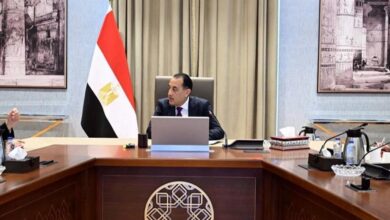
Essam Sharaf is the first Egyptian politician to march in an anti-regime protest and, after three weeks, be appointed prime minster.
On Thursday, Egypt’s Supreme Council of the Armed Forces chose Sharaf to form a new government, meeting a chief demand of Egyptian revolutionaries.
The appointment came shortly after the resignation of Prime Minister Ahmed Shafiq, who was appointed by Mubarak in the latter’s last days in office in a desperate attempt to mollify anti-regime protesters.
Sharaf, who served as minister of transportation from July 2004 until December 2005, joined the anti-Mubarak protests on 8 February.
Sharaf was quoted as telling striking underground metro drivers, “Your dignity as drivers is my dignity as minster.”
He was removed from the government headed by former Prime Minister Ahmed Nazif at a time the cabinet was becoming increasingly intimate with Mubarak’s influential son, Gamal, and other like-minded businessmen, while simultaneously purging many figures considered part of the old guard.
Egypt, which is infamous for road accidents, has witnessed some devastating train disasters. But during Sharaf’s time as minster, there were no major accidents.
“In the last three years he was more involved in political and social activism. He established the Age of Science organization, an NGO to advance knowledge and modern sciences in Egyptian society,” said Suez Canal University professor Iman Yehia.
“The organization boasts as members Nobel laureate Ahmed Zewail, acclaimed surgeon Mohamed Ghoniem, and prominent Egyptian-American scientist Farouk al-Baz,” added Yehia.
After leaving office, Sharaf had criticized state sequestration of the Egyptian Engineering Syndicate. He was recommended to head up a committee to solve the syndicate’s crisis in 2009 by calling for long-awaited syndicate board elections.
Sharaf obtained a bachelor's degree in civil engineering from Cairo University in the mid 1970s, a time of massive student activism against late president Anwar Sadat. He was influenced by Abdel-Moneim Osman, considered the father of highway engineering in Egypt and the Middle East.
“At that time, Dr. Osman had three graduate instructors working with him, and it was impossible for him to add another graduate instructor, according to the department and college rules. Dr. Osman, in the department council, announced that he had decided to replace the three graduate instructors with me. I will never forget that,” Sharaf recalled in a recent interview.
Later, Sharaf traveled to the United States to obtain his MA and PhD degrees from Purdue University, Indiana, where he specialized in highway maintenance and management. He then spent two decades in academic positions at Cairo University, where he specialized in transport management.
As minister, Sharaf was concerned with the alarming increase in traffic accidents in Egypt, where scores of people lose their lives every year in road disasters, and began to conduct detailed research into the phenomenon.
Reckless driving, lax traffic rules and poor road conditions have made Egypt one of the top countries worldwide in terms of traffic accidents. Informal figures suggest that around 100,000 people were killed in road crashes nationwide between 1990 and 2008.
Furthermore, Sharaf showed real interest in several diplomatic files, including the ongoing dispute over Nile water.
On Monday, Burundi joined five other Nile Basin countries in signing an agreement to reallocate water resources. Some fear that the new treaty will deprive Egypt of its longstanding colonial-era quota of Nile water.
Last August, in a public lecture delivered at the Egyptian Journalists Syndicate, Sharaf indirectly accused the regime of not paying enough attention to African affairs. He said that Egypt must now be linked to the Nile Basin countries via paved roads and railways.