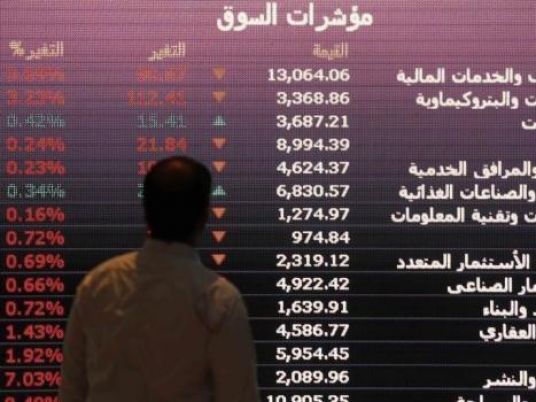
Index compiler MSCI's semi-annual review lifted stock markets in the United Arab Emirates and Qatar on Wednesday, but had little impact on Saudi Arabia and was negative for Egypt.
MSCI published a standalone index for Saudi Arabia late on Tuesday which includes 19 stocks and is largely the same as the provisional Saudi index it compiled last year. One addition is Al Tayyar Travel Group, which rose 0.8 percent on Wednesday.
The index was released just before the Saudi market opens to direct foreign investment on June 15. Since Saudi Arabia will not be part of the emerging market universe for at least two years, however, significant inflows of passive foreign funds are not expected for now.
Instead, the kingdom's market was supported on Wednesday by stronger oil prices. Brent crude rose above $67 per barrel in Asian trade after jumping 3 percent in the previous session, supported by bets that U.S. crude stockpiles would fall for a second straight week as production slows. The Saudi stock index climbed 0.5 percent to 9,672 points, confirming technical support on its 200-day average, now at 9,569 points.
The rally in crude prices helped petrochemicals giant Saudi Basic Industries jump 2.6 percent, and this pulled up other Saudi stocks in the sector.
Meanwhile, telecommunications operator Etihad Etisalat (Mobily) dropped 3.4 percent after the firm said on Wednesday that it was studying the possibility of selling its telecommunications towers but hadn't reached any agreement yet.
The Wall Street Journal reported on Tuesday, citing unnamed sources, that Mobily planned to sell its telecommunications tower portfolio for up to $2 billion.
QATAR, ABU DHABI
Qatar's benchmark was the best performer in the Gulf and rose 1.0 percent as Ezdan Holding and Qatar Insurance surged 7.3 and 6.0 percent respectively. MSCI added both stocks to its emerging markets index for the first time in its semi-annual review, although the move surprised some analysts.
VTB Capital and EFG Hermes cited data from Qatar's depository showing three large shareholders together owned 94.1 percent of the company, leaving very little room for other investors.
"It is possible that Ezdan could be dropped from the MSCI EM index in short order if passive funds are not, in fact, able to replicate the index," EFG Hermes said in a note, adding that Qatar Insurance, according to its calculations, did not meet MSCI's liquidity requirements.
Doha Bank edged up 0.4 percent after its weighting in Qatar's section of the MSCI benchmark was increased to 4.8 percent from 3.0 percent.
Abu Dhabi's bourse rose 0.4 percent as Abu Dhabi Commercial Bank surged 5.8 percent; its weighting in the UAE subset of MSCI's index rose to 18.6 percent from 15.3 percent.
But First Gulf Bank and Union National Bank fell 1.0 and 2.2 percent respectively after MSCI announced no changes for them. Some market players had expected both stocks to be upgraded.
DUBAI, EGYPT
Dubai's index rose 0.3 percent, thanks in part to Emaar Malls which, as expected, was added to MSCI's index and rose 1.5 percent.
The most traded stock in the emirate was Gulf Finance House , up 2.0 percent after the Bahraini investment firm said it had won a $91 million legal case at the Bahrain Chamber for Dispute Resolution against two former executives over their bonuses.
But builder Arabtec dropped 3.5 percent after it posted a surprise firs-quarter loss of 279.82 million dirhams ($76.2 million), compared with a 137.89 million dirham profit in the corresponding period of 2014.
Global Investment House had forecast Arabtec would make a quarterly profit of 95 million dirhams, while SICO Bahrain had estimated a profit of 20.2 million dirhams.
While it was positive for the Gulf, the MSCI review spooked investors in Egypt, where the main index fell 1.7 percent in a broad sell-off.
Telecom Egypt tumbled its daily 10 percent limit after MSCI excluded the stock from its emerging markets index, leaving only three Egyptian stocks in it – Commercial International Bank (CIB), Talaat Moustafa Group and Global Telecom – which analysts said was the minimum required for a country to stay in the benchmark.
"The fall to three stocks does indirectly put Egypt's emerging market status at risk: the index becomes less diverse -CIB is now 72 percent of the MSCI Egypt index – and investor interest could fall, leading to lower turnover and market cap," EFG Hermes said.
The expected exit of foreign funds from Telecom Egypt could be complicated by foreign currency shortages in the country, it added.