Former US State Department official Josh Paul, who resigned over America’s policy regarding the Gaza conflict, views Israel’s actions as a strategy to impose its regional dominance through intimidation, while exploiting the political fragility of neighboring states.
He argues that the conflict is part of a broader effort to reshape the Middle East, forcing a choice between “submissive regimes or collapsed states,” a policy that faces little genuine resistance from Arab leadership.
Paul stresses that the absence of democracy in the region ties policies to regime survival rather than public interests, suggesting that sustainable peace requires empowering Arab citizens, respecting their will, and building a system grounded in justice and stability, free from military coercion.
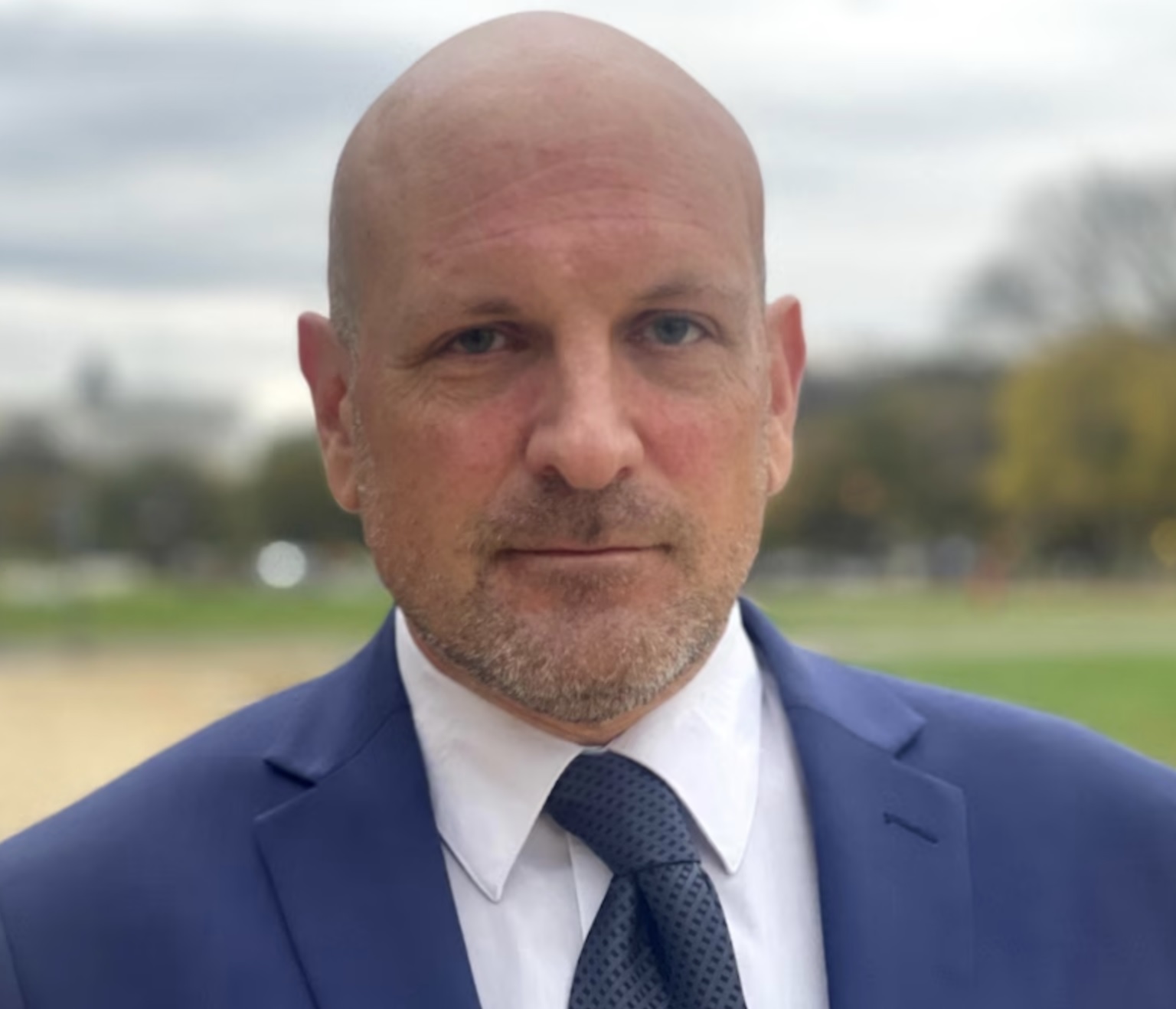
Paul’s perspective is significant due to his decade-long role within the US decision-making structure, where he oversaw sensitive weapons and security assistance portfolios to US allies. Since he resigning in protest, he has become a prominent public voice, offering unique insights into the Arab-Israeli conflict and the influence of pro-Zionist dynamics within US institutions.
He warns that Israeli expansion in the Red Sea is a major strategic development reshaping regional security and highlights the Egyptian peace initiative as a more just alternative to previous plans, though he notes Egypt must first restore its economic strength to reclaim its regional leadership role.
Interview:
■ The term “Middle East” is geographically rooted in a colonial framework, yet it has become globally accepted. In your view, how has the region’s colonial history shaped its current realities and ongoing conflicts—particularly since the Sykes–Picot Agreement? Is our region being subjected to another redrawing of borders, this time on the blood of its peoples, driven by what has unfolded in Gaza to secure Western interests?
Understanding the region’s colonial history is a key part of understanding its current political dynamics, from the national borders, many of which were imposed by a (foreign) stroke of the pen, to the impact of foreign efforts to exploit natural resource extraction on local socioeconomic development.
In both these contexts, Israel’s colonization of Palestine – and the world’s apparent collusion in that colonization – should seem familiar, the major difference being the particular religious history that creates additional levels of complexity.
Remove that aspect, and the actual tools and methods of colonization – from the erasure of the indigenous culture and people to the assertion of control over natural resources from offshore gas to the very rain that falls, is not particularly distinct from many other dark moments of colonial history – except that it is being carried out in the modern day, and with the modern technological toolkit – from weaponry to digital propaganda.
■ The term “Middle East” first appeared in the writings of the American strategist Alfred Mahan in 1902, long before Condoleezza Rice famously revived it—an idea now resurfacing strongly. Do you believe the region is heading toward a reconfiguration that consolidates Israeli dominance, especially with Trump’s return to the White House? Is this envisioned “New Middle East” one in which Israel seeks military hegemony over Arab states and economic control over the wider region?
We must separate the plans of the Government of Israel from the realities that history teaches us over and over.
There are many – including in Israel – who will argue and genuinely believe that all Israel seeks is acceptance within the region. However, the national psyche of the state seems to be rooted in a self-fullfilling insecurity; an unwillingness to trust or to leave anything to chance.
This manifests itself in an objective of regional military hegemony in which Israel sees two acceptable conditions for its neighbors: as dependable and aligned autocracies, or as failed states.
This is not, however, a durable outcome. There is no amount of military power that can permanently entrench Israeli dominance in the Middle East.
The question is really how much suffering the region will endure before this framework collapses.
■ What role do you believe major regional powers—such as Egypt, Turkey, and Iran—are playing in response to these plans, given their strategic weight and historical influence?
In the case of Iran and Egypt – and most other countries in the region – because of the absence of democratic governance, the response to the current situation is greatly driven by regime preservation.
Egypt poses a particularly complex question given the catastrophic state of its economy, the challenges of its demography, and the political migration of Arab leadership from Cairo to the Gulf.
Turkey under Erdogan faces its own significant democratic deficit, but has attempted to differentiate itself from many of the Arab regimes through its tolerance of – and sometimes exploitation of – political Islam.
However, its immediate focus in the region lies along its southern borders, with Syria, Iraq, and the Kurdish areas of both being the areas of its highest priority. In all cases, the governments appear satisfied to use Israel as a means of redirecting popular discontent away from their own failings – so long as that discontent does not get to the point of demanding significant action.
■ The Arab world currently lacks any unified project capable of countering Israel’s increasingly overt expansion. What would you advise Arab states to do in order to confront Israeli practices and compel Israel toward peace? Do you believe that deeper Arab integration, perhaps through an entity analogous to the European Union, could be a meaningful step toward a sustainable solution?
The above responses are observations from the other side of the world, and, I should caveat, may be inaccurate, but I offer them in case the reader finds it helpful to understand how the region is seen from the US.
However, it would be a step too far for me to make recommendations to the Arab world on how to organize themselves, except to say that the only means of doing so in a way that reflects the will of the people, is to empower the people.
■ Egypt has historically played a pivotal role in the Middle East. How can it continue to fulfill this role effectively despite growing challenges along its four borders? And do you believe Egypt’s peace initiative offered a more suitable framework than Trump’s plan?
I do believe that Egypt’s peace initiative offered a more suitable – indeed, a more feasible and sustainable – framework than the 20-Point Plan, mostly because Egypt’s plan centered the Palestinians in a way that the current approach fails to do.
As I noted above, while Egypt has historically led the Middle East, that leadership appears to have passed to the Gulf, and it is hard to imagine Egypt reclaiming it within our lifetimes.
Whatever role Egypt sees for itself, the most pressing task before it is to get its own economy and society in order.
■ How can the Arab region benefit from the geopolitical competition among global powers and from discussions on emerging multipolarity? How can it leverage this environment to its advantage, without allowing its resources to remain hostage to a single dominant power that has drained its wealth for decades?
Seen from the perspective of the US, this is the era of strategic competition – of great power competition between rivals on the global stage (My own view is that it is more complex than that).
What this means for regions such as the Arab world is that the opportunities for leverage are greatly increased compared to those available in the receding unipolar world.
But it must do so without letting itself become a new battleground over resources, and also should be very wary of any investment that continues to entrench the existing power structures at the cost of broader political mobility.
I also somewhat disagree with the premise that the resources of the Arab world have been ‘hostage’ to a single dominant power; indeed, not only did the Arab oil boycott of the 1970s demonstrate that the Arab world can exert some significant degree of control over those resources, but the vast majority of current Persian Gulf oil exports go to Asia, not Europe or America.
There is very clearly a history of Western exploitation of Arab resources, but the current reality – both in the oil-rich states and in those countries with diversifying modern economies – has evolved significantly from that history.
■ If you were to draw a vision for the future of the Middle East—one that shields it from recurring conflicts—what would be your starting point for establishing a sustainable peace that safeguards human rights, honors human dignity, and upholds justice?
I am a believer in the Western ideal that every human life has equal value, and therefore deserves equal rights.
Therefore, my starting point – or, perhaps more accurately, my ending point – for any region, people, or peoples, is that the safeguarding of human rights, human dignity, and justice, requires democracy.
There must be two caveats here: the first is that there is little in the current performance of democracies, including my own, to suggest that they can deliver on this promise; here, I rely on the promise of democracy that, unlike all other systems, it avails itself to peaceful change and gives all its citizens the opportunity to, as Martin Luther King Jr, said, bend the arc of history towards justice.
The second caveat is that while I do believe democracy should be the objective for the Middle East – and the only path that would both resolve many of its current conflicts while shielding it from future ones – the transition to democracy is not an easy one, and in many cases fear of what that transition may look like can restrain people from pressing for it.
■ Your principled stance on Gaza and your resignation from the US State Department—did you pay a price for that decision?
I gave up a powerful job that I enjoyed, and did not have a dependable income for two years.
But these are very minor “costs” compared to the confidence I have had from the moment I resigned that I was doing the right thing; the wealth of friendships I have made in the intervening years (particularly within the Arab-American and Muslim-American communities); and the opportunity I have now to reshape American politics and policies regarding Palestine and Israel.
Of course, no cost could ever compare to that being paid by the Palestinian people.
■ You and Tarek Habash launched an initiative. Could you tell us more about it—its activities, its impact in the US and the wider Western sphere—and whether it has been met with positive reception?
Tariq Habash was the second US official to resign over Gaza.
When he and I first met, we discovered that even though our backgrounds and careers were very different, we shared an understanding of the problem we, and our nation, faced: that America’s unconditional support for Israel is not a policy choice, but a political choice.
Therefore, we founded an organization called A New Policy, which is designed not to propose policy solutions, but to restructure the political incentives for the US Government through lobbying, advocacy, organizing, and campaign finance so that American officials can act towards Israel as they would act towards any other country in the world: in a manner that reflects America’s national interests, and make decisions that are driven by rational thought rather than political fear.
■ After joining DAWN as an advisor, you announced in July 2024 the launch of a political action committee aimed at influencing US decision-making on the Palestinian–Israeli conflict. What motivated your shift from working within US government institutions to establishing independent advocacy platforms? And do you believe such initiatives can genuinely challenge the long-standing dominance of the Israeli narrative within American policymaking circles?
Before I resigned, I tried to lead a debate within the US Government concerning our policies towards Israel and, specifically, Gaza. It was clear within the Biden Administration that there was no desire for that debate, but I felt it was an important conversation for the American people to have.
In order to bring it to them, I had to resign.
A New Policy’s purpose is to create the space in American politics for that debate – and for that debate to happen on its own merits, rather than being driven by malign political interests.
I do believe that change is possible. We have seen a transformative shift in the way that the American people think about Israel and Palestine. We know that American politics does not function purely based on the public will, but, as a representative democracy, is driven by the electoral considerations of candidates for office, which, unfortunately in our system as it is currently structured, includes a major role for money.
However, even within that flawed system, we know that change is possible – because we see organizations like AIPAC that represent a small minority of American public opinion able to drive that change and lead our nation astray.
If they can do it (at great expense) in the face of the popular will, we can do it in the service of the popular will, and at significantly less expense, too.
■ Senator Josh Hawley has stated that Trump intends for Gaza’s neighboring countries to accept Palestinian refugees. Do you expect Trump to continue pressuring Egypt to facilitate displacement, or might he pursue alternative pathways to assist Netanyahu in removing Gaza’s population? Moreover, do you foresee the reconstruction process being manipulated—as previous peace deal provisions were—to exert pressure on civilians?
I am deeply concerned that the reconstruction process will be driven by a combination of Israeli interests, corporate profiteering, and regional regime interests, rather than working in the service of the Palestinian people.
I think that President Trump’s greatest desire is not to have to deal with the “problem” of Gaza, and of Palestine and Israel, and so he will pursue the course of least resistance.
There are many sources of pressure on President Trump in this regard, including Prime Minister Netanyahu and the Israel-first lobby in America on the one hand, but also including Arab leaders and the American electorate on the other.
While I cannot predict President Trump’s future decisions, I feel confident in saying that if we want to predict them, we must assess these various sources of pressure and consider how they play out in his policy-making.
■ How do you assess the recent UN Security Council resolutions on Gaza, which Palestinians criticized as a form of guardianship over them—an implicit mandate that strips them of their right to self-determination and grants it instead to a foreign, biased actor, namely the US? Are these concerns legitimate in light of Washington’s unequivocal support for Israel? And was the Egyptian proposal a more viable path than the Trump plan for achieving a just and comprehensive peace in our region?
The recent UN Security Council resolutions on Gaza directly contradict the recent wave of recognition of Palestinian statehood, including by two Permanent Members of that Council (the UK and France), and represent yet a further obstacle to the Palestinian self-determination which is the only path to a just and lasting peace. In this regard, the Egyptian proposal was a more promising path than the plan the UN Security Council has endorsed.
The irony is that the UN plan is not in America’s interest either, which is why I think Russia and China abstained rather than opposing the plan.
Now, America “owns” this issue, not only in a de-facto sense, but in a de-juro sense, too.
■ Some argue that the two-state solution is no longer viable, while others believe a single state for all is equally impossible after Israel’s perpetration of genocide and ethnic cleansing. From your perspective, what is the realistic framework for establishing a just and comprehensive peace in Palestine and the wider Middle East? And do you believe that resolving the Palestinian issue is the key to addressing much of the region’s conflicts?
Recent history shows that when Americans try to dictate the outcome of the Israeli-Palestinian conflict, it does not go well for anyone, so it would be unwise of me to make the same mistake.
I believe that the key here is self-determination: it is for the people who live there to decide what their future should look like. It is our role, from the outside, either to support them as they do so, or to get out of the way.
I believe that resolving the Palestinian issue is very important to addressing the region’s conflicts, but is not the only factor. Even once the Palestinian issue is resolved, the region will continue to face economic and political challenges ranging from corruption to climate change.
Resolving the Palestinian issue will make the gravity and nature of these challenges more apparent, and it will certainly have ameliorating effects in the immediate area, most particularly Lebanon, Syria and Jordan, but it is not the sum of all of the region’s problems.
■ Is what we are witnessing in Gaza today an attempt to impose a political settlement by force—leaving Palestinians with only two options: either accept US-Israeli proposals or remain under siege? In light of your experience within policymaking institutions, do you believe this war could have been prevented if Washington had not insisted on using military force as a negotiating tool rather than pursuing diplomatic channels?
Yes, of course what we see in Gaza today is an effort to impose a political settlement by force – if it was not, the Palestinians would be at the table, and the use of military tools would be off it.
I believe this war could have been prevented had the US (and for that matter the broader international community) played a stronger and less biased role in pressing for the full implementation of steps like UN Resolution 242, the Camp David Accords, and the Oslo Accords; it was the failure of US diplomacy – and the absence of any real pressure on Israel – that laid the groundwork for the current phase of the conflict, including Israel’s genocidal acts against the Palestinian people.
■ Do you believe the Middle East is moving toward a new security architecture led by emerging regional powers, or will the United States fight a prolonged battle to preserve Israel’s dominance at any cost? If unconditional US support continues, will the balance of power remain skewed in Israel’s favor, or could shifting global public opinion undermine this equation? Do you foresee an internal confrontation emerging within the United States itself—between traditional policy elites and a new political bloc that increasingly objects to the cost of the US–Israel alliance?
It is likely that we are at the start of a spiral in the US-Israel relationship in which the preservation of Israel’s regional dominance will require more and more outrageous conduct from Israel which will lead Israel to require to more and more support from the US, which will cause that support to become less and less popular in America – both as a function of its foreign policy implications, its moral implications, and its financial implications.
We are already seeing the fracturing of the Washington consensus on Israel, and on the current trajectory eventually the costs of the status quo will outweigh the cost of a change in approach – the question, for as long as the attention of the American polity is drawn to Israel, is whether this change will come incrementally, or suddenly.
■ What do you foresee for the future of Gaza, the Palestinian cause, and the broader region over the next decade if Israel continues its aggressive practices?
Since I worked in the West Bank from 2008-2009 I have believed that the trajectory we are on is that of the ethnic cleansing of the Palestinian people. I have not seen anything yet to suggest that trajectory has changed.
Essentially, we are in a race between that trajectory, and the spiraling of American support for Israel. It is A New Policy’s job to accelerate the latter, in no small part to avoid the former.
■ Washington is deeply implicated in supplying Israel with advanced weaponry used in attacks on Gaza and Lebanon, resulting in devastating destruction in both regions. What explains this? Does AIPAC influence the direction of US policy to this extent? Has the pro-Israel lobby corrupted American political life so profoundly? And why is there no enforcement of US laws prohibiting arms sales to parties involved in grave human rights violations, despite abundant evidence that Israel uses these weapons against civilians? What, then, is the way forward—and where should any solution begin?
The AIPAC promotes itself as a single-issue organization – its stated mission is to continue America’s unconditional support for Israel.
But that is not a ‘single issue,’ because in order for it to happen, the US Government must violate its own laws; must waste billions of dollars of the American people’s money; must subjugate its own national interests and global leadership; must allow the corruption of our politics; must repress our most basic freedoms.
Because the AIPAC’s agenda has been sold historically as a single-issue, and one that does not interest most Americans, all of this harm has gone unperceived – until now.
More and more Americans are now aware of the harm that the AIPAC and other organizations aligned with it (such as DMFI and CUFI) are doing to our national interests, and to our very democracy.
That is why Gaza has become a litmus test in American politics – not only because the moral failings of the current approach are so visible, but because alignment with AIPAC means opposition to America’s interests, America’s, values, and to the very rule of law itself.
■ Netanyahu’s government is deliberately fostering a climate of conflict and openly declaring its ambition to establish what it calls “Greater Israel,” destabilizing the Middle East in the process. Do you believe Israel genuinely seeks to redraw regional borders—or at least impose political and security dominance—based on its actions in Lebanon, Syria, and Gaza? How can such unchecked behavior be confronted? And will these policies push Arab publics to abandon hopes of peace and embrace more radical positions in response to Israel’s conduct?
I believe Israel genuinely seeks to impose political and security dominance, and I think that part of what it has tried to achieve with its genocidal actions in Gaza is to use fear as a tool of diplomacy – that is, to persuade Arab publics that the only safe option is, if not to embrace Israel, then at least to ignore it.
In the short term, that approach appears effective. No leader of an Arab State currently seeks confrontation with Israel. But fear is not an enduring strategy, and the impact of Netanyahu’s program is deeply destabilizing both to the region as a whole, and to the internal stability of the Arab states.
■ Some say Israel is an instrument of American power, while others argue that the US has become an instrument of Israel due to the strength of the Israeli lobby and the corruption of US policy in the region. How do you interpret this dynamic?
The actual question here is, what strategic benefit does Israel get from the US, and what strategic benefit does the US get from Israel? The answer to the first is obvious: military and diplomatic support that enables it to act with impunity.
As to the latter, I have never heard a convincing answer beyond things like counter-terrorism and intelligence cooperation – the vast majority of both of which are focused on challenges that the US-Israel relationship has itself created.
■ Do you believe Israel will only abandon destabilizing activities and pursue peace once Washington stops providing unconditional support? What is your assessment of Trump’s remarks before the Knesset acknowledging that the US arms Israel and describing what he called “peace through strength”? Do you believe peace can be imposed through overwhelming force, as he suggests? And is it justifiable to grant Israel overwhelming military capacity while it undermines the security of Arab nations?
I do believe that America’s unconditional support for Israel is the critical factor in Israel’s behavior – and specifically the means in which that support removes any form of accountability or consequences for Israel from which it might actually learn. I think that the idea that Israel might impose its will across the Middle East in perpetuity is absurd – Israeli regional military dominance will prove transient.
But we cannot count on the passage of time to bring about this change: human history is replete with examples of “peace” through overwhelming force, as the history of my own nation in its westward expansion shows.
■ Israel has repeatedly violated ceasefire agreements—those signed in Sharm el-Sheikh and others—and continues to strike Gaza and Lebanon. Has Israel become so assured of US protection that it feels emboldened to threaten regional security without consequence?
Yes, and this is the key problem in America’s approach. Because Israel never faces any consequences for its actions, it never sees its actions as mistakes, and therefore never learns from its mistakes, as any other nation – or individual – might.
■ Do you believe the deepening security and economic entanglements between some Gulf states and Israel are redefining the concepts of ally and adversary in the Arab world—at the expense of justice and regional stability—or is this merely a transitional phase shaped by specific circumstances?
In the current construct of many of the Arab states, we must assess inter-state relations not as relations between the entirety of a country with Israel, but as relations between the regime and Israel. In many cases, because it serves regime interests, deepening entanglements with Israel exist despite public opposition to those entanglements.
That is not to say that there are never any mutual economic benefits of such ties, but they certainly come at the expense of justice. This question, however, also requires a state-by-state level of analysis, as it is clear that the calculation for the government of a country like Saudi Arabia – with 20 million citizens and a responsibility for religious guardianship as an important element of its legitimacy differs from that of a country like the UAE.
■ Given assertions that current conflicts are fundamentally struggles over interests, how do you assess the strategic importance of the Red Sea as a global trade route? Do developments in Yemen and Sudan threaten the security of this maritime corridor, or are they reshaping it? Is the competition over ports and sea lanes in the Red Sea part of a broader geopolitical contest involving Washington, Beijing, and Tel Aviv? Can we say the Red Sea has become a gateway for a new regional security order—and that some powers see controlling it as essential to political influence in the region? Do you believe that reshaping power dynamics in the Red Sea and the Horn of Africa will define the Middle East’s future over the coming decade more than the Arab–Israeli conflict itself? And where does Israel stand in this picture?
Sea Lines of Communication (SLOCs) are vital to the global economy and will remain so, and it is clear that both external actors such as the US and People’s Republic of China (PRC), as well as regional actors, such as the UAE and Israel, view their freedom of navigation as both an economic opportunity and a paramount national interest.
There is a broader global competition over the protection – or essentially ownership of – the SLOCs.
For decades the US has essentially taken on responsibility for the protection of the global commons, although it has invited partnerships and coalitions where common threats have emerged (such as the multinational effort to combat piracy off the coast of Somalia).
That role is increasingly being challenged at the regional level, for instance by the PRC in the South China Sea region, but no other country has the global naval presence that could replace the US. Israel’s economy is clearly dependent on freedom of navigation, as the closure of the Port of Eilat showed, but its interests are much narrower than the broader competition between the US and PRC – as its willingness to invite PRC ownership of the Port of Haifa (until the US forced it to walk back that initiative) demonstrates.
In short, the US will continue to see itself as the ultimate guarantor of freedom of navigation for many years to come, and both the Red Sea, the Persian Gulf, and the Arabian Sea will continue to function as a key focus of global trade and maritime competition – with the security and dependability of those routes as one of the few shared interests for both the region and external powers.
■ From your experience at the US State Department, do you believe Washington still possesses a coherent strategic vision for the Middle East—or has it become captive to the imperative of securing Israel, even at the expense of its broader interests? To what extent does the continued flow of US arms to Israel make the US a direct partner in destabilizing the region rather than a guarantor of its stability?
I do not think Washington currently has a coherent strategic vision for the Middle East beyond the maintenance of the status quo. I do not believe Washington would like to see further instability in the region, but nor is it able to have the type of open debate that would allow it to see the clear contradiction between its current approach to arming Israel and that objective.
■ Do you see current US policy toward the Arab–Israeli conflict as driven more by security considerations or ideological commitments? Who sets the real tempo of this policy in Washington? Do you believe Israel is working to redesign the Middle East so that it becomes the core of a new regional order? How does this relate to normalization agreements and emerging alliances?
America’s current policy towards the Arab-Israeli conflict cannot be understood through a foreign policy lens – it is shaped and driven by domestic political considerations, which is precisely why A New Policy is focused on restructuring those domestic political incentives and levers over issuing voluminous foreign policy recommendations.
■ In your view, who bears responsibility for Israel’s belief that it can operate above international law because it enjoys unlimited US backing? How does this affect the future of the international system? To what extent can it be said that Israel equates its national security with dismantling any viable sovereign Arab project, rather than merely defending its borders?
As described above, Israel’s belief that it can operate with impunity relies on the US to continue to protect it from the consequences of its actions. The support of the world’s preeminent power for Israel’s actions poses a fundamental threat to the continued viability of the international rules-based order because it both exposes an hypocrisy that calls into question the credibility of that order, while also leading the US to actively undermine that order so that Israel’s behavior can continue with impunity.
■ There are claims that the United Arab Emirates is fueling internal divisions in Yemen and Sudan through policies that fragment national institutions and empower local militias. Some analysts argue that these actions objectively align with Israel’s strategic interests by weakening the regional environment and diverting attention from the Palestinian cause. How credible do you find this assessment? Do you see these dynamics as part of a broader regional reconfiguration that ultimately benefits Israel?
I think that the question of UAE policy towards Yemen and Sudan is very complex, and is driven by a number of considerations for Abu Dhabi that have nothing to do with Israel directly, and I do not think the UAE’s policies are directly driven by an intent to distract from the Palestinian cause – if anything, the UAE would rather its foreign policy operate without drawing significant attention.
However, it is clear that Israel’s preference, where it cannot have a partnership with a strong regime, is for weakened, or even failed, states, and in this regard I suspect that Israel does not object to the current outcomes in Sudan or Yemen.
It is also likely that Israel welcomes an expansion of the UAE’s influence in other Arab countries.