In March, the US intelligence community assessed that Iran was “not building a nuclear weapon.”
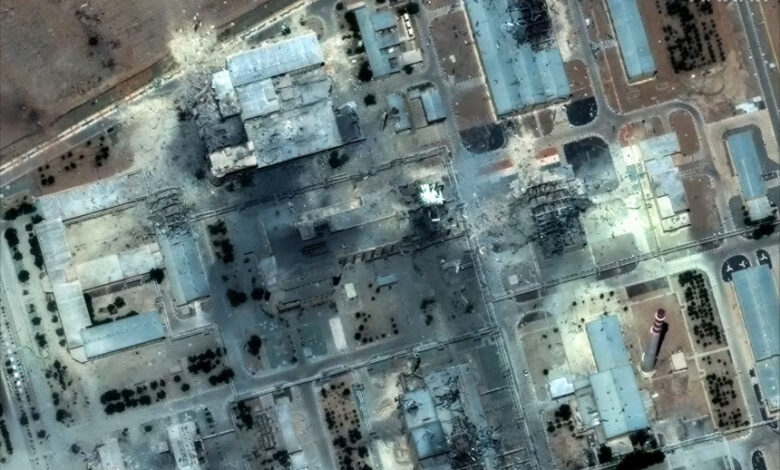
In June, the Trump administration nevertheless launched airstrikes targeting Iran’s nuclear program.
And today, it might strike Iran again over its nuclear ambitions — this time despite President Donald Trump having assured repeatedly that those June airstrikes had “obliterated” its program.
Trump and his team have rarely taken care to provide consistent rationales for using military force.
But ahead of a potentially more extensive campaign in Iran — one Trump is likely to talk about Tuesday night in his State of the Union address — their failures to build a coherent case for war are getting even more conspicuous.
Trump and his administration went to great lengths to highlight the success of those June strikes, in ways that appeared to go well beyond the available evidence at the time. And today, those grand claims are suddenly looking like a liability.
A focus on the nuclear threat
The administration has in recent days repeatedly cited Iran’s potential nuclear threat while floating potential military force if Tehran doesn’t cut a deal.
“Our primary interest here is, we don’t want Iran to get a nuclear weapon,” Vice President JD Vance told Fox News last week.
“They can’t have nuclear weapons; it’s very simple,” Trump said last week.
And over the weekend, Trump’s special envoy Steve Witkoff suggested Iran’s nuclear threat was rather imminent.
“They’ve been enriching well beyond the number that you need for civil nuclear. It’s up to 60%,” Witkoff told Fox. “They are probably a week away from having industrial-grade bomb-making material, and that’s really dangerous.”
But if Iran actually is that close to having material to make nuclear bombs, that would represent a truly miraculous recovery — at least, to the extent one believes Trump. After all, it was just eight months ago that Trump declared Iran’s nuclear program to have been “obliterated.”

Trump’s suspiciously quick verdict in June
Initially, Trump merely said that Iran’s nuclear facilities had been obliterated.
“Iran’s key nuclear enrichment facilities have been completely and totally obliterated,” he said the day of the operation, June 21.
Even that was a weird answer, though, given after-action reports generally take some time. It wasn’t clear how Trump could have reached this conclusion so quickly and definitively. And indeed, Joint Chiefs of Staff Chairman Dan Caine provided a more circumspect version the next day.
But then Trump repeated the claim on social media. And Defense Secretary Pete Hegseth in his own comments on June 22 went even further, declaring that not only were the facilities obliterated, but so too were Iran’s nuclear ambitions.
“Thanks to President Trump’s bold and visionary leadership and his commitment to peace through strength, Iran’s nuclear ambitions have been obliterated,” Hegseth said.
By June 24, Trump followed Hegseth’s lead. “It was my great honor to Destroy All Nuclear facilities & capability, and then, STOP THE WAR!” Trump said on social media.
He doubled down — for months
That same day, though, CNN broke the news that an early US intelligence assessment did not back up Trump’s claims. It had found the strikes did not destroy the core components of Iran’s nuclear program and likely only set it back by months. (The New York Times reported something similar.)
But Trump has continued to say the nuclear program was obliterated.
A sampling:
- “It knocked out their entire potential nuclear capacity.” (July 16)
- “It’s been obliterated.” (July 31)
- “We obliterated … the future nuclear capability of Iran.” (August 18)
- “But I also obliterated Iran’s nuclear hopes, by totally annihilating their enriched uranium.” (September 20)
- “Well, they don’t have a nuclear program. It was obliterated.” (October 13)
- “… completely obliterated Iran’s nuclear capability.” (November 11)
- “It was called Iran and its nuclear capability, and we obliterated that very quickly and strongly and powerfully.” (November 19)
- “We obliterated their nuclear capability.” (December 11)
- “We knocked out the Iran nuclear threat, and it was obliterated.” (January 8)
- “… obliterated Iran’s nuclear enrichment capability.” (January 20)
- “… achieving total obliteration of the Iran nuclear potential capability — totally obliterated.” (February 13)
So to recap: Trump has claimed to have obliterated Iran’s nuclear “capacity,” “capability,” “future … capability,” “potential capability,” “hopes,” “threat” and “enrichment capability.” And as recently as four months ago, he said Iran didn’t even have a nuclear program to speak of.
The word “obliterate” means to utterly destroy or wipe out. In the context of nuclear capability, it’s not the kind of claim that allows for the obliterated thing to be reconstituted in a matter of months.
Shifting motivations
But today, Trump’s motivations are different.
Suddenly, it’s not about highlighting the success of a past mission but rather about building the case for a future one. And suddenly, it’s not so helpful for that first mission to have been the resounding success that Trump has spent months asserting it was.
Indeed, Trump was critical of the CNN and Times reports that Iran’s nuclear program was only set back months.
It’s an altogether familiar tale. This administration often seems to say whatever it needs to in the moment to build its case for military intervention — regardless of how substantiated or how consistent it is.
That was true not just with the initial Iran strikes in June, but also with its operation to oust Venezuelan President Nicolás Maduro. That latter operation was justified as being about drugs, about law enforcement and/or about oil.
And it’s happening again.
Last month, when Trump was first threatening to strike Iran again, the stated reason was that Tehran was killing protesters. Today, the stated case is much more focused on nuclear issues.

When White House press secretary Karoline Leavitt was asked last week why the US might have to strike Iran again even after its nuclear program was supposedly “obliterated,” she responded: “Well, there’s many reasons and arguments that one could make for a strike against Iran.”
The administration is still searching for a logically consistent one.