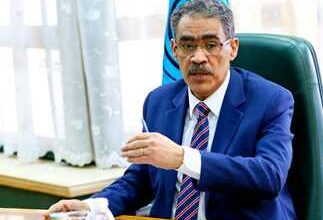
Minister of Industry Khaled Hashem announced on Friday the launch of a comprehensive government campaign, starting next week, to reclaim all allocated industrial land that has not been utilized by investors for its designated industrial purposes.
The aim is to immediately reallocate this land to serious investors with clear and ready-to-implement business plans, Hashem said during a meeting with members of the Alexandria Businessmen Association to discuss ways to improve the investment climate and industrial integration in the governorate.
This initiative comes as part of a package of decisive measures to correct the course of the industrial sector and maximize the utilization of state resources, the minister explained.
Hashem indicated that the ministry will introduce new mechanisms for land allocation in the coming months, including options for ownership, lease, and usufruct rights.
This aims to provide greater flexibility for manufacturers, especially young entrepreneurs, allowing them to direct their funds towards purchasing machinery and operations instead of depleting them on land costs, he said.
The minister added that flexible land development cost models are currently being developed in collaboration with industrial developers, offering investors diverse options to suit their financial capabilities.
A fruitful strategy
The minister emphasized that no new industrial land will be allocated to investors unless it is fully serviced to ensure the investor receives the land ready for immediate operation.
Hashem said that this is especially crucial given the substantial investment costs for infrastructure borne by the state, which necessitates the ministry finding mechanisms to recover these costs without overburdening investors.
The minister confirmed that the updated Egyptian industrial strategy has been finalized, identifying priority industries to serve as a clear compass for both local and foreign investors.
Hashem noted that ongoing and fruitful coordination is taking place with Finance Ministry to address customs and tax distortions that negatively impact the competitiveness of local industry, including the imposition of higher customs duties on raw materials and production inputs than on imported finished products.
He affirmed that a package of corrective measures will be issued soon to support and deepen local manufacturing.