In the five years since the chaotic US withdrawal from Kabul and the Taliban’s return to power, Afghanistan has become home to one of the world’s worst human rights and humanitarian emergencies.
Once central to US foreign policy, with American taxpayers footing a $2.3 trillion bill for its 20-year war there, Afghanistan and its people have largely slipped out of much of the world’s view, despite a convergence of man-made and natural crises that have pushed millions of children to starvation and stripped women and girls of their most fundamental rights.
Humanitarian aid to Afghanistan – which is needed by approximately 45% of the population – has been dramatically cut by international donors since the Taliban returned to power, with women and girls bearing the brunt of those cuts. The United States, once the top provider of assistance to Afghanistan, no longer even ranks in the top five of donor nations.
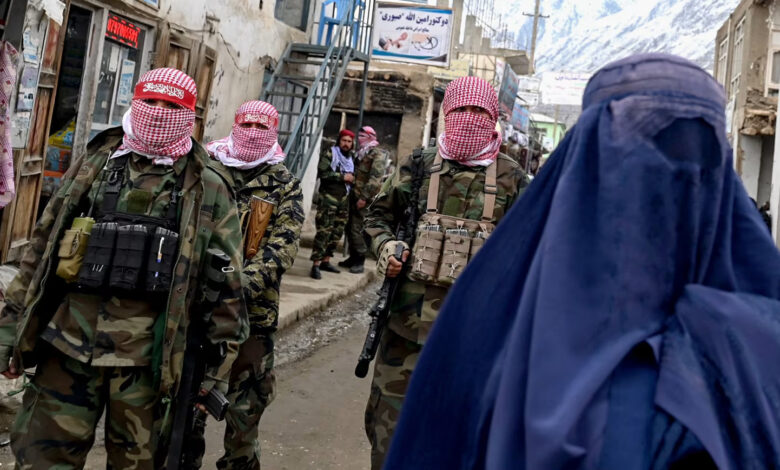
Plummeting assistance comes as the Taliban wages a continued assault on the rights of women and girls, eroding legal protections and systemically stripping them of agency under a system experts have described as “gender apartheid.” Their efforts have successfully erased half the population from public life and made Afghanistan one of the world’s most dangerous places to be a woman.
“To be very blunt, it’s hell if you’re a woman in Afghanistan,” John Sopko, the former Special Inspector General for Afghanistan Reconstruction told CNN on Thursday.
“And I don’t see the international community, I definitely don’t see this government – the Trump administration – doing anything, anything at all about it. If anything, they’re creating a bigger mess for the poor people of Afghanistan,” Sopko added, referencing the US president’s termination of nearly all USAID humanitarian and development contracts in Afghanistan in early 2025, which cut off more than $1.7 billion in planned assistance.
Afghanistan is now the only country on earth where girls are barred from education past sixth grade. The ban has been in place long enough that an entire cohort of girls has passed through adolescence without stepping foot in a secondary school classroom.

The United Nations Educational, Scientific and Cultural Organization (UNESCO) estimates that 2.4 million girls are currently excluded from school.
Women have also been banned from most jobs, ordered to wear face coverings in public, and barred from traveling long distances without a male chaperone.
UN Women reports that half of Afghan women now leave home only once or twice a month, isolation that is driving a mental-health emergency. Seven in 10 women now describe their mental health as “bad” or “very bad,” the organization said.
Mahbouba Seraj, one of the few Afghan women activists who stayed in Kabul after the Taliban returned to power, told CNN on Thursday that she was considering leaving the country due to the rapidly deteriorating situation for women.
“I cannot continue working this way because I haven’t been any help to any one of the Afghan women that needed me. I haven’t been able to do it because nobody allows me to. And the women… all of their rights have been taken away from them. And if anybody says anything about it, we are wrong. We are not supposed to say it, but this is exactly what has happened,” Seraj said.
Meanwhile, violence against women has effectively been sanctioned by law. In March, the Taliban issued a decree that allows men to beat their wives so long as they don’t break bones or leave visible, lasting wounds.
Another decree makes it significantly harder for women to leave their marriage, while also removing the minimum legal age for marriage, which was 16. Human rights experts from Amnesty International and the UN Committee on the Rights of the Child warn that the decree legitimizes child marriage, which has been steadily rising since the Taliban took back power.

That repression is unfolding alongside the severe aid cuts, with overall humanitarian funding for Afghanistan falling nearly 70 percent since 2022.
UN Women estimates that more than 10.7 million Afghan women and girls depend on humanitarian aid. More than half of women-led organizations recently surveyed by the UN expect to close or suspend their operations within the next year because of the cuts. One organization working in northern Afghanistan, which asked to remain anonymous, told CNN that it is now running on a “limited scale” with its ability to keep operating “at serious risk.”
Children are paying the price alongside their mothers.
One in ten Afghan children are acutely malnourished, according to a report released by the charity Save the Children this week. Wasting – the most life-threatening form of acute malnutrition – is on the rise. More than eleven million children are projected to need humanitarian assistance this year, according to UNICEF, but nearly 600 health facilities have closed because of the cuts.
In one hard-to-reach district in northern Afghanistan, Save the Children is the only healthcare provider for 10,000 people.
Humanitarian intervention alone is unable to improve this dire situation. Afghanistan’s economy offers women and families little help.
Most Afghans scrape by on informal trade as they attempt to navigate shrinking services and tightened restrictions on womens’ ability to work at all.
During the years of occupation by US and allied forces, a large share of rural households relied on opium for income, even as Washington spent nearly $9 billion over two decades on a counternarcotics policy that – perversely – helped to fill the Taliban’s pockets, further entrenched its drug economy and, in some regions, fueled support for the insurgents. The campaign has consistently been described as a failure.
This is one area where the Taliban’s governance resembles success. Since banning poppy cultivation in 2022, opium production has fallen by about 95%, which the UNODC and other experts call one of the most drastic drops in illicit drug production in modern history. The ban, however, wiped out a crop that provided a large share of rural income, without real alternative livelihoods, and in some cases, through force. The UN now warns of a new problem filling that gap: the trafficking and production of synthetic drugs like methamphetamines.

Before 2021, foreign aid financed roughly three-quarters of public expenditures. That money has largely disappeared and billions in central bank reserves remain frozen by the US and its allies over the Taliban’s rights record. Unfreezing these assets is one of the main bargaining chips in talks with Western governments, with the ban on girls’ education a key sticking point – meaning the very money that once funded that schooling is now being withheld to try to restore it.
None of this has changed the Taliban’s calculus on women or its engagement with the outside world. In 2025, the US State Department removed its multi-million-dollar bounties for several key Taliban leaders who had transitionally assumed top positions within the Afghan government.
While Taliban-run Afghanistan hasn’t become the terror haven many feared in 2021, nor collapsed, as some analysts initially predicted, weak institutions and deepening poverty have left pockets of lawlessness where groups like ISIS-K and al-Qaeda remain active.
And while no country has fully normalized relations with the Taliban, Russia formally recognized their government last year. China, which appointed an ambassador to the Taliban government in December 2023, has deepened its economic ties, with Chinese companies becoming major players in Afghan oil, copper and lithium extraction.
Five years on, the promises that once sought to justify two decades of American intervention have not just gone unfulfilled but have been actively undone.
“Do you think anyone is going to believe and trust the United States the next time we need allies to fight, whether it’s Ukraine, Iran, or whatever, after the way we treated the Afghans?” Sopko said.
Meanwhile, hunger, preventable disease and legalized violence define daily life for millions.
CNN’s Lauren Kent and Zahid Mahmood contributed reporting.