A conventional wisdom has begun to settle over the war with Iran: Iran won.
The argument is straightforward. The US and Israel bombed Iran for weeks, inflicted enormous damage, and demanded major concessions. Iran refused to surrender. Its government remains in power. Its missiles remain a threat across the region. And most important, Tehran still has the ability to disrupt shipping through the Strait of Hormuz, imposing higher energy costs on the US and much of the world. Over the summer, Trump warned of a global depression if the Strait remained shut.
That’s a strong argument. But it may have proved premature.
Wars are contests of leverage and endurance. And the contest now looks very different from even a few months ago.
The fourth act
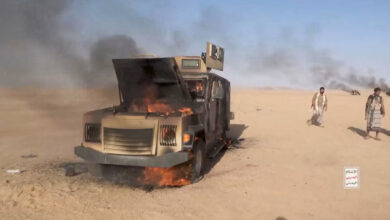
The arc of this six-month conflict has proceeded in four acts. Act One began with intensive airstrikes on February 28 and lasted through six weeks of high-intensity military operations. Act Two began with the April 7 ceasefire and negotiations, culminating with the June 17 MOU signed by Trump and Iran’s president, Masoud Pezeshkian. Act Three began weeks later when Iran chose once again to target commercial ships in the Strait of Hormuz, leading to another tit-for-tat military exchange.

That was the moment calls rose for the US effectively to give up and cede control of the Strait to Iran. The United States appeared to be out of options.
Not so fast.
Since mid-July, the US has reimposed its military blockade on Iranian ports and sanctions on Iran’s oil trade. In parallel, the U.S. military has worked tirelessly to clear shipping lanes and help protect commercial ships transiting the Strait. The result has been an effective blockade on Iranian oil shipments, with global shipments recovering and energy prices remaining remarkably stable. Bloomberg reported this week that oil flows through the Strait have recovered to 2/3 of pre-war levels.
That means pressure is now compounding on Iran, and not the US. And if Iran loses its ability to hold the Strait hostage, its leverage dissipates rapidly.
A better US strategy
Iran entered the war weakened by years of sanctions and economic mismanagement. Its position today is considerably worse.
According to the International Monetary Fund, Iran’s economy is expected to contract by more than 5% this year, with inflation approaching 70%. The value of Iran’s currency has fallen sharply. Prices for basic goods have soared. An Iranian Labor Ministry official recently estimated that more than one million jobs disappeared during the first three months of the war alone.

These statistics matter because Iran’s ability to sustain the conflict ultimately depends on more than its remaining missile arsenal. Before the war, the Iranian regime confronted unprecedented public pressure against its repressive rule and failing economy. Thousands of Iranians were reportedly killed in the streets.
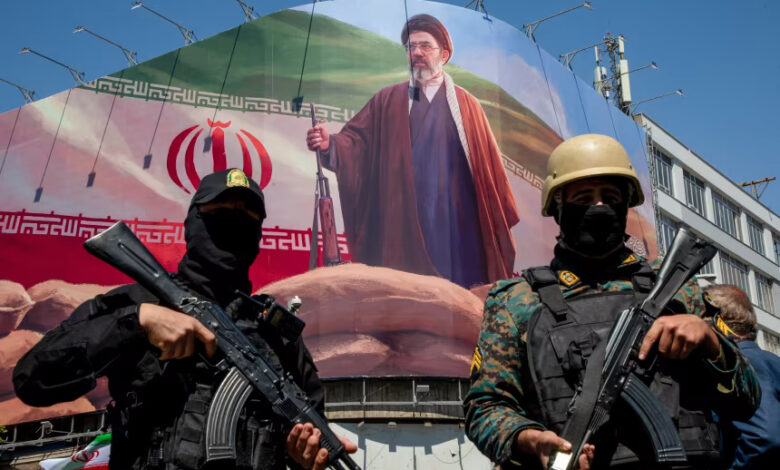
A better American strategy from the start may have been an economic campaign to support the Iranian people demanding change. The first act of the war — removing most of Iran’s leaders — resulted in consolidation by the Revolutionary Guards and further crackdowns against the majority of Iranians that oppose their rule.
But the Guards require resources to rule by force, and this new fourth act — a military embargo — is something that Iran has never confronted before. Indeed, this is the first time since the 1979 Revolution that Iran has faced a quarantine on its economic lifeline through Hormuz.
Their way out is to stop threatening ships in the Strait and abandon what’s left of its mostly destroyed enrichment program. That’s a deal Trump would accept. Doing either, however, from the vantage point of the Guards would show weakness and threaten their rule.
Iran’s cards
Tehran may seek to fight its way out of this noose. Its strategy through the first three acts was clear: threaten commerce in the Strait, raise energy prices globally and gasoline prices in the US, increase global economic pressure and ultimately force Trump to back down, particularly with midterm elections approaching.
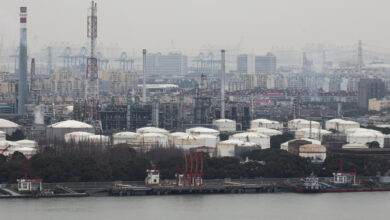
Iran has also targeted the energy infrastructure of the Gulf states and could do so again. Its proxy force in Yemen, the Houthis, have threatened to shut down commerce through the Red Sea with Iranian missiles and drones.

All that would mean resorting to the same tactics from the early acts of the war. Strategically, it has not worked for Iran. The Gulf states are not happy with the war, but most do not support giving in to Iran’s extortionist demands in the Strait. Iran’s attempts to close the Strait with drones and mines are also now — for the first time — failing.
So, I would not discount the risk of an Iranian escalation as the economic pressure builds. But it may not be enough at this stage to reduce that pressure. Trump appears far more committed than Iranian leaders apparently presumed.
Breaking point
Iranian leaders and many Western analysts project immunity to pressure. Iran will never surrender its nuclear program or the Strait of Hormuz. Or its terrorist proxies around the region.
That’s something we all must accept as a fact of life in the Middle East, according to Tehran.

Foreign Minister Abbas Araghchi argued last week that the blockade and sanctions pressure are “bound to fail” just as all other campaigns, he said, had failed to change Iranian policy.
I used to hear the same thing from experts about ISIS, when I was leading the campaign to defeat the group. And Hamas, when negotiating to free the hostages held in Gaza.
In fact, everyone has a breaking point. Iran thought it had found Trump’s. Trump may yet find theirs. It’s too early to call.
Not the last act
This contest in some form may last through the end of Trump’s presidency and beyond. It’s been ongoing for nearly five decades.

The earlier acts in this war were mired from the US side by shifting and ill-defined objectives, widely careening positions, and inconsistent statements.
But Act Four seems different. The US military has a clear objective as outlined this week by the commander of CENTCOM, Admiral Brad Cooper. It is enforcing the blockade on Iran and facilitating the movement of commercial traffic.
The objective for the US should be similarly well-defined. Iran must abandon claims on the Strait and give up the nuclear enrichment program. Until then, this will be the new status quo.
And that status quo — perhaps for the first time since the war began — now favors Washington, not Tehran.