When Jan Angelo Ong traveled to Bangkok three years ago, he expected temples, street food and the familiar rush of traffic and heat. He did not expect to return home with a bag full of Thai sunscreens and skin care products.
The Filipino skincare enthusiast noticed their lightweight, matte finishes stayed on his face under the hot, humid Southeast Asian climate.
Sunscreens made elsewhere can also be lightweight, Ong said, “but if it blends onto your skin a bit shiny, a lot of Filipinos will still consider it as a bit greasy … And I imagine it’s the same with a lot of Southeast Asians, like Singaporeans, Thais, Indonesians, because we experience the same weather,” he said.
Ong is among a growing number of consumers looking beyond the beauty powerhouses of South Korea and Japan, turning their attention to Thai brands. Designed for a demanding climate, Thai beauty products are gaining a reputation for comfort and the longevity to withstand tropical conditions.
It’s not just sunscreens; Thai cosmetics from serums to face lotions are finding favor in the region because their formulas are made to stay on your face, no matter how hot or sweaty it gets.
Laura Tjahjadi, an analyst from market research company Euromonitor International, said that many Thai brands focus on solving the practical problems of living in a tropical climate.
“Thai brands benefit from operating in one of the world’s most demanding beauty environments. Year-round heat, humidity, and high UV exposure mean products must perform under conditions that are also highly relevant across Southeast Asia,” Tjahjadi said. “This has encouraged brands to develop products that prioritize comfort and wearability rather than just technical claims.”
The Thai beauty sector achieved record retail sales of roughly $3.2 billion in 2025, marking a 7% increase over the previous year, according to estimates by Euromonitor.
Redefining Thai beauty
Thailand has a long history of using herbs and oils in wellness treatments and traditional massage. But a new generation of founders is developing products that are rooted in tradition and engineered for tropical life.
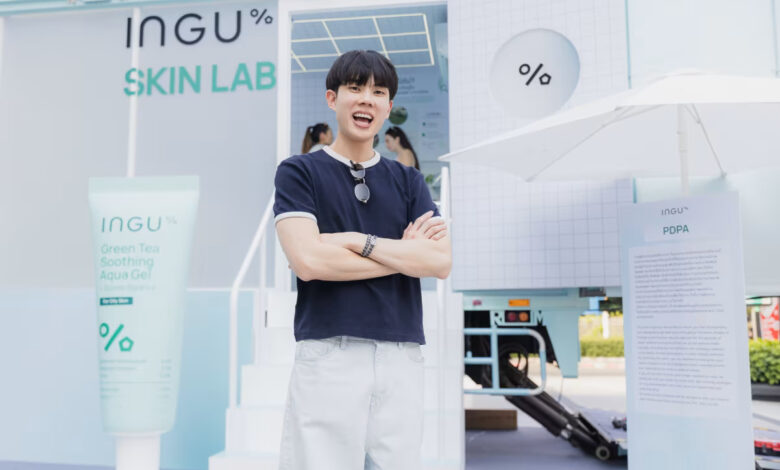
Chayadhorn “Ing” Kitiyadisai, better known online as Ing, has built a following of more than 443,000 people on Instagram while touting Thailand as a testing ground for skin care products. The 29-year-old began making his own beauty products about four years ago, drawing on his family’s business experience in cosmetic sourcing and manufacturing.
“There’s a huge underrepresentation of skin care made by people in the region for people in the region,” Kitiyadisai told CNN, referring to Southeast Asia.

His brand, INGU Skin, has gained a devoted following through social media and in-person pop-up events. Some of the company’s best-selling products incorporate Thai green tea extract and local black rice.
International orders mainly come from Singapore, Malaysia and the Philippines, Kitiyadisai said, while he regularly gets inquiries from consumers and retailers in the US and UK. INGU Skin has partnered with e-commerce retailer YesStyle which makes its products available to 155 countries.
Kitiyadisai said climate change is also expanding the potential market for products designed for heat, humidity and intense sun exposure.
Other brands have drawn from earlier waves of beauty innovation in South Korea and Japan and modified them to create products that better suit Thai people’s needs.
Nui Waritta Suebphanwong, CEO of Thai skincare brand MizuMi, said she began with Japanese formulation technologies for sunscreens when building her brand in 2015, because they were popular at the time.
“We used a lot of their raw materials (and) UV protection technology. But we did do a lot of adaptation in terms of texture to fit Thailand’s climate,” Suebphanwong said.

More than a decade on, Suebphanwong has been asked many times what the “secret sauce” for Thai product formulation really is.
“I would say that I don’t think any single brand has any mysterious ingredients or anything, but for Thai beauty brands, when we develop products, we always keep in mind what Thai people would love to wear over the day,” Suebphanwong said.
While South Korea and Japan had a head start in the beauty market, Southeast Asian brands are luring in customers with products at a cheaper price point.
“There are really good Korean brands too, but they are a bit more expensive usually. The Thai ones are more affordable, and I think the Thai ones are just as good,” Suebphanwong said.
Singapore-based content creator Amelia Alexander, who has almost 80,000 followers, said her videos on TikTok about her favorite Thai beauty products, ranging from sunscreens to hydrating face masks and serums, are some of her most viewed posts on the platform.
“I didn’t expect that, because usually I only do Korean, K-beauty (content), but apparently there is a lot of interest in Thai beauty, so I can see that it might actually be as popular as K-beauty in the near future.”