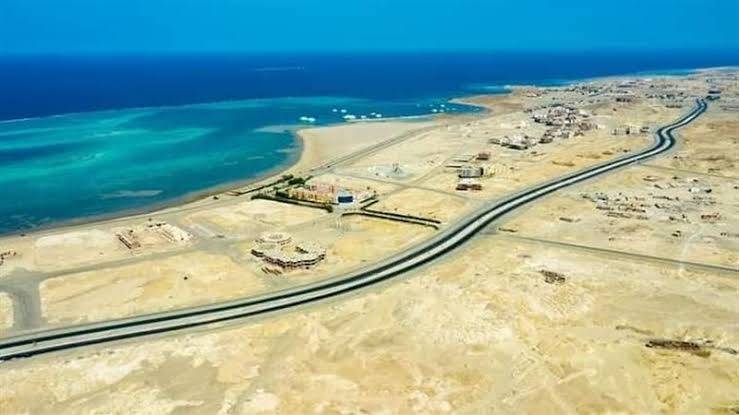
Economist Fakhri al-Fiqi explained that the decision to allocate 112 million square meters of state-owned land in the Red Sea governorate to Finance Ministry for investment purposes does not entail selling the land or transferring its ownership.
During a phone interview with the “Modern MTI” television channel on Friday, Fiqi noted that this allocation is not a new development – it was enacted via a presidential decree as part of the state’s broader strategy to leverage its assets for economic gain.
The decision authorizes the Finance Ministry to grant usufruct rights to the land or to utilize it as an in-kind asset for economic development, he explained.
The proceeds generated would then be directed toward servicing the public debt and reducing its burden, while the state retains the underlying ownership.
Usufruct rights
The economic expert emphasized the necessity of distinguishing between allocating land under a “usufruct” (right-of-use) arrangement and selling land to transfer its ownership.
Fiqi’s remarks came in response to questions regarding whether the government intends to sell state-owned land to generate financial resources to help repay public debt.
He clarified that the announced measure concerns the management and economic utilization of assets through usufruct rights, rather than the relinquishment of ownership.
Egyptian President Abdel Fattah al-Sisi had issued a presidential decree allocating over 112 million square meters of state-owned land in the Red Sea Governorate to Finance Ministry.
The decree was published in the Egyptian Gazette on Wednesday.
This land is to be used for the purpose of reducing public debt and issuing sovereign “Sukuk” (Islamic financial certificates)—a move aimed at leveraging state assets to lower the national debt burden.