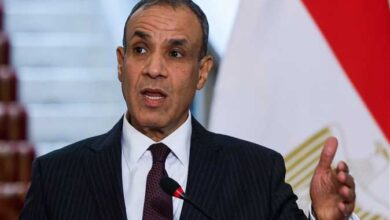
Ambassador Hossam Issa, Egypt’s former envoy to Sudan, stated that the war has entered a “decisive phase” that will fundamentally shape the future of the conflict.
Speaking on the program Aan Orb ma3 Amal al-Hanaawy (Close Up with Amal Al-Hanawy)on Al-Qahera News, Issa explained that Sudan is currently divided between the Sudanese Armed Forces (SAF) and the Rapid Support Forces (RSF).
He noted that the army maintains control over the eastern and northern regions, the Nile corridor, and major urban centers such as Khartoum and Wad Madani, while the RSF controls the Darfur region.
Issa added that the conflict is now concentrated in the Kordofan region, which serves as a strategic buffer between the two forces’ areas of influence. “Whichever side secures Kordofan will seize the initiative,” the Ambassador remarked, “and gain the upper hand in threatening the other’s position.”
The conflict has entered a critical phase following the fall of El Fasher in October 2025, which left the Rapid Support Forces (RSF) in control of nearly all of Darfur. Since then, the momentum has shifted toward the strategic Kordofan region, where intense battles for the Heglig oilfields and key military headquarters are occurring.
The Sudanese Armed Forces (SAF) continue to hold the northern and eastern regions from their administrative base in Port Sudan, but the front lines are increasingly volatile as both sides deploy advanced weaponry, including long-range drones, in a high-stakes struggle for national initiative.
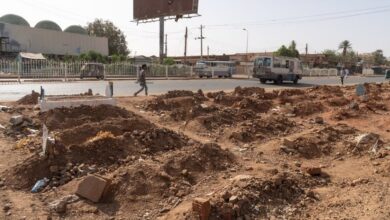
On the humanitarian front, Sudan is now the site of the world’s most severe protection crisis, with over 13 million people displaced and famine confirmed in several areas, including Darfur and parts of Kordofan.
Recent reports from December 2025 detail widespread atrocities, including systematic sexual violence and summary executions, which have drawn urgent condemnation from the UN and the International Criminal Court.
Despite high-level diplomatic efforts by the “Quad” (the US, Egypt, Saudi Arabia, and the UAE) to secure a three-month humanitarian truce, a permanent ceasefire remains elusive as external actors continue to fuel the conflict with arms.