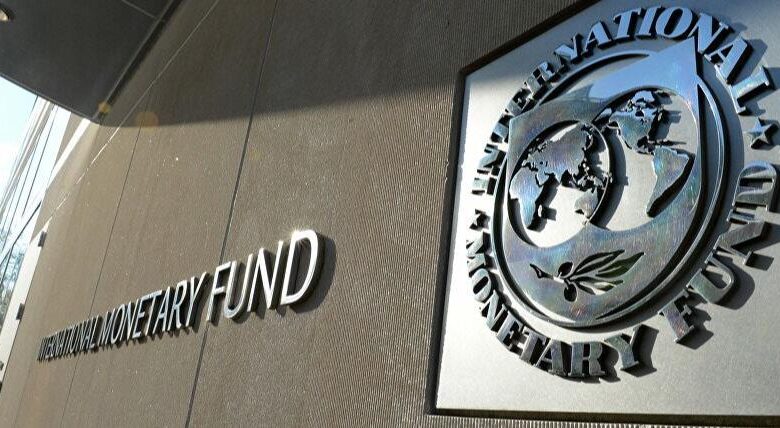
Egyptian economist Mohamed Fouad predicted on Sunday that Egypt’s borrowing from the International Monetary Fund (IMF) will end with the conclusion of its current economic reform program.
During a virtual interview with “al-Hekaya” (the story) program on MBC Masr, Fouad noted that the government has announced that Egypt’s program with the IMF would end by the end of this year.
In response to reports that Egypt needs an additional five billion dollars, Fouad clarified that the IMF is not Egypt’s only recourse for financing.
He pointed out that Egypt requires continuous external financing because it has a significant funding gap.
Fouad explained that the idea of dealing with the IMF is always linked to crises, as the Fund acts like an intensive care unit.
He continued, “Keeping a patient in intensive care is not good, so I believe Egypt’s (borrowing) relationship with the Fund will end with the conclusion of this program.”
Fouad pointed out that the Fund is one source of financing, though it is sometimes different as it finances the budget through structural measures in addition to the exchange rate.
The state has alternatives, he noted, including extending debt maturities and renewing deposits.
Egypt has a diversified financing strategy based on resource recycling, annual commitments, asset sales, investment incentives, and access to financial markets for liquidity, Fouad explained.
He called to reduce external borrowing to a comfortable level, noting that what has happened in this area recently is that while the total debt has not decreased, the debt-to-GDP ratio has declined.
Fouad said that some indicators may show a decrease in the debt-to-GDP ratio due to economic growth, while the total debt itself remains largely unchanged, emphasizing that both could be true depending on the analysis.