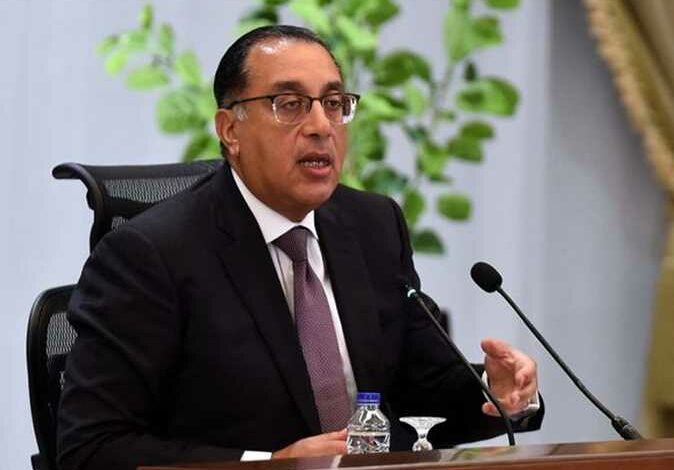
Prime Minister Mostafa Madbouly sent national expectations soaring with his ambitious pledge to slash public debt to levels unprecedented in Egyptian history.
His message was so potent it revived a long-standing narrative regarding the distribution of wealth and the ‘fruits of growth,’ prompting citizens to ask exactly how they might personally share in this newfound prosperity.
By the end of last June, total public debt—both domestic and external—had climbed to nearly LE 15 trillion, with some estimates projecting it to reach LE18 trillion by the close of this year.
However, according to Madbouly’s vision, this figure is set to plummet to just 50 percent of the Gross Domestic Product (GDP).
To put this into perspective, Fitch Solutions estimates Egypt’s GDP at over US$342 billion (approximately LE 16.2 trillion).
The Prime Minister’s words have sparked a wave of hope among a public desperate for economic relief. Yet, this surge of optimism has also triggered a flurry of questions.
While Madbouly sought to inspire confidence, some projections have veered into extreme optimism, with speculations suggesting external debt could drop from $161 billion to as little as $10 or $20 billion.
The announcement has ignited a series of pressing questions:
- How exactly will this be achieved?
- Are we anticipating a debt write-off similar to the 1990s Paris Club agreement following the Gulf War?
- Have we unearthed some hidden treasure within our lands or beneath our territorial waters?
- Or is the strategy to restructure the debt into different formats, effectively shifting the figures from triple digits to double digits?
Crucially, the Prime Minister is referring to the debt-to-GDP ratio—a distinction that may be lost on the average citizen. To the layperson, economic health is measured in simpler terms: ‘What was the number, and what will it become?’
They calculate the impact on the ground, weighing the debt reduction against the daily cost of a basic meal.
Madbouly’s message follows a concentrated effort to promote ‘debt-for-investment’ swaps—a mechanism he championed in his column a couple of weeks ago.
This strategy is now deeply embedded in the government’s broader economic narrative. It posits that the administration can transform debt into a catalyst for growth by breaking the cycle of borrowing and pivoting toward sustainable development and job creation.
Essentially, the goal is to persuade creditor nations and depositors to rechannel their dollar holdings into direct investments within Egyptian projects.
During his press conference, Madbouly extended two pivotal pledges to the public.
First, he offered a definitive assurance that no new financial burdens would be imposed on citizens, promising instead that reforms would focus on enhancing the investment climate rather than tapping into people’s pockets.
His second vow suggested that the populace would soon witness a tangible improvement in essential services—insinuating that the Hayah Karima (Decent Life) initiative is no longer a mere state project, but a standard defining the daily lives of all Egyptians.
It is certainly not our intention to stifle the seeds of hope sown by the Prime Minister. However, a sense of duty compels us to remember that stirring the national psyche is no small feat. Such rhetoric can generate a powerful momentum for the future; yet, conversely, it can foster an equal measure of disillusionment should these promises prove hollow or fall short of expectations.
No official can afford to dispense the ‘narcotic of empty promises,’ nor manufacture an artificial sense of optimism without a solid foundation.
Every citizen wishes for their nation to move forward—after all, we are all in the same boat, weathering the same hardships, and sharing a profound love for this land.
But by the same token, the public has little patience for deception and will quickly withdraw their confidence from those who mislead them.
We demand that the announcement of Madbouly’s ‘economic bombshell’ be grounded in a reality that directly touches the lives of the people. My hope is that this is not merely an exercise in ‘creative accounting’—wiping debt off the ledgers while leaving it as a heavy yoke around the necks of future generations.
We do not need a smoke screen; we need a burst of light that brings genuine relief to a public that has long endured the redistribution of hardship and now yearns for the equitable distribution of wealth.
Furthermore, we must avoid replicating the ‘illegal migration’ model within our economy—taking reckless, unregulated risks to reach the opposite shore without documentation or a clear vision for the future. We cannot simply look to the heavens for a miracle while failing to take the necessary practical steps, thereby undermining our own right to a dignified life.
We await the upcoming conference, and we shall be the first to celebrate if it delivers tangible relief rather than just another empty narrative.
Author’s bio:
Alaa Al-Ghadrify has been the Editor-in-Chief of the Al-Masry Al-Youm newspaper since October 2023, and the Executive Editor-in-Chief at ONA Media Group since 2016.
He is also an opinion writer in Al-Watan newspaper and Masrawy website, and an advisor at the Egypt Media Forum.
He further serves as a lecturer in television journalism and in-depth journalism for postgraduate studies at the Faculty of Mass Communication at Cairo University.
He worked as Editor-in-Chief of CBC Extra channel, which he founded, as former Managing-Editor of Al Watan newspaper, and former Executive Editor-in-Chief of its website.
He also co-founded the Al-Masry Al-Youm newspaper, the Al Watan newspaper, and the Al Ashera Masaan program on Dream TV channel, and was the Head of Program Editing at Alhurra channel.