About 1.2 million Russian troops have been killed, wounded or are missing since its invasion of Ukraine almost four years ago, a rate of casualties for a major military power not seen since World War II, a new report from a prominent international think tank says.
And the enormous human toll has secured relatively small territorial gains on the battlefield, with Russia increasing the amount of Ukrainian land under its control by just 12% since 2022, the report from Center for Strategic and International Studies (CSIS) says.
The report calls into question assumptions in many circles, including in the White House, that a Russian victory in Ukraine is inevitable and incoming.
“Russia has the upper hand,” US President Donald Trump said in an interview with Politico last month.
“They’re much bigger. They’re much stronger… At some point, size will win,” Trump said.
But the CSIS report says Ukraine retains a significant advantage as the defensive side on the battlefield.

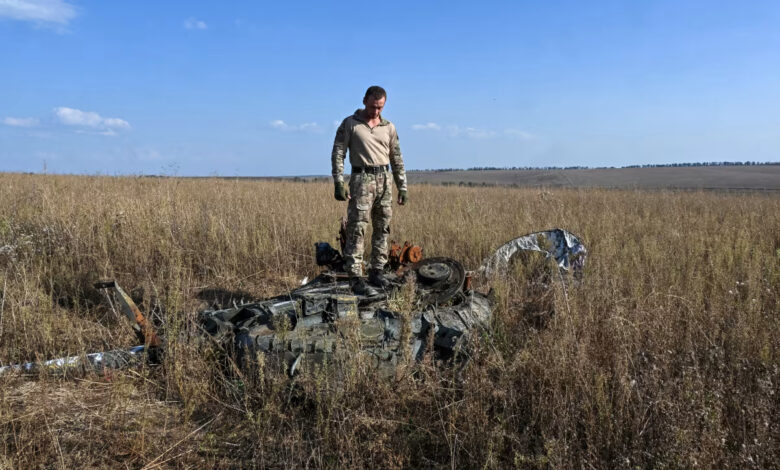
Kyiv’s “defense-in-depth” strategy – using trenches, anti-tank obstacles, mines and other barriers along with drones and artillery have stymied Russia’s attempt for any meaningful gains, the report says. Meanwhile, battlefield casualties favor Ukraine by a 2.5- or 2-to-1 ratio.
Russia and Ukraine do not release detailed figures for their combat casualties.
Ukrainian casualty tolls are about 500,000 to 600,000 killed – compared to Russia’s 1.2 million – wounded and missing, according to the report.
Russia has had between 275,000 and 325,000 battlefield deaths, compared to Ukraine’s 100,000 to 140,000, according to the report.
“The data suggests that Russia is hardly winning,” the authors write.
Historic combat losses
Compared to conflicts involving major powers since World War II, Moscow’s losses are staggering.
The United States lost around 57,000 troops in the Korean War and 47,000 during the Vietnam War. Russia’s losses in Ukraine are five times higher than its total losses from all Russian and Soviet wars since World War II combined, including the Afghanistan war and two Chechen wars, the report says.
NATO Secretary-General Mark Rutte told the World Economic Forum in Switzerland earlier this month that Moscow lost 1,000 troops a day in December.
“Not seriously wounded, dead,” he said.
“In the 1980s in Afghanistan, the Soviets lost 20,000 in 10 years. Now they lose 30,000 in one month,” Rutte said.
New troops are becoming increasingly hard to find, foreign analysts say.
“Russian military losses, of those killed and wounded, now exceed sustainable recruitment and replacement rates,” James Ford, Britain’s deputy ambassador to the Organization for Security and Cooperation in Europe said in a speech last week.

Russian President Vladimir Putin has relatively little to show for the hundreds of thousands who have died since he ordered the invasion of Ukraine in February 2022.
In the past two years, Russian territorial gains in some areas can be measured in just yards per day, well under half a football field, the CSIS report says.
Russia daily battlefield gains – 16 yards a day in Chasiv Yar, 25 yards a day in Kupiansk, 76 yards a day in Pokrovsk – are less than what was seen by Allied troops during the infamous Battle of the Somme in World War I, a five-month campaign in 1916 that saw a British-French force gain fewer than 90 yards a day against German defenders.
In the past two years, “Russian forces have gained less than 1.5 percent of Ukrainian territory,” the report says.
Economic drag
At home, the toll of the Ukraine war has effectively removed Russia from the ranks of the world’s economic powers, according to the report.
“Russia is becoming a second- or third-rate economic power,” it says, citing declining manufacturing, weak consumer demand, high inflation and a shortage of labor that led to economic growth of only 0.6% in 2025.
The war is burdening the not only the current Russian economy but its future prospects, the report says.
“While such items as ammunition, uniforms, and fortifications contribute to GDP, they do not improve long-term welfare or capital formation,” it says.
And Moscow has fallen behind in high-tech, with not one Russian company among the world’s top 100 technology companies.
In a Stanford University ranking of top artificial intelligence countries, Russia is 28th out of 36 countries, behind countries like Spain, Saudi Arabia and Malaysia.
Despite the pessimistic outlook the report paints for Russia, Putin is unlikely to settle for a peace deal without further Western pressure on his regime, it says.
“The United States and Europe have failed to fully wield the economic or military cudgels. Without greater pain, Putin will drag the talks out and keep fighting — even if it means millions of Russian and Ukrainian casualties,” it concludes.