President Donald Trump had the economic wind at his back at the start of the year: falling mortgage rates, relatively low inflation and cheap oil and gas.
His war with Iran threatens to undermine all of that.
The Middle East conflict could inflict deep and far-reaching economic pain on Americans – particularly if the war persists. That’s a scary thought for the millions struggling with the high cost of living, and it could present a significant political liability for Trump and Republicans in this year’s midterm elections.
No one knows how long this war will last. If the United States ends its conflict sooner rather than later, the skyrocketing oil and gas prices of the past week could quickly reverse themselves, and we could remember this period as a blip.
But Trump on Friday said that the United States wouldn’t end the war until Iran surrenders unconditionally. And oil tankers aren’t eager to resume shipments in the region as long as Iran threatens to set boats ablaze.
Energy prices are surging at a precarious time: The worse-than-expected jobs report Friday renewed fears that a prolonged labor market standstill could tip over into widespread job losses if uncertainty about the economy grows further.
And if inflation picks up more speed, the US economy could face a toxic combination of rising prices and rising unemployment, which would be difficult for the Federal Reserve to solve.
That could entrench the No. 1 issue (and the biggest complaint) in voters’ minds: the economy’s lack of affordability.
Gas prices
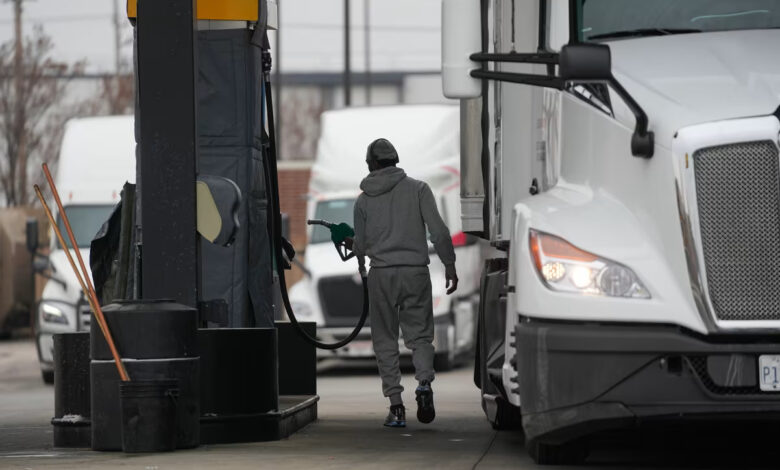
Americans have been fed up with the high cost of living, but one saving grace has been that gas prices have stayed relatively low.
Trump told Reuters Thursday he wasn’t worried about rising gas prices, which have surged 34 cents a gallon over the past week to the highest price of either of his presidential terms: “If they rise, they rise,” he said.

But gas prices are one of the best-known and most widely advertised costs – plastered all over town in giant numbers on gas stations, and drivers fill up about once a week, on average. Higher gas prices could have an outsized effect on Americans’ perceptions about their finances.
Low gas prices have helped keep inflation in check over the past year. If gas prices continue to surge, overall inflation could speed up.
“It’s one thing if you go from $3 to $3.25” a gallon for gas, said Mark Zandi, chief economist at Moody’s Analytics. “But if you go from $3 to $4, then that undermines confidence completely.”
“Americans are on high alert when it comes to anything related to the cost of living,” he added.
Inflation
Consumer prices rose just 2.4% in January from a year ago – an eight-month low. And with price hikes from tariffs expected to be done this year, economists anticipated inflation as a whole to ease off in 2026.
But dramatically higher fuel prices could change that. Higher jet fuel prices could push airline tickets higher. Rising transportation costs could do the same for grocery prices. And if high prices persist for months, petroleum-based products like plastics could become more expensive, spilling over across the economy for a long time.

That’s why inflation could snap back to 3% this year if the war drags on and oil prices keep rising, Goldman Sachs economists told clients this week. Goldman had predicted inflation would ease to 2% by the end of the year.
Higher prices could hurt consumer spending, which accounts for more than two-thirds of the US economy. Even before the war, growth already dropped off in the fourth quarter, and retail sales fell in January by the largest amount since May 2025.
“The impact on inflation becomes even greater the higher the prices go; and the damage to the real economy – to growth – will also be magnified,” Zandi said. “There’s no upside. There’s just nothing but downside here for the US economy.”
Housing
Home buyers breathed a sigh of relief in the last week of February: Mortgage rates fell below 6% for the first time since 2022, potentially helping millions of would-be homeowners waiting on the sidelines for an affordable place to live.
Mortgage rates had fallen steadily over the past nine months.
with a big assist from the Fed’s three interest rate cuts last year.
But investors are now demanding higher Treasury yields over fears of economic damage from the war. Mortgage rates, which are closely tied to the benchmark 10-year US Treasury yield, rose last week too, back over 6%.
The ability to achieve the American Dream is crucial to folks’ perception of affordability. The US appeared to be on the cusp of a breakthrough. A prolonged war with Iran could freeze the housing market again.
Duration is key

The key – but unknowable – question remains: How long will this war last?
The conflict has effectively halted the flow of Middle Eastern oil through the critical Strait of Hormuz, and oil producers have run out of places to store their crude. That’s led to a drop in oil production, driving prices even higher.
Every sustained $10-per-barrel increase could cost an average US household close to an extra $450 each year, according to Zandi.
The key part is “sustained.” The Trump administration insists it has a plan in the works to free up oil flows in the Strait soon, and it expects oil and gas prices to fall again. The market remains skeptical – US oil topped $100 a barrel Sunday for the first time since July 2022.
“So it could be that within a couple of weeks, we’re not talking about this anymore – that oil prices have fallen back down, volatility has eased, and that this is just a bad memory,” said Gregory Daco, chief economist at EY-Parthenon. “It could also be the case that we are still here in a few months’ time, with oil prices trading over $100 per barrel and yields being notably higher and inflation being significantly higher.”
If that happens, he added, “we will be talking about job cuts and potential recessionary conditions.”