“The United States imports almost no oil through the Hormuz Strait and won’t be taking any in the future. We don’t need it. We haven’t needed it and we don’t need it.”
That was President Donald Trump last Wednesday during his primetime address from the White House.
“Open the Fuckin’ Strait, you crazy bastards, or you’ll be living in Hell – JUST WATCH!”
That was Trump Sunday in a Truth Social post.
What changed?
Well, the price of oil, for one thing.
US oil surged more than 11% on Thursday, the day after his speech, to settle above $111 a barrel – its highest price in four years and one of the biggest single-day gains in history. West Texas crude had traded around $100 a barrel just before Trump’s speech and less than $70 a barrel before the war started.
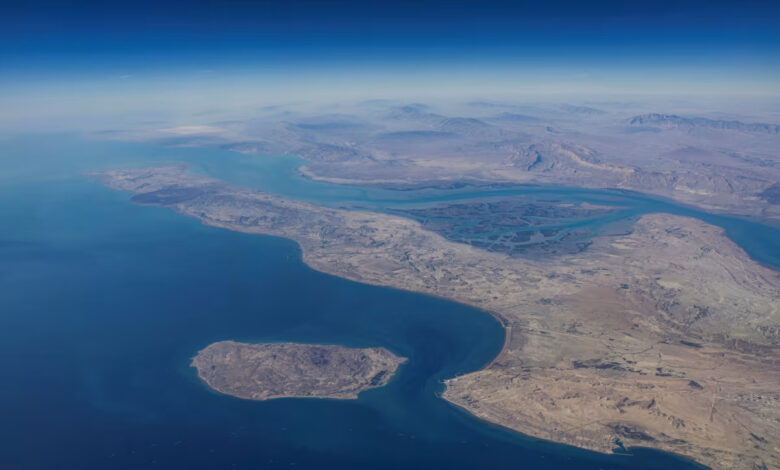
Trump is correct that the United States relies very little on Middle Eastern oil delivered through the Strait of Hormuz – the narrow waterway through which 20% of the world’s oil typically travels. America gets only about half a million of the 20 million barrels of crude it consumes each day from the strait – a very low amount that it could substitute with oil from other locations.
But Trump’s latest four-letter-word-laden threat underscores the stark truth of the matter: The health of the US economy depends on the Strait of Hormuz much more than the president has admitted.
Supply and demand
The United States has done remarkable work over the past decade and a half reshaping its energy industry, thanks to the advent of hydraulic fracking and horizontal drilling, particularly in Texas’ Permian Basin. America now produces around 22 million barrels of oil a day, double No. 2 Saudi Arabia’s output and slightly more crude than the United States consumes each day.
America is energy independent. Sort of.
The United States still imports more than 6 million barrels of crude a day – around a third of what it consumes. It also exports around 4 million barrels of oil each day.

That’s because not all oil is created equal: America produces light, sweet crude, which is great for making gasoline but lousy for heating fuel, asphalt and diesel, among other heavier distillates. So the United States needs to import oil from places that produce heavy, sour crude – including Venezuela and the Middle East.
Also, the oil market is global. When supply declines in one region, it affects all locations. During supply crunches like this one, oil importers compete for any available barrels, driving the price higher for whomever wants or needs them them the most, noted Dan Pickering, founder and chief investment officer at Pickering Energy Partners.
So the United States has been and probably will continue to be well-supplied with oil during the Iran war. That’s not the big problem. The concern is America isn’t insulated from the global oil market’s price shock.
The energy economy
High energy prices are an obvious consequence of America’s war and Iran’s effective closure of the Strait of Hormuz. Crude prices remained high Monday after Trump’s threat to take out Iran’s power plants and bridges. And US gas prices have risen to $4.11 a gallon on average.
Those high crude and gas prices are already taking a toll on the US economy. Many middle- and lower-income Americans who were already weary of high prices are struggling with high prices at the pump, and some small businesses that are unable to raise prices any further are making difficult choices about staffing.
The bigger concern will come if high prices destroy demand for gasoline and oil. Prices may come down as a result, but if oil and gas are too expensive for Americans to afford to fill their cars and fly on a plane, that could create significant problems for the economy.
Bringing down a $30 trillion economy down isn’t easy. Even though eight of the past nine recessions were preceded by an oil price shock, the war is only just over five weeks old, and it may need to last for months longer to inflict recession-level damage on the US economy.

Wall Street analysts estimate every $10 increase in a barrel of oil shaves between 0.1 and 0.4 percentage points off gross domestic product, the broadest measure of the US economy. So the current $40 increase in oil could take around a percentage point off GDP – nothing to sneeze at, but not enough to make a serious dent.
But that could get much worse in a hurry if prices rise sharply. And oil isn’t the only factor: Everything delivered on a truck will get more expensive because diesel prices are surging. And a number of other imports through the strait, including aluminum, helium and fertilizer, among other goods, will raise prices for building materials, microchips and food.
Annual consumer inflation for March is expected to surge to around 3.5%, completely wiping out last year’s average paycheck gain for American workers.
“The US economy can absorb the shock for a period of time caused by oil over $100 dollars per barrel,” said Joe Brusuelas, chief economist at RSM US. “Now, if that turns into $150 per barrel or $200 per barrel that is a different matter.”
The Strait truth
That could be a significant factor in Trump’s renewed alarm over the Strait of Hormuz.
Trump has spoken out of both sides of his mouth on the strait since the start of the war. His administration has pledged naval escorts for oil tankers to navigate the strait and has guaranteed insurance for ships that lost their coverage from maritime insurers.
He has also said that oil tankers should display courage and navigate the waterway, and countries that rely more heavily on Middle Eastern oil should help to reopen the strait on their own.
“Go get your own oil!” Trump posted on Truth Social Tuesday.
Trump’s changing rhetoric from day to day has sent oil prices jumping or diving, but oil has risen overall as it becomes clearer that Iran holds the cards in the strait – and American exit from the war may not reopen the crucial waterway to oil tanker traffic.
Traders grew concerned late last week that Trump has failed to provide an exit strategy from America’s war with Iran, and they feared that his threats of escalation could inflict more damage on crude supply.
Iran, meanwhile, has said it would charge tolls for safe passage through the strait – a fee many Gulf countries will probably refuse to pay. Even a partially opened strait would leave the world short by between 4.4 million and 8 million barrels per day, according to Citi global energy strategist Anthony Yuen.
Trump set a Tuesday 8 pm ET deadline for Iran to reopen the strait. It’s not clear what Iran’s response will be. Or how – or whether – the United States could persuade Iran to reopen it.