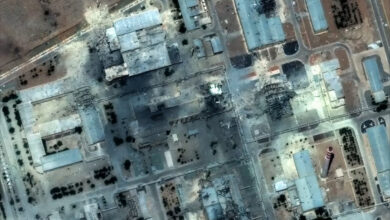
Venezuelan President Nicolás Maduro has been captured and flown out of the country following a large-scale US strike on Caracas, leaving behind uncertainty for the country — and its massive oil reserves.
The Trump administration just struck a country with more oil than Iraq. Venezuela is sitting on a massive 303 billion barrels worth of crude — about a fifth of the world’s global reserves, according to the US Energy Information Administration. That trove of crude will play a central role in the country’s future.
Oil futures don’t trade on the weekend, so the near-term impact on the price of oil is a bit of a guessing game and quite dependent on how the next couple of days shake out. Maduro’s socialist government has been unfriendly to the global oil industry and allowed its infrastructure to crumble. It’s unclear in the immediate aftermath of the strike what the political future of Venezuela holds — and whether the next government will keep a tight grip on its dilapidated oil industry or unlock its potential with a friendlier stance to the international market.
“For oil, this has the potential for a historic event,” said Phil Flynn, senior market analyst at the Price Futures Group. “The Maduro regime and Hugo Chavez basically ransacked the Venezuelan oil industry.”
US Secretary of State Marco Rubio said the US action in Venezuela has ended after Maduro was captured. Venezuelan Vice President Delcy Rodríguez is a member of the socialist regime that took control of the country in 1999, and if she assumes power, little may change in the near term.
But Maduro’s removal opens the possibility of a power vacuum, which could put the future of Venezuelan politics in doubt. The United States recognizes the exiled Edmundo Gonzalez as the rightful president of Venezuela, supported by 2025 Nobel Peace Prize recipient María Corina Machado.
“The next 24 to 48 hours will be huge,” Flynn said. “If we see signs that the Venezuelan military supports the opposition, that’ll be a big win for global markets. On the flipside, if there’s a sense this will lead to further conflict or a civil war in Venezuela, we’ll get the opposite reaction.”
Control of Venezuela’s oil trove
Venezuela is home to the largest proven oil reserve on Earth, but its potential far outweighs its actual output: Venezuela produces only about 1 million barrels of oil per day — about 0.8% of global crude production.
That’s less than half of what it produced before Maduro took control of the country in 2013 and less than a third of the 3.5 million barrels it was pumping before the Socialist regime took over.
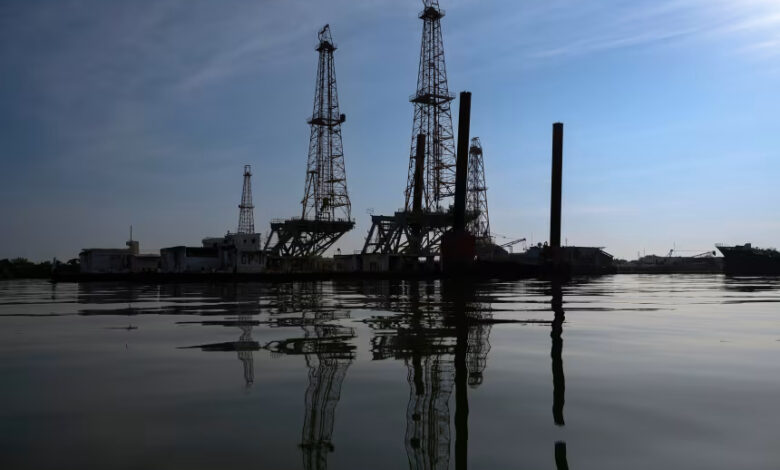
International sanctions on the Venezuelan government and a deep economic crisis contributed to the decline of the country’s oil industry — but so did a lack of investment and maintenance, according to the EIA. Venezuela’s energy infrastructure is deteriorating, and its capacity to produce oil has been greatly diminished over the years.
That’s why, even if Venezuela’s oil supply is completely cut off from the rest of the world in the aftermath of the US strikes, oil prices — and their derivatives like gasoline — probably won’t surge out of control. The country just doesn’t produce enough oil to make that big a difference.
Oil prices have been in check this year because of oversupply fears. OPEC has ramped up production, but demand has fallen off a bit as the global economy continues to struggle with inflation and affordability after the post-pandemic price shock.
US oil briefly rose above $60 a barrel when the Trump administration began seizing oil from Venezuelan vessels, but it has since fallen to $57 a barrel again. So the market’s reaction — if investors believe the strike is bad news for oil supply — will almost certainly be muted.
“Psychologically it might give it a bit of a boost, but Venezuela has oil that can be easily replaced by a combination of global producers,” Flynn said.
Venezuela’s oil potential
The kind of oil Venezuela is sitting on — heavy, sour crude — requires special equipment and a high level of technical prowess to produce. International oil companies have the capability to extract and refine it, but they’ve been restricted from doing business in the country.
The United States, the world’s largest oil producer, has light, sweet crude, which is good for making gasoline but not much else. Heavy, sour crude like the oil from Venezuela is crucial for certain products made in the refining process, including diesel, asphalt and fuels for factories and other heavy equipment. Diesel is in tight supply around the world — in large part because of sanctions on Venezuelan oil.
Unlocking Venezuelan oil could be particularly beneficial to the United States: Venezuela is nearby and its oil is relatively cheap — a result of its sticky, sludgy texture that requires significant refining. Most US refineries were constructed to process Venezuela’s heavy oil, and they’re significantly more efficient when they’re using Venezuelan oil compared to American oil, according to Flynn.
“If indeed this continues to go smoothly — and it looks like a masterful operation so far — and US companies are allowed to go back and rebuild the Venezuelan oil industry, it could be a game-changer for the global oil market,” Flynn said.