At least 18 migrants have died while attempting to reach the city of Ceuta, where Spain deployed military forces after thousands of people crossed the border with Morocco and streamed into the small Spanish enclave.
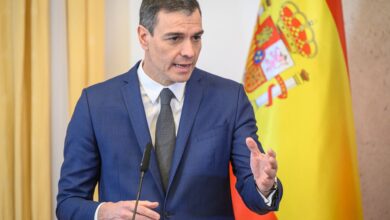
Spanish Prime Minister Pedro Sánchez is expected to join Interior Minister Fernando Grande-Marlaska on a visit to Ceuta on Friday, as Rachid Sbihi—who heads a local association representing Civil Guard officers—described the situation as a “serious humanitarian crisis.”
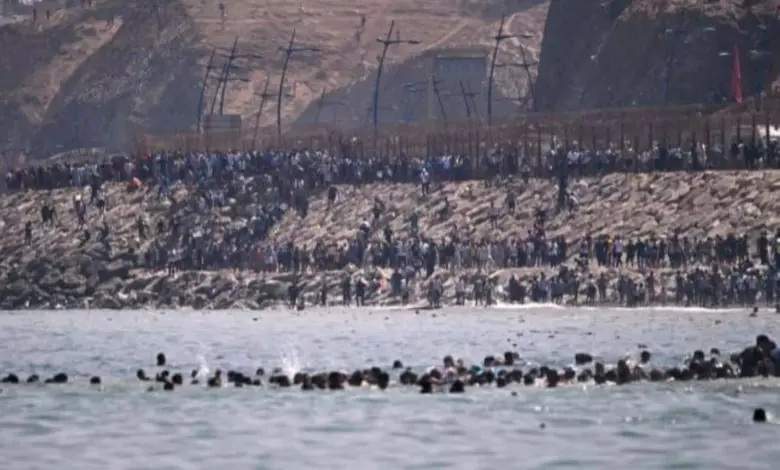
“People are still coming in; the reinforcements that arrived are tasked solely with assisting the injured and supporting other humanitarian efforts,” Sbihi said, adding that “thousands of migrants—including unaccompanied children—have been left homeless, sleeping in parks and on sidewalks, while others wander the streets aimlessly,” characterizing the situation as “chaotic.” Sbihi clarified that many of the 18 victims drowned, while others were killed in stampedes while trying to cross the fence extending along the breakwater at Tarajal beach.
On Thursday, video footage showed crowds of people—the majority of them Moroccans—walking from the breakwater area at Tarajal beach toward local roads. Although most appeared to be young men, the crowds also included families accompanied by women and small children.
Some chanted “Viva España!” in front of a freelance photographer working for the Associated Press (AP), who observed crowds gathered on the Moroccan side of the border attempting to cross into Ceuta, as well as other individuals walking from Ceuta back toward Morocco in an attempt to return.
It remains unclear what prompted such a large number of migrants to cross into Ceuta, and Moroccan authorities have not issued any public statement regarding these crossings, nor has the Moroccan Ministry of the Interior responded to requests for comment.
Although the arrival numbers had been on the rise, the underlying reasons remain unclear.
This escalation at the border between Spain and Morocco follows a massive influx of migrants—most of whom attempted to reach the small Spanish enclave by swimming—on Wednesday.
Authorities in Ceuta had previously attributed this surge in numbers to a ruling issued by the Spanish Supreme Court earlier this month, which prevents authorities from immediately deporting migrants arriving by sea without following due legal process. This ruling does not apply to migrants who enter Spain by land, including those who scale the border fence; however, some activists in Morocco doubted that this judicial decision was the primary driver behind the wave, asserting that most migrants were unaware of such legal rulings.
The repercussions of this chaos extended to Italy, another major destination for migrants. Prime Minister Giorgia Meloni threatened to suspend the Schengen Agreement (which allows free movement across open borders) with Spain in order to defend her country’s borders and ensure public safety, despite Italy not sharing a land border with Spain.
Spain serves as a primary entry point for migrants arriving in Europe, whether they are seeking better economic opportunities or fleeing violence in their home countries. To reach the city of Ceuta on the North African coast, migrants often swim from the Moroccan town of Fnideq, covering about 3 miles (5 kilometers) to reach Spanish territory, while others attempt to cross from the nearby town of Belyounech, where the distance is shorter.