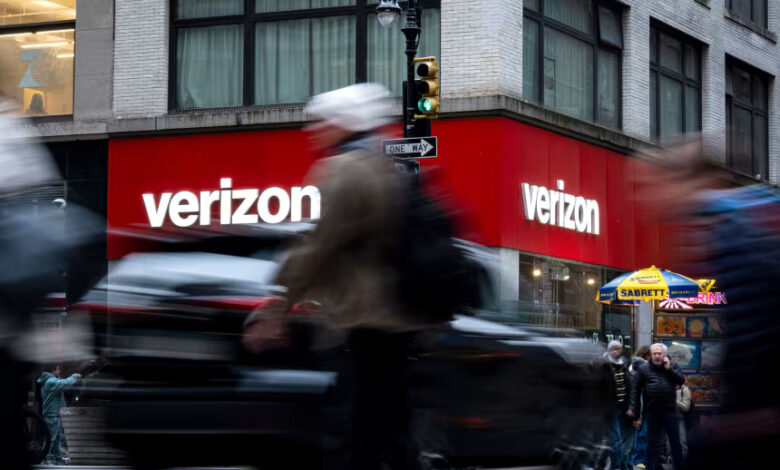
Tess Coward, a 27-year-old PR professional based in New York City, woke up feeling under the weather on Wednesday. But without the ability to make phone calls or receive text messages, she couldn’t get in touch with her doctor or log into the provider’s patient portal.
Coward is one of thousands left without cell service on Wednesday when a major Verizon outage prevented customers who were on the go from texting, accessing the internet or placing phone calls across the United States. The inconveniences extended beyond missed calls and texts; some Verizon customers had trouble finding directions and managing deliveries without cell service. The problem lasted for hours and was resolved shortly before 10:30 p.m. Eastern Wednesday evening.
Verizon has not yet revealed the cause behind the outage, but it said on Thursday morning that it will credit customers $20.
The disruption was yet another sign of how vulnerable American society is to Internet outages, coming after a massive Amazon Web Services issue took down large swaths of the web in October. In February 2024, AT&T’s network went down for nearly an entire day.
Coward said she was unable to contact her doctor until Thursday morning,
“If I needed anything in that moment, I couldn’t get it,” she told CNN in an interview. “And I know that’s how a lot of people felt.”
Getting through the day without cell service
Health care systems will typically send a text message with a code to patients to verify their identity when logging in. But Coward couldn’t receive those messages because she was impacted by the outage.
Coward said her feelings grew from physically unwell to anxious.
“I feel like people are feeling it emotionally a lot more than I think Verizon would care to notice,” she said.
Her experience echoes others shared on social media feeds, which were littered with stories from frustrated subscribers who couldn’t find their way without Google Maps.
That nearly happened to Omar Hassan. The 30-year-old Brooklyn-based product designer had plans to meet friends for dinner but was worried about finding the restaurant without cell service. So he downloaded maps over his home’s Wi-Fi before leaving.
“I didn’t want Verizon be the reason I’m not meeting my friends,” he said.
Network outages can be particularly frustrating for gig-economy workers, including Uber drivers and DoorDashers, who rely on working cell signals for their livelihoods.
It can also be a hassle for those waiting for deliveries, especially when expecting an expensive product.
Matt Crowe, a 32-year-old software engineer in Hoboken, New Jersey, was working from home to wait for a new television when he lost cell service. He was expecting a phone call when the delivery arrived, but because of the outage it never came.
A text eventually came through.
“They had been waiting outside my building for like, 20 minutes or so, and were not very pleased with me,” he said.
New York City Emergency Management said on Wednesday that it was monitoring the situation and coordinating with utility providers and other partners to “asses any potential effects on city agencies & essential services.”
Verizon has not revealed how many consumers were impacted. But Downdetector, a website that aggregates and analyzes user-submitted outage reports at major online services, said more than 178,000 reports were filed within a 15-minute window at the outage’s peak. It also said it received 1 million issue reports within a 24-hour period.
Why these outages keep happening
Verizon hasn’t said why the service disruption occurred. But software issues can sometimes cause outages like these, according to Susan Welsh de Grimaldo, a Gartner analyst covering the communications industry. Networks have become increasingly reliant on software, which she says can present some “points of weakness and challenges.”
While updates can improve the network and consumer experience, they also mean “more frequent configuration changes” and updates, some of which are automated, she said.
A software issue temporarily disrupted service for AT&T consumers in 2024, for example. And the AWS disruption from October came down to a bug that occurred when two automated systems tried to update the same data simultaneously during an update.
“And so, if just some small thing is off, it can cause an issue, and it can trigger through the system in multiple locations,” she said, adding that there are often outages consumers don’t notice because they’re addressed early enough.
For Coward, Wednesday’s outage isn’t enough to motivate her to switch carriers. But another one might.
“In today’s age, you rely so much on your phone without even realizing,” she said. “It’s hard to think that might not always be a possibility.”
This story has been updated with additional information.