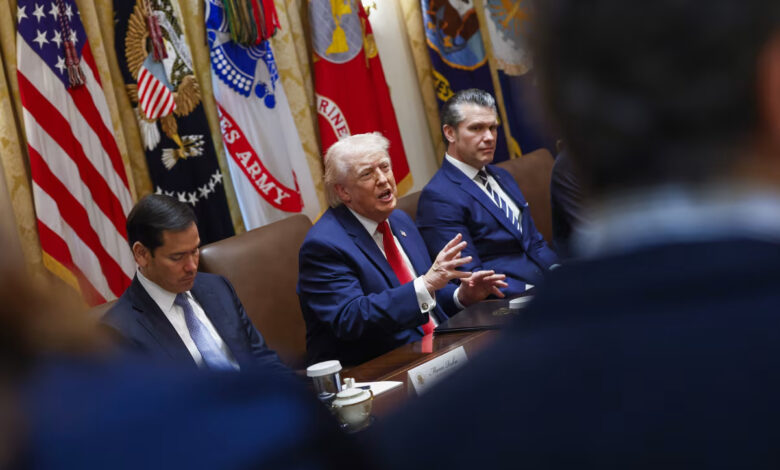
Strip away the bombast and superlatives. Let the apocalyptic, threat-laden deadlines slide. The dynamics of President Donald Trump’s war on Iran suggest it is likely to end with a whimper not a bang.
Trump has stumbled into the trap of many presidents before him: the illusion of a swiftly executed military operation, bringing enduring political change. But war and peace is never that binary. And as Trump gives his negotiators more time to make headway, the stage is increasingly set for the vague greyness that usually ends conflicts, to limp this one to a close: talks.
Wartime leaders tend to speak in absolutes, and Trump has been keen to exude many. But his most grandiose ambitions for Iran will likely stay out of reach. He cannot guarantee Iran will never have a nuclear weapon – just heavily degrade and delay their chances of doing so. Similarly, he cannot permanently alter an Iranian missile program that was rebuilt quickly after the damage of Israel’s 12-day war last year.
Likewise, Iran will not get the guarantee it seeks of all hostilities ending, forever, and its desire for reparations seems remote outside of possible sanctions relief.
And Israel will not be able to “disarm” Hezbollah – its spoken goal at the start of the conflict, but elusive for decades, as the group remains a stubbornly resilient political and military force in Lebanon. Indeed, Prime Minister Benjamin Netanyahu said Wednesday the goal was to “fundamentally change” the situation in Lebanon – an arguably reduced aim. The conflict between Israel and Hezbollah never truly stopped, and may continue to- perhaps at a lower ebb, with Lebanese lands occupied as leverage – regardless of Trump’s war in Iran.
As Trump’s deadline for a deal vaults over this weekend into the next, unsettled stock markets close, and reports of new, madcap US military options proliferate, the Middle East is still dealing with the same set of problems it had when the war began.
Iran’s brutal regime retains a solid grip in Tehran, in Iraq through proxies, and in Lebanese society through Hezbollah. Little violence has been able to dislodge Iran as – to some Shia – a sponsor or protector of sorts.
It is a role Iran loses through political and economic change, not through 2000 lb. bombs and targeted assassinations.

In Lebanon, a shift in dynamics has occurred, where the Lebanese government now openly shares – in terminology at least – Israel’s goal of “disarming” Hezbollah. But they lack the means, and the Iranian backed militants retain the very “monopoly of force” the government seeks to take from them. It is much easier to declare a policy than enact it.
Trump’s diplomatic approach is chaotic and relies on forging a reality that may – or may not – actually gain traction with the facts on the ground. But the current leadership vacuum inside Tehran helps. Iran does not speak with a singular public voice, allowing Trump to try and speak for it.
Iranian state media seemed to reject a reported US 15-point proposal, that the White House later added was not entirely accurate. Given we do not publicly know what the United States’ true red lines or demands are, or what Iran is willing to concede privately, Trump can pluck ideas from the ether and construct a diplomatic triumph of his own liking.
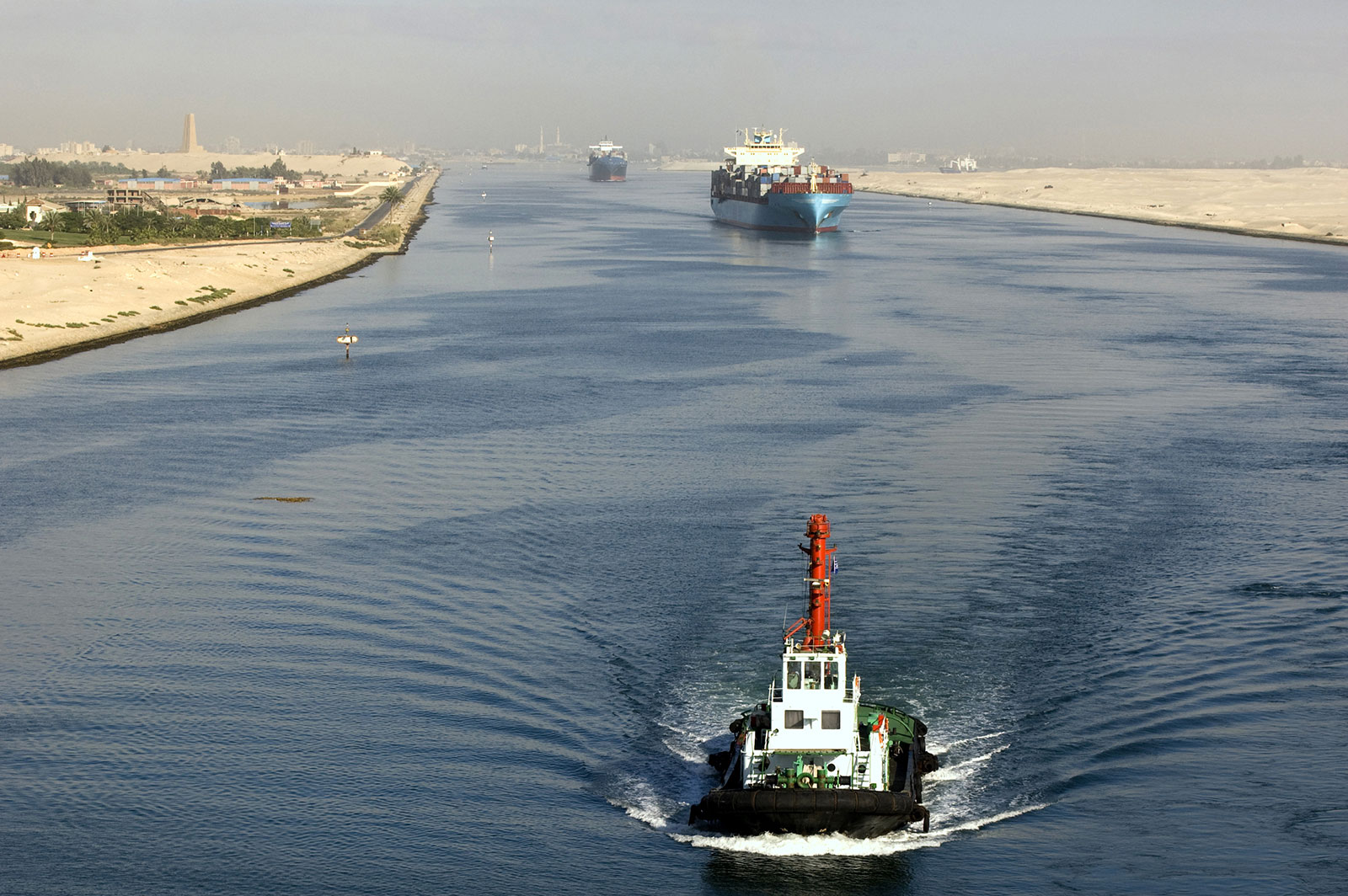
Provided the violence ebbs in some form, energy markets calm, and the Strait of Hormuz opens up enough, Trump can, and will, claim a win.
Despite Iran’s remarkably ferocious response across the region – attacking neighbors like Oman who days earlier mediated between Tehran and Washington – weeks of intense airstrikes against its cities and military has not magically left it a hundred feet tall. It has lost one Supreme Leader, has another yet to emerge in public, and has seen its top brass decimated. An end to hostilities now is vastly in its favor, provided it comes with some sense of deterrent intact.
The United States is also slowly lacking good military options. Its military has bombed 10,000 targets, but the first thousand were likely more valuable than the tenth. The Pentagon is sending a relatively tiny number of Marines and other troops to the region – enough to make a small–scale military operation viable, but nothing like the volume needed for any sort of serious land incursion, or perhaps even the much discussed seizing of Kharg Island or Iran’s enriched uranium. Both options would be prohibitively perilous, even before they had been telegraphed for over a week.

Trump preferred Thursday to speak of the war in the past tense, as “not the big one.” He prefers to call it an operation. He has long searched for an off-ramp, while polishing his veneer of invincibility and military might. But his reality mirrors that of Tehran: neither can blink first, nor hide the damage this month of violence has done to it and its allies.
Both sides need this to stop, and the seminal role information plays in warfare – tightly policed, the propaganda stakes fought over as much today as land and concrete itself – helps both sides define the reality in which they make a deal.
Trump is little bothered by the constraints reality places on what he declares. It is unlikely that will change in the fog of his first war, where arguably truth was never enough of a consideration to be the first casualty.
Diplomacy doesn’t have to yield absolute victory, or “unconditional surrender,” just enough of a slowdown to let the avaricious news cycle move on.