Multiple oil spills are visible from space after Iranian and US-Israeli strikes hit oil facilities and ships in the region, with experts warning of an impending environmental catastrophe.
Satellite images are giving an insight into destruction in the region, including to the fragile biodiversity of the Persian Gulf. Oil spilt there has the potential to affect the lives and livelihoods of people along the Gulf coastlines, as well as the region’s rich marine life.
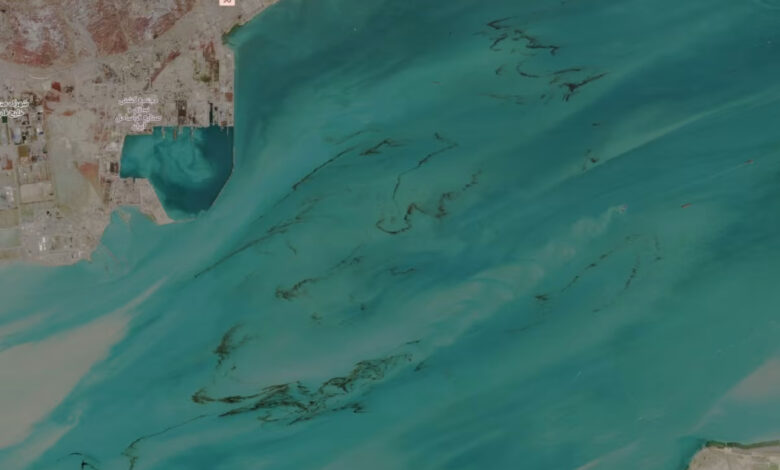
One image, taken on April 7, shows a spill spanning more than five miles in the Strait of Hormuz near Iran’s Qeshm Island. An Iranian vessel, the Shahid Bagheri, was leaked oil in the same area after US forces hit the vessel on February 28, Greenpeace Germany spokesperson Nina Noelle told CNN.

Another image shows oil around Lavan Island after what Iranian state media called a hit “by enemies” on an oil facility near the island’s coast on April 7. Video shared on social media and geolocated by CNN also shows a large fire erupting from the Iranian oil refinery.
The hit on Lavan is a “major environmental emergency,” said Wim Zwijnenburg, a project leader at Dutch peace organization PAX, who tracks the consequences of strikes around the Gulf.
At least five locations on Lavan were damaged, with subsequent spills happening around the island and oil leaking into the sea, he told CNN. The spills are “also now reaching the Shidvar Island… which is a protected site. It’s uninhabited, but it has a range of protected species there,” he added.
Shidvar Island is a coral island in the Persian Gulf, around one mile east of Lavan Island, that is rich in wildlife, including turtles and sea birds.


Satellite images also show spills just off Kuwait’s coast on April 6. Iran’s Islamic Revolutionary Guard Corps said it targeted fuel and petrochemical facilities in Gulf countries, including Kuwait, that day in retaliation for an attack on a petrochemical complex in southwestern Iran.

In the worst case scenario, these oils spills could have consequences for thousands of people, especially those living along the coast of Iran, including contaminating the fish they rely on for income and food, Zwijnenburg warned.
The spills threaten other marine life, too, such as turtles, dolphins and whales that might ingest or become trapped in the oil. They could also potentially affect the filtering systems of desalination plants, on which nearly 100 million people in the region rely for clean water.
At this stage, it’s hard to quantify what damage these spills may be causing, but there are fears of an ecological catastrophe, especially if more ships are hit. There are an estimated 75 large oil tankers in the Gulf, carrying a total of almost 19 billion liters of crude oil, according to data from Greenpeace Germany.
Oil spills can have huge, wide-ranging impacts, “affecting the entire ecosystem, from microorganisms to fish, birds, and marine turtles that depend on mangrove habitats,” said Greenpeace’s Noelle.
They are very hard to clean, she said, due to “structural complexity, limited accessibility and challenging working conditions,” adding that the ongoing conflict makes the prospects of gaining access to the Gulf to clean it up all but impossible.