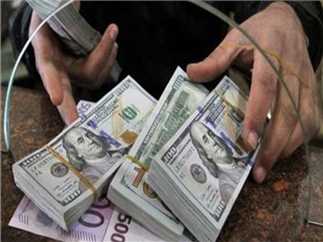
Economist Mohamed Fouad suggests that the US dollar exchange rate in Egypt will likely hover around the LE 52 mark for the time being.
He sees it unlikely that the rate will drop below LE 50 in the near term, citing pressures from the outflow of foreign investments, rising financing requirements, and structural imbalances within the Egyptian economy.
During a phone-in with “al-Hekaya” (The Story), hosted by Amr Adib on MBC Masr, Fouad explained that the dollar’s rise is occurring against the backdrop of a global trend of US currency strength.
He noted that this coincides with three primary factors: economic conditions in the US, pressures within energy markets, and structural issues in the Egyptian economy.
Fouad pointed out that the immediate cause for the dollar’s rise in Egypt is that capital outflows are exceeding inflows; he cited the exit of approximately US$1.8 billion in just four days—from Monday to Thursday of the previous week.
He added that a flexible exchange rate regime makes the market more sensitive to the movement of capital inflows and outflows.
Why is the dollar rising globally?
Fouad said that the US economy is experiencing robust activity, bolstered by a strong labor market and high consumer spending.
This coincides with energy-related risks and massive financing requirements that are absorbing liquidity from the markets.
He explained that the US budget deficit, and the approximately $2.2 trillion in new debt issuance expected from the US Treasury represent a significant source of demand for financing.
Fouad also pointed to projections that new offerings in the technology sector could reach around $1.7 trillion by 2027, further enhancing the appeal of the US market for liquidity inflows.
He added that these pressures are not limited to Egypt but extend to other emerging markets, noting that Argentina is facing acute financing strains, with its bond yields approaching 12 percent – meanwhile, Indonesia faces the threat of being removed from emerging market indices, and Turkey has received a warning in this regard.
Outflow of Foreign Investments
Regarding domestic factors, Fouad explained that the outflow of dollars from the Egyptian market is primarily linked to two types of foreign investment activity: first, the exit of investors selling off their holdings of treasury bills; and second, the maturity of three-month deals concluded in July, which allows investors to recover their funds and transfer them abroad.
He noted that a flexible exchange rate regime allows the impact of these movements to be reflected directly in the dollar exchange rate—particularly when capital outflows exceed inflows.
Fouad further pointed out that global pressures are coinciding with structural imbalances within the Egyptian economy, as evidenced by balance-of-payments indicators; the trade deficit stands at approximately $65 billion, while the current account deficit is nearly $2.25 billion.
He concluded that the convergence of global financing pressures and domestic imbalances leaves the Egyptian economy increasingly vulnerable to fluctuations in international markets and capital flows.
Dollar Outlook
Fouad ruled out a catastrophe in the conventional sense, but emphasized that the Egyptian economy is facing clear and persistent pressures—part of a broader trend affecting various emerging markets.
Given these circumstances, Fouad suggested that the dollar exchange rate is likely to hover around the 52-pound mark for the time being, noting that a return to levels below LE 50 in the near term is unlikely.
Post-IMF Plan
Regarding the national plan for the period following the International Monetary Fund (IMF) program, Fouad explained that discussions are still in the phase of defining broad outlines.
It has been agreed to open the plan for public debate until the end of next December; he emphasized that it has not yet reached the stage of a fully detailed plan.
He also noted his participation in a session on public debt and foreign currency resource management, held as part of the Egypt 2026 Forum.
Edited translation from Al-Masry Al-Youm