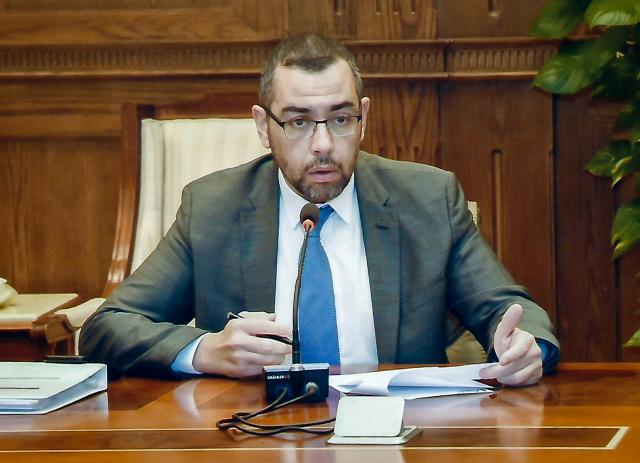
A member of the Egyptian Parliament’s Economic Affairs Committee and economist Mohamed Fouad on Saturday criticized the practice of allocating state-owned land for the purpose of reducing public debt.
Speaking with TV host Amr Adib on the “al-Hekaya,” (The Story) show, the MP remarked: “The issue isn’t just whether the land is being sold or not; the economic implications are what matter most. Are we actually solving the problem, or are we merely postponing it?”
Fouad said that the recent allocation of 112 million square meters of land in the Red Sea region to the Finance Ministry mirrors the earlier case of the Ras Shuqair land, which he noted implies a lack of clarity regarding the outcomes of that previous initiative.
Fouad explained that a presidential decree issued on June 4, 2025, had allocated 174 million square meters in Ras Shuqair area to the Finance Ministry, with the stated objective of reducing public debt and facilitating the issuance of sovereign “Sukuk” (Islamic bonds).
He said that 17 months have passed without the development of an operational plan, or even a preliminary framework, which raises questions about the ultimate fate of these lands and the mechanisms through which they are to be utilized.
The newly allocated area in the Red Sea spans 112 million square meters, he noted, which is equivalent to approximately 60 percent of the size of the land at Ras Shuqair.
What became of Ras Shuqair?
Fouad explained that he has submitted a formal inquiry to uncover the details surrounding the allocation of the 112 million square meters of land in the Red Sea region.
He is also seeking clarification on the status of the previously allocated land at Ras Shuqair, the nature of the arrangements made for it, the plans for its utilization, and what has actually been achieved since its initial allocation.
Fouad further demanded an accounting of the funds generated and the sources intended for settling existing obligations.
He emphasized that the House of Representatives has the authority to hold the government—and the relevant minister—accountable regarding how these lands are being managed, plans for their development, and the expected economic returns.
Funds for Repaying Sukuk
Fouad raised questions regarding the mechanism for paying returns on sovereign “Sukuk” (Islamic bonds) once they are issued.
He inquired about the source of the profits and financial flows that would be used to meet these obligations—particularly in scenarios where the land in question has not yet reached the operational stage and is not yet generating revenue.
He further questioned whether such repayments would rely on returns from investment activities linked to the land, or on the state’s general public resources.
He called for clarification on the financial engineering of the process, the entity receiving the funding, the returns generated, and how financial flows are distributed among the various parties involved.
Fouad emphasized that his objection does not concern the use of state assets or the nature of the financial and investment transactions themselves, but rather the necessity of understanding the economic returns generated thereafter—pointing specifically to the Ras el-Hekma and Alam al-Roum deals, as well as other arrangements along the Red Sea coast.
The MP underscored the importance of shifting away from financing deals aimed solely at debt repayment.
Instead he advocated for the operationalization of assets and the establishment of projects that generate sustainable revenue, thereby helping to alleviate the state’s financial burdens in the long term.
Edited translation from Al-Masry Al-Youm