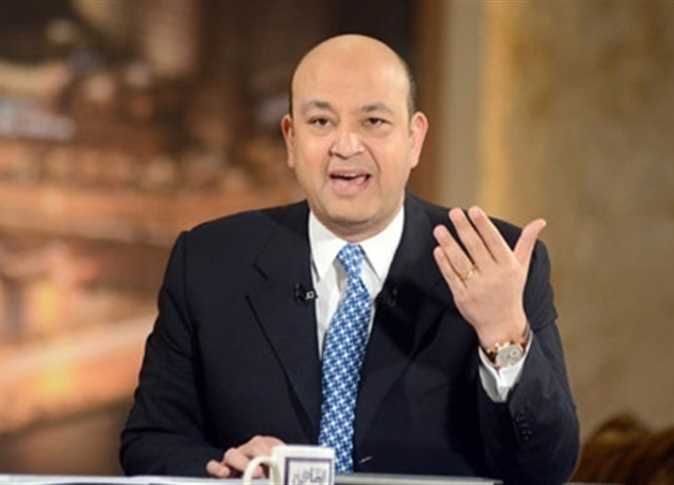
Prime Minister Mostafa Madbouly said that the strong relationship between President Abdel Fattah al-Sisi and Indian Prime Minister Narendra Modi has had a positive impact on bilateral ties and helped boost cooperation between the two countries in recent years.
Madbouly made the remarks during his meeting on Monday, November 16, 2026, with Indian Minister of Commerce and Industry Piyush Goyal at the Cabinet headquarters in the New Capital to discuss ways to strengthen economic, trade and investment ties between Egypt and India.
The meeting was attended by Investment and Foreign Trade Minister Mohamed Farid, Commercial Representation Authority Chairman Abdel Aziz al-Sherif, Export Development Authority Chairman Hatem al-Nawawy, Indian Ambassador to Egypt Suresh K. Reddy and Indian Assistant Trade Minister Bital Dillon.
The Premier welcomed Goyal and his accompanying delegation, stressing Egypt’s pride in its longstanding historical ties with India, which underwent a major transformation in 2023 when they were elevated to the level of strategic partnership.
The upgrade reflects the depth of relations between the two countries and the commitment of their leaders to expanding cooperation, he said.
Madbouly noted that the Indian minister’s visit affirms both countries’ determination to strengthen economic, trade and investment ties and build on progress in political relations, particularly following reciprocal high-level visits by their leaders.
He stressed the importance of capitalizing on the current momentum to promote cooperation between the Egyptian and Indian business communities.
The Prime Minister welcomed Egypt’s hosting of the seventh session of the Egyptian-Indian Joint Trade Committee and the Egyptian-Indian Business Forum, saying the events offer an important opportunity for companies and economic institutions in both countries to establish contacts, explore promising trade and investment opportunities and turn them into tangible projects and partnerships.
Bilateral trade reached around $ 6.6 billion in 2025, Madbouly said, adding that the two countries have significant potential to increase that figure.
Egypt seeks to double trade with India to around $ 12 billion in the coming years, a target he said could be achieved through intensified joint efforts and greater cooperation between the private sectors of both countries.
Indian investments in Egypt stood at around $ 4.5 billion, Madbouly said, adding that the Egyptian government is keen to support Indian companies operating in the country, help them expand existing investments and attract more Indian firms.
Several Indian companies have established major industrial projects in Egypt, including TCI Sanmar, Aditya Birla and Uflex, the premier said.
A large share of Indian investment is concentrated in the chemical and petrochemical industries, but there are promising opportunities to expand into other sectors, given India’s diverse industrial expertise and capabilities, he added.
Madbouly explained he had visited several facilities and factories owned and operated by Indian investors in Egypt, praising their positive contribution to the Egyptian economy and stressing the need to strengthen their presence and expand their activities in the coming period.
The government is continuing to develop institutional and legislative frameworks, improve the investment climate, streamline procedures and address challenges facing investors to enhance the competitiveness of the Egyptian economy and attract more foreign investment, he said.
Investment and Foreign Trade Minister Mohamed Farid had outlined the measures taken by the government in this regard during his bilateral meetings and the business forum, Madbouly added.
The Prime Minister stressed that the government is ready to provide all forms of support to Indian companies seeking to make new investments in Egypt or expand existing projects.
He also called for fostering the private sector’s role in both countries and encouraging partnerships between Egyptian and Indian companies across various fields.
Madbouly identified food security, information and communications technology, pharmaceuticals and healthcare, renewable energy, textiles, automotive manufacturing and components, and the chemical industries as priority areas for cooperation.
He underlined the significance of enhancing industrial integration and making use of the comparative advantages of both countries.
Egypt serves as a strategic gateway for Indian companies seeking access to African and several Middle Eastern markets, thanks to the free trade agreements it has signed with numerous countries and economic blocs in those regions, Madbouly said.
The Premier reiterated Egypt’s welcome of a proposal to establish an Indian industrial zone within the Suez Canal Economic Zone, allowing Indian companies to set up projects and benefit from Egypt’s strategic location, advanced infrastructure and investment and logistical advantages.
He also welcomed cooperation between Egypt’s sovereign wealth fund and India’s National Investment and Infrastructure Fund (NIIF), as well as Indian investment institutions and funds, to promote investment partnerships and open new avenues for joint projects.
For his part, Goyal stressed the strength and depth of relations between the two countries and their leaders’ commitment to expanding cooperation in various fields.
He expressed appreciation for his visit to Egypt and the fruitful meetings he had held with several ministers and business leaders, saying they show promising prospects for future cooperation.
Goyal voiced his admiration for Egypt’s ancient civilization and the sites he had visited at the Grand Egyptian Museum and the Pyramids.
The Indian minister also praised the New Capital, highlighting its integrated urban development and describing it as a model of rapid implementation, high-quality planning and architectural design.
Egypt and India, as two of the world’s oldest civilizations, have the potential to become major trading partners, Goyal said, calling for joint efforts to take bilateral relations to broader horizons and tap significant opportunities that had remained largely underexploited over past decades.
The strategic partnership established in 2023 had provided a clear framework for identifying future areas of collaboration, he said.
The $12 billion trade target is a first step that could be built upon, given the considerable potential of both countries and opportunities for greater economic integration, Goyal added.
He stated that the coming months will see the two sides identify priority sectors for cooperation and form specialized working groups to examine opportunities for integration.
They will also organize reciprocal sector-specific trade missions to connect Egyptian and Indian companies, explore available opportunities and accelerate the implementation of joint projects and partnerships, he said.
The Indian minister identified several areas with potential for economic integration, including industry, the establishment or development of new ports along the Suez Canal, shipbuilding, railway development and partnerships between infrastructure companies to implement joint projects.
Cooperation could also extend to renewable energy and green hydrogen production, Goyal added.
He pointed to significant opportunities in automotive manufacturing and components, as well as tourism and the exchange of expertise in museum management.
Goyal also stressed the importance of facilitating travel for businesspeople and investors between the two countries and simplifying business procedures.
During the meeting, Farid reviewed the outcome of meetings held throughout the visit, attended by the ministers of investment and foreign trade, industry, transport, foreign affairs, international cooperation and Egyptians abroad, and planning and economic development.
The meetings featured fruitful discussions on ways to strengthen economic and investment cooperation, with both sides agreeing to form joint working groups to identify the frameworks needed to examine options for advancing trade relations, he said.
Several investment opportunities in Egypt had been presented to the Indian side, including the possible allocation of land for a specialized Egyptian-Indian investment zone, Farid said.
A number of available plots would be presented during ministerial-level meetings of the Joint Trade Committee to assess their suitability for the proposed zone, the investment minister added.
The Egyptian side had also expressed its readiness to cement partnerships with Indian investment funds and institutions, Farid said.
The talks also covered opportunities for cooperation in tourism and real estate development, as Egypt is keen to attract new Indian investments in real estate development and hotel management as part of plans to expand hotel capacity, he added.
At the end of the meeting, the two sides agreed to work on a more ambitious vision for the future of trade relations and explore the possibility of reaching a preferential trade agreement.
They also underscored the significance of maintaining coordination and consultations and building on the outcome of the visit, the Joint Trade Committee meetings and the business forum to advance the strategic partnership and open new avenues for trade, investment and industrial cooperation.