When President Donald Trump was asked about how Afghans legally in the United States might feel about his decision to pause issuing visas for them after the suspected shooter of National Guard members was identified as an Afghan national, he took aim at another country in the same breath: Somalia.
“They can’t be happy because what’s taking place between that and, if you look at Somalia, they’re taking over Minnesota,” Trump said in remarks to reporters following his call to service members on Thanksgiving Day.
Moments later, he clarified the alleged shooter had nothing to do with Somalia. But the president has nonetheless continued pushing hostile rhetoric toward the Somali population in Minneapolis in the days since.
Over the past few months, the Trump administration has continued its sweeping deportation push of immigrants, with a surge of federal agents flooding the streets of blue cities such as Los Angeles; Washington, DC; Chicago; Charlotte and New Orleans, where Department of Homeland Security agents are expected to arrive this week.
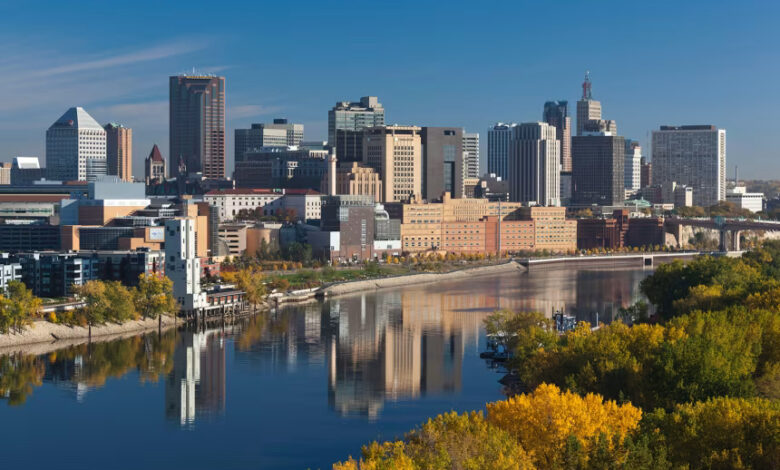
But a new Immigration and Customs Enforcement operation, a federal official told CNN on Tuesday, will specifically target undocumented Somali immigrants in Minneapolis and St. Paul, Minnesota. The community, one of the largest in the US, is one of the few the president has focused on directly for years.
Here’s how we got here:
Trump singles out Somalis after National Guard shooting, funding scandal
In recent attacks against the Somali community, the president and his allies have frequently cited a $300 million fraud scandal that centered on Feeding Our Future, a nonprofit organization, and a Covid-19 program meant to provide free meals to needy kids.
The vast majority of roughly 70 people charged in the case are members of the state’s Somali community, CNN has reported.
Prosecutors alleged defendants set up a network of shell companies connected to Feeding Our Future to exploit the federal child nutrition program, claiming to be feeding thousands of children per day but instead using the money to purchase luxury vehicles and real estate.
Thirty-seven defendants have pleaded guilty, according to the AP. Five were convicted in a group of defendants who were tried last year, the AP reported.
Trump referenced the scandal a week before Thanksgiving, calling Minnesota a “hub of fraudulent money laundering activity” as he announced plans to terminate Temporary Protected Status for Somali residents in the state.
“Somali gangs are terrorizing the people of that great State, and BILLIONS of Dollars are missing. Send them back to where they came from,” Trump said on Truth Social.
Then, on the day of the National Guard shooting, Trump vowed to escalate his anti-immigration agenda after the suspect was identified as an Afghan national as he claimed the incident “underscores the single greatest national security threat facing our nation.”
Lashing out at Somali immigrants in Minnesota, Trump claimed they were “ripping off our country and ripping apart that once-great state.” He described Somalia as a country that has “no laws, no water, no military, no nothing.”
Days later, Trump ended his Cabinet meeting on Tuesday by asserting he does not want Somali immigrants in the United States. He referred to the community and US Democratic Rep. Ilhan Omar, a Somali immigrant who represents Minnesotra, as “garbage” who should “go back to where they came from.”
Trump has rallied against Somalis for years
But Trump has zeroed in on Minnesota’s Somali population and rallied against Omar, who became the first Somali-American elected to Congress in 2018, for years.
Somalia was also on the travel ban list during Trump’s first presidential term. Under the Obama administration, several Muslim-majority nations, including Somalia, were identified as “countries of concern” and subject to travel restrictions. Somalia had been added to address “the growing threat from foreign terrorist fighters,” according to a DHS statement.
When Trump took office, the restrictions turned into a travel ban.
At a rally in Minneapolis in 2019, Trump challenged the case for allowing Somali refugees to settle in the North Star State as he touted his travel ban. “For many years, leaders in Washington brought large numbers of refugees to your state from Somalia without considering the impact on schools and communities and taxpayers,” he said.
He went on to attack Omar, who represents the district where the rally took place, as a “disgrace.”
Minnesota is home to over 79,000 Somalis, roughly 80% of whom reside in the Twin Cities, according to the Minnesota Compass.
Citizens of Somalia were first granted Temporary Protected Status in 1991 when the country was plunged into chaos after dictator Mohamed Siad Barre was overthrown. In 2013, the US officially recognized the Somali government in Mogadishu for the first time in two decades, CNN reported.

Somalia has maintained TPS “due to insecurity and ongoing armed conflict that present serious threats to the safety of returnees,” according to the legislation.
Omar condemned Trump’s announcement in a news conference last week and spoke about the impact on her community: “Many of these people we are talking about have built lives,” she said. “They own homes, they own businesses, they are a vibrant part of our communities, and we want to make sure that their new home stays their forever home.”
Somalia is one of 19 countries included in Trump’s sweeping travel ban implemented this summer, which imposes full or partial restrictions. Many of the countries on the list are either failed states or under repressive rule, and some are governed by groups that took control after years of US involvement, CNN has reported.
In the wake of the National Guard shooting, Trump said the US will reexamine all green cards issued to people from the 19 countries “of concern.”
Plans for operation targeting Somalis remain vague
The new ICE operation targeting undocumented Somali immigrants will focus on Minneapolis and St. Paul, a federal official told CNN on Tuesday.
The New York Times, which cited documents and an official who spoke anonymously, was first to report the operation in Minneapolis.
In response to the Times’ report, Minnesota Gov. Tim Walz, a Democrat, called the proposed operation a “PR stunt.”
But details remain vague, as leaders of the Twin Cities said they were not given advance notice or information about the plan as they held a news conference to respond to reports of the new operation.
“We will not compromise our values here in Minneapolis,” said Minneapolis Mayor Jacob Frey. “Our values and our commitment to the Somali community, to every community of immigrants and people in our city is rock solid and will be unwavering.” Frey confirmed Minneapolis police would not participate in immigration enforcement operations.
Both Frey and St. Paul Mayor Melvin Carter reiterated their citizens have rights and touted immigration legal resources available to the community.
Minneapolis City Council member Jamal Osman, a Somali immigrant who represents many migrants in his district, said his community “has lived through fear in the past, and we are not going to let that divide us.”
“I know many families are fearful tonight, but I want you to know that city, Minneapolis stands behind you,” Osman said.
CNN’s TuAnh Dam, Holmes Lybrand and Chris Boyette contributed to this report.