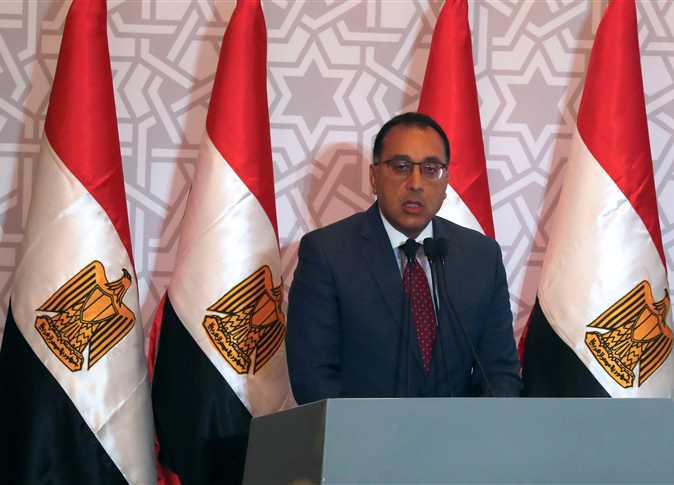
Prime Minister Moustafa Madbouly affirmed that while Egypt continues its efforts with various countries and concerned parties to contain the military escalation in the region and resolve the crisis through peaceful means, it strongly condemns the repeated Iranian attacks against the Gulf states, Jordan and Iraq.
Madbouly reiterated Egypt’s full solidarity with the sisterly Arab countries, stressing the need for the immediate cessation of all attacks against them and Egypt’s categorical rejection of any violation of their sovereignty, territorial integrity and citizens, or any threat to their security and stability.
He underlined that the national security of Arab states is an integral part of Egypt’s national security.
The remarks came during a meeting of the Central Crisis Management Committee, chaired by Madbouly on Monday evening, to follow up on the repercussions of the ongoing military escalation in the region.
The meeting was attended by Deputy Prime Minister for Economic Affairs Hussein Issa, Central Bank of Egypt Governor Hassan Abdallah, Minister of Finance Ahmed Kouchouk, Minister of Tourism and Antiquities Sherif Fathy, Minister of Supply and Internal Trade Sherif Farouq, Minister of Foreign Affairs, International Cooperation and Egyptian Expatriates Badr Abdelatty, Minister of Petroleum and Mineral Resources Karim Badawi, Minister of Investment and Foreign Trade Mohamed Farid, Minister of State for Information Diaa Rashwan, Minister of Planning and Economic Development Ahmed Rostom, along with officials from the relevant ministries and authorities.
Madbouly said the committee will convene regularly to monitor regional developments, particularly the latest developments related to the US-Israeli operations in Iran, and to examine their various repercussions on the region, the world and Egypt domestically.
Cabinet Spokesman Mohamed al-Homsani said the meeting reviewed scenarios prepared by the relevant ministries and entities to deal with the potential repercussions of the regional developments, as part of preparations to address any possible impact on the local market.
The prime minister stressed the importance of closely monitoring developments and taking the necessary measures to address any new developments in the crisis in a way that preserves the stability of the Egyptian economy and enhances its ability to withstand external challenges.
Homsani added that the committee approved a package of government measures aimed at rationalizing spending and consumption.
These include canceling government events, reducing official travel and limiting training programs, in addition to several other measures that will be announced in detail later, he added.
The measures also include implementing a plan to regulate road lighting systems and illuminated billboards, reviewing fuel consumption across various sectors, accelerating the operation of mass transit systems, expanding programs to convert vehicles to run on natural gas, and promoting the use of electric vehicles.
The plan also involves reducing imports of non-essential finished goods.
During the meeting, the prime minister stressed the importance of increasing and diversifying foreign currency resources and working to attract and stimulate more sectors that generate foreign currency.
He also highlighted the need to accelerate the implementation of the state privatization program and other measures aimed at strengthening the role of the private sector in economic activities.
The meeting also reviewed the steps taken within the framework of the recently announced social protection package targeting low-income citizens, with focus on strengthening support for eligible groups.
It was also noted that new measures to support citizens will be announced in the coming days, including raising the minimum wage.
The meeting further discussed the impact of the ongoing war in the region on several sectors, including tourism and petroleum, stressing the importance of supporting the affected sectors and ensuring the regular payment of dues owed to international petroleum companies to encourage further exploration and production.
During the meeting, the minister of petroleum presented a report on the sharp rise in prices of petroleum products and gas over the past hours, as well as higher transportation costs and the announced closure of a number of fields amid the escalating developments in the region.
He also reviewed the measures being taken to secure petroleum supplies for productive sectors, power generation stations and other uses.