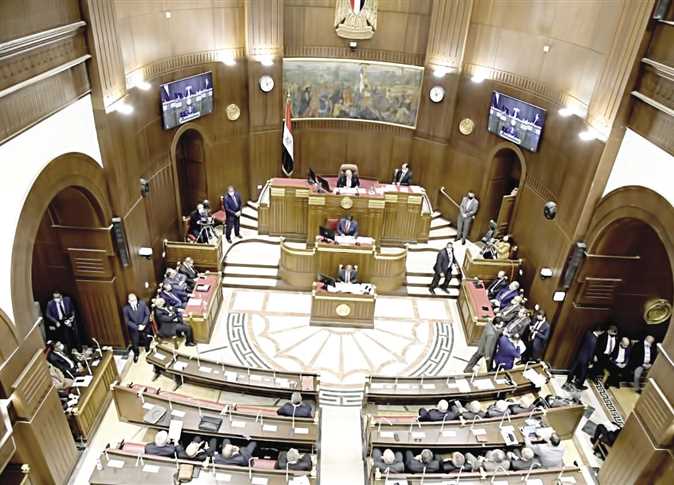
The Egyptian Senate discussed during its plenary session on Sunday a report on a government-proposed bill to amend certain provisions of Law #196 of 2008 concerning the tax on built properties.
The Chairman of the Senate’s Committee on Financial, Economic, and Investment Affairs, Representative Ahmed Abu-Hashima, presented the committee’s report.
Abu-Hashima said that amending the property tax law is part of the first phase of the tax relief initiative, which includes legislative reforms.
He explained that this aligns with a vision to ease the tax burden, taking into account the social and economic circumstances of property taxpayers – whether when filing tax returns or paying the due tax and late payment penalties, and working to simplify and automate tax procedures.
Abu-Hashima added that the amendments include simplifying filing tax returns, reforming and developing the tax appeal system, easing the burden on taxpayers in dispute over tax bases, increasing the tax exemption threshold for private residences, waiving taxes for taxpayers during crises, and simplifying tax relief procedures.
Waiving tax debts
The amendments also include waiving tax debts and late payment penalties in specific cases, recognizing the validity of electronic tax payment receipts, and setting a maximum limit for late payment penalties with a full waiver upon payment of the principal debt within a specified period, he added.
The representative noted the amendment to the Real Estate Tax Law includes raising the exemption threshold to LE 100,000 instead of LE 50,000.
He explained that the committee based the amendment on raising the exemption threshold to ensure a fairer distribution of the tax burden, especially since the Egyptian real estate market has witnessed significant nominal increases in asset values in recent years, which have not been matched by similar growth in real income.
The exemption will remain limited to a single property used as the family’s primary residence, he added, thus ensuring a delicate balance between considerations of societal justice and the requirements of tax fairness.