The Egyptian Nuclear and Radiological Regulatory Authority (ENRRA) has addressed recent reports on the potential impact of radioactive fallout on Egypt from the war against Iran by the US and Israel.
The ENRRA confirmed that there are no indicators of any change in background radiation levels within Egypt.
The Cabinet’s Media Center clarified, following communication with ENRRA, that background radiation in Egypt is being monitored around the clock through the Authority’s national monitoring, alarm, and early warning systems.
Furthermore, the status of regional nuclear facilities is being tracked via International Atomic Energy Agency (IAEA) reports.
The Center urged citizens to rely solely on official sources for information.
Nuclear threats
The former Vice Chairman of the Nuclear Power Plants Authority (NPPA), Ali Abdel Nabi, noted that rhetoric regarding the targeting of nuclear facilities has become a staple of the mutual threats between Israel and Iran.
This has heightened concerns over potential large-scale radioactive contamination threatening neighboring states.
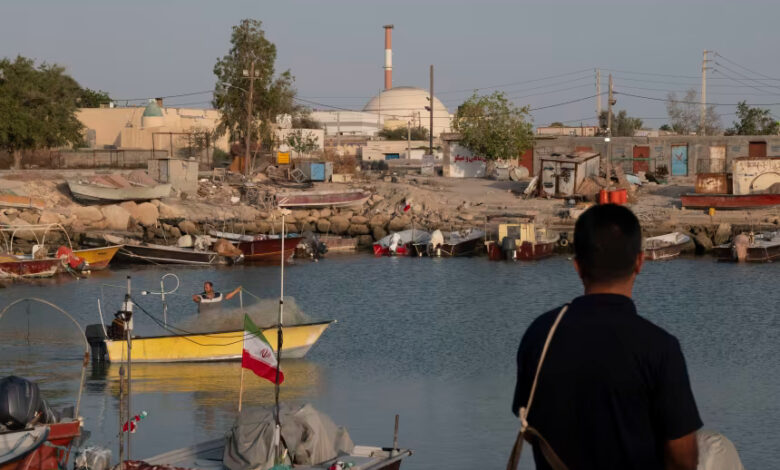
Abdel Nabi explained that an attack on the Bushehr reactor might provide Iran with a pretext to strike the Dimona reactor. He pointed out that the presence of Russian experts at Bushehr offers a degree of international protection to avoid escalation with Moscow.
Additionally, the reactor’s primary circuit is encased in a reinforced concrete containment vessel designed to withstand conventional bombing. He further emphasized that the distance of over 1,800 kilometers between Egypt and the Bushehr plant precludes any direct radioactive impact.
Threat of nuclear fuel leakage
The former Chairman of the NPPA and member of the Executive Authority for Nuclear Power Plants, Amjed al-Wakeel, stated that the primary risk lies not only in the reactor itself but also in the estimated 210 tons of spent nuclear fuel.
Should the containment vessel and spent fuel pools suffer severe damage, the waters of the Arabian Gulf would face immediate contamination.
While the atmospheric dispersal of radioactive materials—dependent on wind speed and direction—could reach 200 kilometers, the distance of over 2,000 kilometers between Egypt and the reactor makes the probability of impact extremely low.
However, Al-Wakeel warned of the risks associated with Israel’s Dimona reactor due to its geographical proximity to Sinai. He noted that the aging facility is used for military purposes and a major incident could release highly dangerous isotopes.
Nevertheless, he clarified that prevailing northwestern winds in the Eastern Mediterranean typically direct risks away from Egypt, though other countries in the region could be at risk.