The catchphrase made famous by Bill Clinton’s 1992 presidential campaign springs to mind when considering the instability that seems to have become a feature of Britain’s political life.
The United Kingdom is on course for its sixth prime minister in some seven years, as one political leader after another proves no match for a stubbornly weak economy, which has weighed on incomes and living standards, wearing down the electorate.
Outgoing Prime Minister and Labour Party leader Keir Starmer, who is stepping down after just two years in the role, is in good company. His four predecessors — Rishi Sunak, Liz Truss, Boris Johnson and Theresa May — faced many of the same thorny challenges, and abided similarly brief terms.
Truss’ spell in the hot seat lasted less than two months, after the bond market told her in no uncertain terms where to get off following a plan for unfunded tax cuts that nearly sent UK financial markets into meltdown.
Bond market vigilantes aside, Clinton’s campaign catchphrase neatly summarizes that it is almost always voters’ experience of the economy — felt mostly by what they can and can’t afford — that determines how satisfied they are with political leaders.
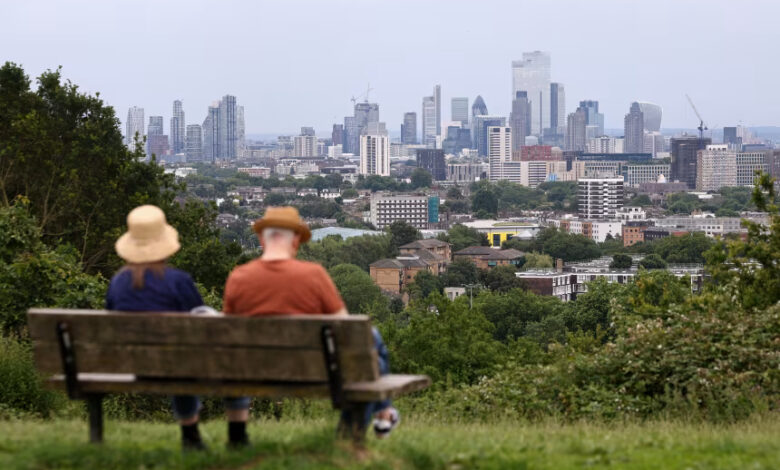
In Britain, politicians are paying dearly for the pervasive sense that life is only getting harder and more expensive.

Salaries have barely kept pace with rising consumer prices, meaning people don’t feel substantively better off. Since the Labour Party took office in 2024, average weekly pay, adjusted for inflation and excluding bonuses, has inched up less than 1% to £494 ($651), according to the UK statistics office — hardly better than the growth since 2019.
Taxes, meanwhile, are at multi-decade highs.
“Everything comes back to (the economy),” said Raoul Ruparel, UK chief economist at Boston Consulting Group (BCG). The UK’s poor economic performance “is part of a wider sense that maybe things aren’t improving,” he told CNN.
Gloomy mood music
Starmer, and the four leaders before him, all correctly diagnosed the UK’s perennial low growth problem and made fixing it their top priority.
Yet robust economic growth has proved elusive, even as government debt has climbed, leaving successive administrations with little firepower to fix a growing list of related challenges, from crumbling infrastructure to a chronic housing shortage.
“If you have an economy that is growing, then it gives you more flexibility to deliver in other areas … to invest and spend more, cut taxes… it underpins everything,” said Ruparel.
UK GDP growth has averaged around 1% a year since May came into power in July 2016, according to consultancy Capital Economics. GDP per capita, which accounts for changes to the size of the population and is generally considered a better measure of living standards, has been similarly uninspiring.
Gloom about the economy helped deliver a Labour Party promising “change” a resounding victory in a 2024 general election. Brits were desperate for someone different, having endured 14 years of rule by the opposition Conservative Party, a period that included the twin shocks of the pandemic and the war in Ukraine, but also Brexit and government spending cuts — so-called “austerity” following the global financial crisis.
Yet meaningful change has been slow to materialize, souring views of Starmer’s premiership and inflicting heavy losses on the Labour Party in local government elections in May, which virtually sealed his fate.
“Polling has consistently shown that cost of living pressures are the biggest concern for people across the country, so they will undoubtedly have been at the forefront of many voters’ minds,” Ben Harrison, director of the Work Foundation think tank at Lancaster University, told CNN following Labour’s local election losses.
New leader, same problems
Just as Starmer inherited a lackluster economy, so too will his successor. But perhaps his replacement will be afforded more time to tackle challenges that were never going to be fixed overnight.
“Delivering economic growth is not easy in the short term,” said Ruparel of BCG. “Building new infrastructure, lowering energy prices … that takes time.”
Ruth Gregory, deputy chief UK economist at Capital Economics, said the government “has had some good ideas and put in place policies that could give the UK economy a longer-lasting boost,” such as plans to increase investment and “fire up” homebuilding.
“But due to a series of missteps and what appears to be poor delivery … the boost is more likely to be negligible,” she told CNN.
The International Monetary Fund expects the UK economy to expand by just 0.8% this year, according to an April forecast. That is half a percentage point less than its January estimate, as the Iran war takes its toll via higher energy prices, and underscores the scale of the challenge ahead.
“The UK’s economic challenges will not disappear with a change of prime minister,” cautioned Rain Newton-Smith, CEO of the Confederation of Business Industry, a business lobby group.
“The economy won’t fix itself while politicians look inwards. And you cannot tackle the cost-of-living without addressing the cost of doing business,” she added in a statement.
“The country now needs stability,” she said. The next prime minister “must move quickly to reassure businesses and investors, protect living standards, and set out a credible, deliverable plan for growth.”