Expectations are growing that central banks globally will move to raise interest rates to hedge against an inflationary wave triggered by rising energy prices.
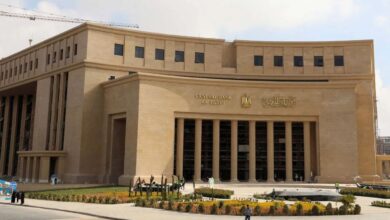
Expert forecasts for the Central Bank of Egypt’s (CBE) upcoming Monetary Policy Committee meeting on September 24 lean heavily toward keeping rates unchanged.
The ECB and Fed prepare policy shifts
The European Central Bank (ECB) is widely expected to hike interest rates, proceeding with caution as the ongoing US-Iranian conflict keeps oil prices elevated and reignites inflationary pressures.
This follows after Brent crude surged over the past month, while European natural gas prices reached their highest levels since early 2023.
Sources told Reuters that the ECB is prepared to raise interest rates again in September, aligning with the minutes of its July meeting.
Traders have priced in a quarter-point move to two point five percent, as the latest data shows Eurozone inflation rising back above three percent in August due to soaring energy costs.
According to the Financial Times, the US August Consumer Price Index (CPI) inflation data could serve as the decisive metric for Federal Reserve policymakers during their September 15–16 meeting when deliberating whether to raise interest rates.
Key Drivers Behind Global Tightening
The General Manager of Wathiqah Brokerage, Mohamed Abdel-Hady, expects several central banks worldwide—led by the US Federal Reserve, the ECB, and the Bank of Japan—to raise interest rates.
He attributes this to three primary factors:
- Persistent inflation: Inflation rates continuously exceeding central bank target ranges.
- Energy price surges: Sustained increases in oil prices threatening further secondary inflation.
- Geopolitical volatility: Ongoing geopolitical tensions increasing overall economic uncertainty and fueling sustained inflation.
Expert perspectives: Global hikes vs. Egypt’s rate freeze
Abdel-Hady told Al-Masry Al-Youm that these combined factors reinforce the case for global central banks to raise interest rates, as each driver fuels inflationary pressures that necessitate monetary tightening.
He noted that while the US might hold rates steady due to underlying economic strength, rate hikes remain highly likely for both the Bank of Japan and the European Central Bank.
Regarding the domestic market, Abdel-Hady predicted that the Central Bank of Egypt will opt to keep interest rates unchanged, given that key rates in Egypt are already elevated.
He warned, however, that global rate hikes could negatively impact hot money flows, triggering capital flight from emerging markets toward higher yields elsewhere, alongside driving potential upward pressure on the US dollar against the Egyptian pound locally.
Emerging market risks and CBE outlook
Concurrently, banking expert Sahar al-Damaty emphasized that major central banks leaning toward renewed rate increases stems primarily from fears of resurfacing inflation—particularly as energy and oil prices climb alongside ongoing geopolitical volatility.
She explained that central banks are exercising extreme caution to prevent new price surges from disrupting their longer-term rate-cutting trajectories.
Damaty added to Al-Masry Al-Youm that the CBE is expected to adopt a wait-and-see approach during its upcoming meeting, provided domestic inflation continues its downward trend and foreign exchange pressures remain manageable.
Maintaining interest rates at current levels for an extended period, she noted, offers policymakers valuable room to fully evaluate the impact of previous monetary decisions on the broader economy and local markets.
Edited translation from Al-Masry Al-Youm