Former Military Prosecutor Sayed Hashem said extending the Emergency Law, which terminates on 31 May, is a possibility should the controversy over the presidential runoffs lead to turmoil and a security gap.
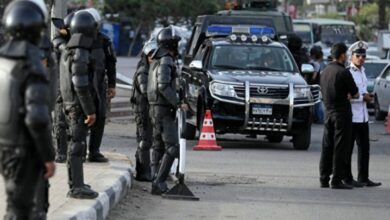
“The army should assist the police who have not yet recovered fully,” he said.
Putting an end to the Emergency Law in place since 1981 has been one of the main demands of revolutionaries who took to the streets on 25 January 2011. But the interim ruling military council has purported that the situation is not yet conducive for the end of military rule.
In January 2012, the council, which acts as the country's executive authority and also has some legislative powers, lifted the law with the exception of cases of so-called "thuggery." For years, the law was held by human rights watchdogs as violating basic rights by legalizing detentions without trial and prohibiting political gatherings.
If all goes well, Hashem said the military council would consult the Cabinet on ending the state of emergency before submitting the matter to Parliament for a decision within seven days, as stated in Article 59 of the Constitutional Declaration that was issued in March 2011.
Legal expert Ibrahim Darwish said he believes the Penal Code partially amended in 1992 is more powerful than the Emergency Law, noting that it covers all aspects of counter-terrorism, corruption and any matter related to the country’s internal and external affairs.
“It even gives the death penalty,” he said. “So why does the military council insists on the state of emergency rather than apply the Penal Code?”
Darwish added, “Even if Parliament rejects the extension, the military council will continue to protect the country, being responsible for its internal and external security until after the election."
Dean of Cairo University’s Faculty of Law Mahmoud Kebeish, however, said it is up to Parliament, not the military council, to extend the state of emergency.
“We never needed that law in the last 30 years as we do now due to the security gap and in light of the election runoffs,” he said.
Edited translation from Al-Masry Al-Youm