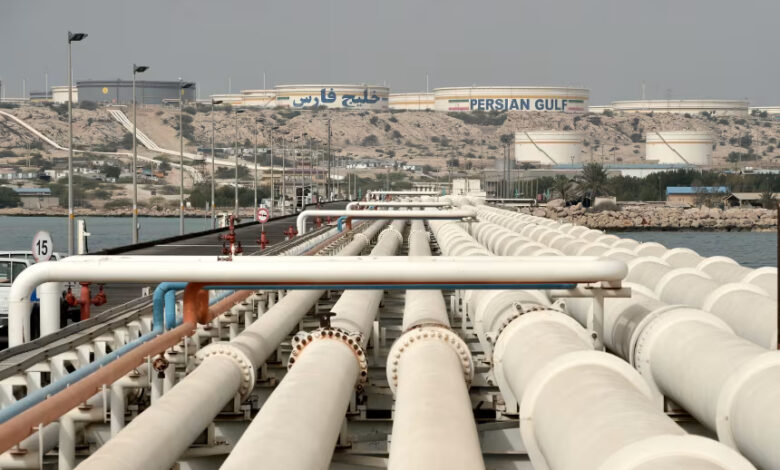
Oil flows through Egypt’s “SUMED” pipeline have surged by 150 percent since the Iranian conflict outbreak, a direct reflection of shifting global energy trade routes and increasing reliance on secure alternatives away from volatile regions.
This surge has reinforced the pipeline’s importance as a strategic corridor for transporting crude between the Red Sea and the Mediterranean, according to a government official who spoke to Asharq Business on condition of anonymity.
The SUMED pipeline, operated by the Arab Petroleum Pipelines Company, is currently functioning at its maximum capacity of 2.5 million barrels per day (bpd), up from one million bpd in February—prior to the conflict—marking a 150 percent increase, the official noted.
The pipeline provides a secure route for crude oil transport in light of the closure of the “Strait of Hormuz” following Iranian aggressions in the Arabian Gulf.
However, the SUMED pipeline does not serve as a direct replacement for the Strait of Hormuz; rather, it functions as a vital link within a broader logistics chain.
According to the US Energy Information Administration, the line extends across Egypt from Ain Sokhna on the Gulf of Suez to Sidi Kerir on the Mediterranean.
It typically transports crude arriving at the Red Sea, which is then pumped to the Mediterranean for re-shipment to Europe, bypassing the Suez Canal in specific instances.
The line also facilitates the transit of Very Large Crude Carriers with capacities of approximately 2.2 million barrels.
Due to their extreme weight and draft, these tankers cannot transit the Suez Canal fully loaded.
Instead, they offload part of their cargo at the Ain Sokhna terminal on the Red Sea before passing through the Canal – the cargo is then reloaded onto smaller vessels at the Sidi Kerir terminal for onward transport to Europe and the Americas.
SUMED is a joint Arab venture led by Egypt, which holds a 50 percent stake through the Egyptian General Petroleum Corporation.
Other shareholders include Saudi Aramco (15 percent), Kuwaiti investors (15 percent), the UAE’s Mubadala (15 percent), and QatarEnergy (five percent), according to official company data.