The energy crisis is a financial nightmare for Main Street and a political nightmare for the White House.
Inflation is racing back to life, real wages are shrinking and voters are blaming President Donald Trump for $4.50-a-gallon gas.
Trump now faces a break-the-glass moment to avoid gas prices from blowing past Biden-era records highs.
Yet Trump has already taken emergency steps designed to limit the damage. His administration is draining oil from America’s stockpile at the fastest pace on record. Shipping restrictions have been waived. Some sanctions on Russia and Venezuela have been eased.
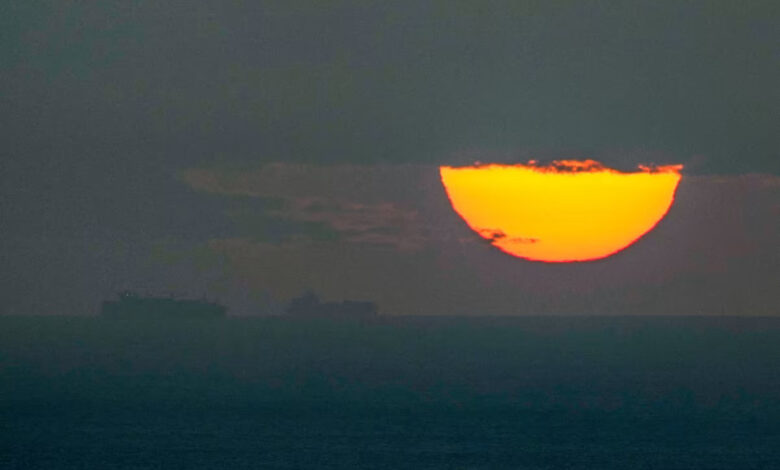
While other ideas have been floated, such as suspending the federal gas tax, the reality is Trump really only has one lever left to slash gas prices: Get the Strait of Hormuz reopened — one way or another.
“There’s precious little the administration can do,” said Jan Stuart, global energy strategist at Piper Sandler.
That’s why Stuart expects the energy crisis will get worse this spring and summer, pushing gas to $5 a gallon as soon as this month.
Stuart expects Brent crude futures to average $130 a barrel next quarter, shattering the prior quarterly record, and to remain near $100 next year.

The White House pointed to steps Trump has taken to address turmoil in energy markets, including a 60-day waiver to the Jones Act.
“President Trump has always been clear that these are short-term, temporary disruptions. The President brought oil and gas prices down to multi-year lows at record speed, and as traffic in the Strait of Hormuz normalizes, these energy prices will plummet once again,” White House spokeswoman Taylor Rogers said in a statement.
Gas tax holiday would save you shockingly little
Trump recently endorsed pausing the 18.4-cent-per-gallon federal gas tax.
However, a gas tax holiday that covered the 122-day summer driving season would cost the Highway Trust Fund $11.5 billion in lost revenue without delivering significant relief to consumers, according to an analysis from the Penn Wharton Budget Model, a nonpartisan think tank.
Even filling up a 15-gallon gas tank once a week would only save a total of $35 during the pause, the analysis found.

A gas tax holiday would “boost fuel demand at a time of low supply,” according to Jason Bordoff, founding director of Columbia University’s Center on Global Energy Policy.
In other words, it’s exactly the opposite of what’s needed.
No wonder House Republicans in 2022 dismissed a gas tax holiday as a “gimmick.” So did then-candidate Barack Obama in 2008 after both Hillary Clinton and John McCain endorsed a gas-tax suspension.
“It is a gimmick. He was right,” Mark Zandi, who was McCain’s top economic adviser in the 2008 presidential campaign and is now the chief economist at Moody’s Analytics, told CNN about Obama’s comments.
Banning exports could backfire
Some lawmakers have called for the Trump administration to consider the “nuclear” option: restricting or even banning US exports of crude oil, gasoline and other petroleum products.
While some analysts concede US gas prices could fall rapidly if exports are banned, they suspect the decline would be fleeting and the extreme move would further destabilize energy markets.
Refiners would likely cut back on their gasoline production. Texas oil companies would get crushed. And world oil prices would skyrocket, slamming the world economy.
‘Drill, baby, drill’ is not happening
Record-high US oil production has not accelerated since Trump took office, not even as oil prices have surged above $100 a barrel.
US crude output increased to 13.7 million barrels per day last week, according to preliminary estimates from the Energy Information Administration. That’s little changed from 13.8 million at the end of 2025.

Forecasters at the EIA, the Energy Department’s statistical arm, expect flat US oil production this year at 13.6 million barrels per day. They are projecting an acceleration, but not until next year, and even then only a modest increase to 14.1 million barrels per day.
Call Riyadh?
In the past, White House officials have turned to Saudi Arabia to keep a lid on gas prices.
Saudi Arabia is not only the leader of OPEC but one of the only nations on the planet with the ability to quickly increase supply.
“The most effective tool in the past was the telephone — calling Saudi Arabia and asking them to open the taps,” said Bob McNally, founder and president of Rapidan Energy Group and a former energy adviser to President George W. Bush.
But that option is off the table as well because the shutdown of the Strait of Hormuz has blocked many of Saudi Arabia’s oil exports.
A new round of fighting?
All of this helps explain why some energy market veterans are now bracing for a new round of fighting in the standoff with Iran.
McNally’s firm now sees just a 10% chance of a deal that reopens the Strait of Hormuz in the near term — a 20% chance of the status quo and a 70% chance of renewed hostilities over the next four to six weeks.

“If you must get the strait open and a deal is not on the table, you have no option other than to escalate the conflict,” he said.
A new outbreak of fighting could drive energy prices even higher if it results in major damage to key energy infrastructure in the region.
McNally expects Brent crude oil futures will soon surge to around $150 a barrel, flirting with the all-time high of $147.50 set in July 2008 during the Great Recession.
“This is a problem that will only be solved with one policy: Reopening the Strait of Hormuz. Period. End of story,” McNally said.