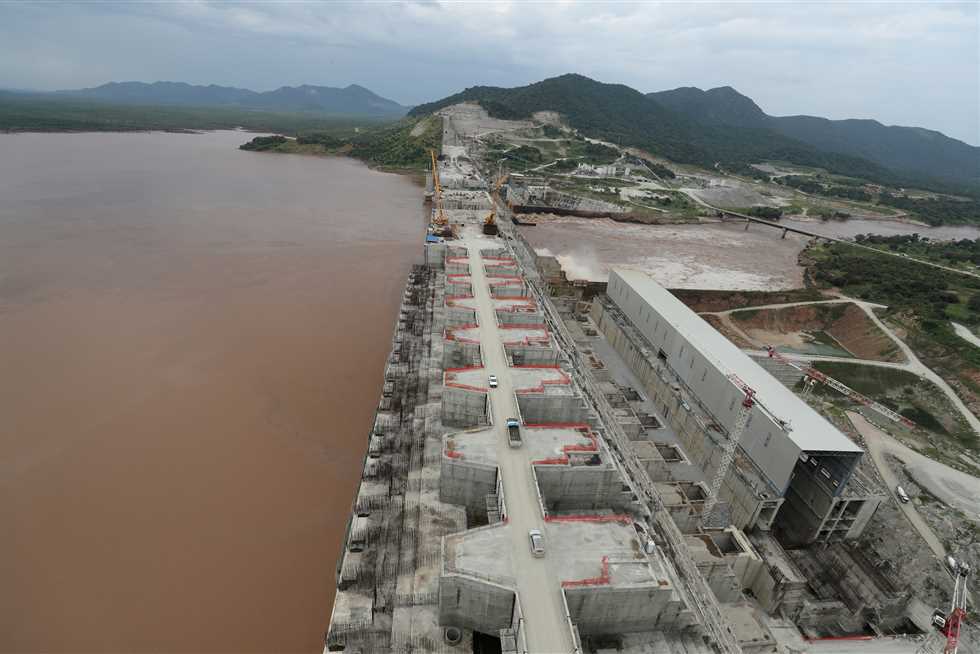
Former Egyptian Minister of Water Resources and Irrigation, Mohamed Nasr-Eddin Allam, warned on Tuesday against underestimating the repercussions of the Grand Ethiopian Renaissance Dam (GERD), especially on Egypt and Sudan.
Allam criticized opinions suggesting the GERD is now full and poses no threat to Egypt, or even that its water storage can be considered a reserve for Egypt, as these ignore the project’s fundamental objective and its potential impacts on downstream countries.
In a post on his Facebook page, Allam added that the dam impounds enormous quantities of water, a portion of which is lost annually through evaporation and seepage.
This impacts the water reserves of both Egypt and Sudan, in addition to the risks of improper operation or filling.
Even after the dam is fully filled, Allam explained that it will undergo repeated cycles of filling and emptying to generate electricity, making continuous operation and coordination among the parties essential.
He emphasized that achieving stability and avoiding harm requires a clear legal agreement between Egypt, Sudan, and Ethiopia to regulate the filling and operation of the dam.
The real solution lies in reaching a legally binding agreement that regulates the rules for filling and operating the dam in a way that safeguards the interests of the Nile Basin countries, he stressed.
Egypt’s water situation
Regarding Egypt’s water situation, Allam said the country has already exceeded the water poverty line for more than three decades, explaining that per capita water share has fallen to about 500 cubic meters annually, compared to the internationally recognized water poverty line of 1,000 cubic meters per person per year.
He pointed out that Egypt relies heavily on water reuse and also imports a significant portion of its food needs, warning that population growth will increase pressure on water resources in the coming years.
Allam called for finding long-term solutions to increase Egypt’s water resources in cooperation with the Nile Basin countries, asserting that regional cooperation could transform the dam into a launching pad for joint projects that would benefit the people of the region – so long as there is a will for it.
A prominent issue
The GERD is one of the most prominent regional issues involving Egypt, Sudan, and Ethiopia since the project’s announcement in 2011.
Cairo and Khartoum demand a legally binding agreement regulating the filling and operation of the dam, while Addis Ababa insists on its right to utilize its water resources for electricity generation and development.
Egypt relies almost entirely on the Nile River, and faces increasing challenges related to population growth and rising water demand.
This has prompted the Egyptian government to implement water recycling projects, expand seawater desalination, and improve irrigation efficiency.
Despite multiple rounds of negotiations under African and international auspices, the three countries have yet to reach a final agreement on the rules for filling and operating the dam.
Cairo continues to emphasize its water rights and prevent any unilateral action that would harm its water security.