US President Donald Trump on Tuesday loosely raised the possibility of a ground campaign as the war with Iran heats up, but he was vague about any specifics.
“I don’t want to do that,” he said of a ground war in an interview with Fox News.
“Sometimes you need a ground campaign, but we have other people that will do the ground campaign for us,” Trump said, without offering any suggestions on who those people might be.
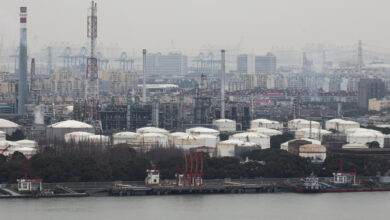
Analysts have said possible locations for a ground campaign include Kharg Island – Iran’s main oil export terminal – or Iran’s southern shores along the Persian Gulf.
But be it US troops or forces from another country, getting them landed on Iranian shores – and in numbers to sustain their presence – would be a complex and dangerous operation.
As amphibious assaults require specific land and sea conditions for successful landings, defenders can concentrate their defenses on the likely spots.
Approaches for landing craft can be mined or blocked with obstacles. Modern weaponry like drones and loitering munitions, as well as traditional artillery, mortars and light infantry arms can then be brought to bear on troops that make it ashore.
And analysts note that the logistics to keep landed troops supplied with munitions, medical aid, food and water leave their supply vessels vulnerable to the same weapons the invasion force faced.
“The balance of littoral warfare has shifted strongly in favor of the defender,” US Army Capt. Daniel S. Hogestyn writes in the May-June edition of the service’s Military Review journal.
US troops in region: Defense Department media shows the 11th Marine Expeditionary Unit (MEU), typically numbering more than 2,000 troops, is in the region embarked on ships of the USS Boxer Amphibious Ready Group.
MEUs typically have been used for missions like evacuations and amphibious operations that require ship-to-shore movements, like raids and assaults. They also have ground and aviation combat components, and some units are trained for special operations.
In addition, the US Army’s 82nd Airborne Division’s Immediate Response Force can be deployed in a matter of hours for missions like seizing ports or airfields.