Egypt’s tourism sector is poised to shatter records in 2026, with projections indicating international arrivals will exceed 20 million visitors. Fueled by booming demand from Arab and Gulf markets, extensive airport expansions, and growing hotel capacity, the country continues to strengthen its position as a top global destination.
The Arab market stands out as a primary driver of this growth. Tourist arrivals from Gulf nations and Jordan have recorded a notable surge during the current season, reflecting rising demand for coastal and cultural destinations—most notably New Alamein City, which continues to draw growing numbers of Arab visitors.
In this context, Hamdi Ezz, Head of the Tourism Syndicate, confirmed that the Arab market has become a core pillar of growth for Egypt’s tourism sector. He projected that total tourist arrivals to Egypt will cross the 20-million mark by the end of 2026, supported by political and security stability, infrastructure upgrades, and rising sectoral investments.
Ezz stated that Egypt welcomed approximately 19 million tourists in 2025—a 21% growth rate compared to the previous year. He noted that indicators for the current season reflect sustained momentum, backed by political and security stability, expanding infrastructure projects, and upgraded hospitality services.
He added that New Alamein City has emerged as one of the premier Arab summer destinations after achieving an extraordinary 450% growth in charter flight traffic, hosting visitors from 104 nationalities led by delegations from Gulf countries—reflecting the city’s success in cementing its place on the regional tourism map.
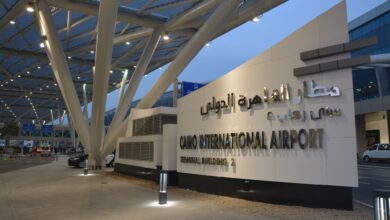
The Syndicate Head highlighted that airport development serves as a fundamental pillar to accommodate expected growth in tourist traffic, noting that the state aims to raise total airport capacity to 72.2 million passengers annually during the 2026/2027 fiscal year, up from 66.2 million passengers currently. This comes alongside ongoing operational modernizations, including Cairo International Airport renewing its Integrated Management System (ISO) certifications for 2026 in line with international standards.
Regarding the hotel sector, Ezz explained that Egypt is preparing to add roughly 7,000 new hotel rooms this year, including 3,445 rooms in Greater Cairo, alongside massive private tourism investments—most notably Travco Group’s plan to inject $1.5 billion to build 10 new hotels, helping meet rising demand for Egyptian destinations.
Ezz emphasized that Arab tourists now view Egypt as an all-inclusive destination offering natural assets, rich heritage, high service quality, and warm hospitality, stressing that current growth represents “not merely an increase in numbers, but a genuine shift in Egypt’s tourism standing, establishing a new phase of partnership with Arab markets.”
He added: “In recent years, the Arab market has proven to be a strategic partner for Egypt’s tourism sector. With ongoing airport upgrades, expanding hotel capacity, and the emergence of new destinations like New Alamein, we expect growth rates to continue and state targets of reaching over 20 million tourists to be met, while strengthening tourism’s contribution to the national economy.”
Dr. Magdy Sadek, a member of the Chamber of Travel and Tourism Agencies, stated that Egypt is currently witnessing high demand from Arab tourists, noting that various tourist destinations—led by the North Coast, Hurghada, Sharm El-Sheikh, and Alexandria—are welcoming growing numbers of visitors from Arab nations.
In exclusive statements to Al-Masry Al-Youm, Sadek added that the Egyptian destination has become the preferred choice for Arab tourists, not only for its beaches, resorts, and diverse tourist assets, but also for the sense of familiarity and cultural closeness visitors feel. He noted that Arab visitors view Egypt as an extension of their own environment, finding a welcome and hospitality that makes them feel right at home.
Sadek explained that declining interest in some competing destinations has contributed to increased arrivals in Egypt, emphasizing that Arab tourists seek destinations that offer safety and stability alongside high service quality—qualities Egypt has successfully established in recent years.
He pointed out that challenging weather conditions in parts of the region, along with regional tensions, have prompted many Arab families to extend their stays in Egypt. He explained that many do not come merely for short vacations, but prefer longer stays due to the stability and favorable atmosphere the country provides.
The Chamber of Travel and Tourism Agencies member affirmed that Egypt was and will remain the closest destination to its Arab brothers, given its historical and cultural standing, as well as its continuous keenness to welcome visitors from across the Arab world by offering a tourist experience combining safety, hospitality, and a diversity of destinations.