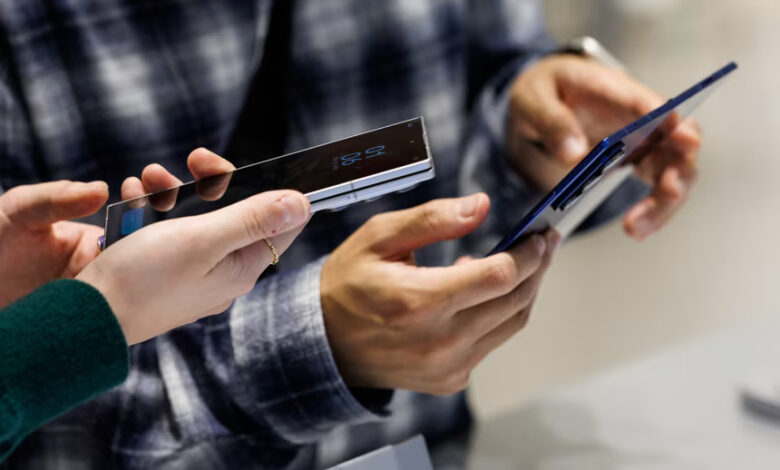
Approximately 50,000 mobile phones have been deactivated in Egypt since the beginning of the year through November, according to the head of the Communications and Mobile Phones Division at the Cairo Chamber of Commerce, Mohamed Talaat.
He warned that the toll will continue to climb as additional handsets are blocked daily, compounding a severe market slump marked by sluggish sales and declining consumer demand.
Speaking during a telephone interview on the television program Yahduth Fi Masr, hosted by Sherif Amer on MBC Masr, Talaat noted that an exact tally of affected devices remains elusive due to ongoing daily shutdowns.
This crisis stems from phones initially brought into Egypt by travelers arriving from abroad—particularly foreign nationals—under customs exemptions, only to be subsequently deactivated after changing hands and being sold to local buyers, he explained.
Disputes between retailers and consumers
The wave of deactivations has sparked wide friction between merchants and consumers.
Many buyers had purchased these second-hand devices months or even years earlier after verifying their tax status via the official mobile application, which at the time indicated no outstanding dues.
Now, aggrieved consumers are demanding recourse from retailers over their blocked devices, while merchants reject any financial responsibility, pointing out that the handsets were verified as tax-exempt on the official app at the point of purchase.
Recounting a typical consumer grievance, Talaat said: “A customer goes back to the merchant saying, ‘I bought this phone from you a year and a half ago,’ and the merchant replies that it is out of his hands—pointing out that when the buyer checked the app at the time of purchase, no taxes were registered on it.”
Talaat sharply criticized the retroactive shift in exemption rules governing devices brought in by foreign travelers, emphasizing that revoking exemptions after the handsets had already lawfully entered the country has unfairly penalized everyday buyers.
“Foreigners were permitted to bring in a tax-exempt phone; you cannot simply reverse that policy retroactively now,” Talaat asserted.
“The market is in turmoil, and people are at each other’s throats—one man even suffered a stroke over this. Customs duties on iPhones range between LE 17,000 and LE 25,000 depending on the model.”
Calls for regulatory intervention
The division chief urged both the National Telecom Regulatory Authority (NTRA) and the Egyptian Customs Authority to intervene promptly to resolve the impasse, warning that disputes between buyers and sellers will only escalate further without regulatory clarity.
He noted that tensions have frequently boiled over, prompting aggrieved parties to file complaints at police stations or with the Consumer Protection Agency.
“Every day we are witnessing major altercations and crises ending up either at police precincts or before the Consumer Protection Agency,” he said.
Highlighting the severe financial toll on small businesses, Talaat shared an encounter with a local merchant: “Just yesterday, a retailer told me, ‘I’m going to have to sell my car—where else am I supposed to come up with all this money?'”—underscoring the steep losses merchants face in trying to manage the fallout.
Talaat stressed that Egypt’s mobile phone market is suffering acute stagnation since the deactivation crisis began.
“The market is deeply strained, and sales have virtually ground to a halt since this issue emerged,” he remarked.
Surge in locally manufactured smartphone prices
Alongside the customs dispute, Talaat noted a sharp surge in the price of domestically assembled mobile phones, revealing that the most affordable touchscreen smartphone manufactured in Egypt now retails for LE 8,000—double the LE 4,000 price tag recorded just a year ago.
Edited translation from Al-Masry Al-Youm