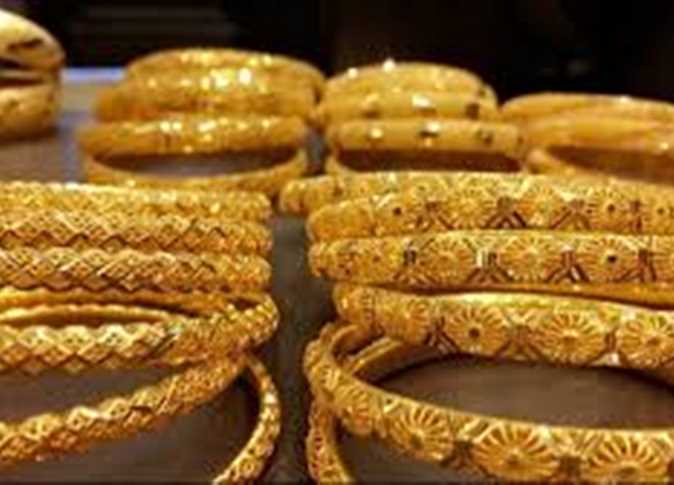
Gold prices in the Egyptian market saw a decline during Tuesday’s trading, influenced by US inflation data that came in higher than market expectations.
The price of a gram of 21-karat gold fell to approximately LE 6,180, down from LE 6,250.
The Vice Chairman of the Gold and Jewelry Division at the Federation of Egyptian Chambers of Commerce (FEDCOC), Lotfi al-Moneeb, said that the US inflation data has strengthened the likelihood that the Federal Reserve will continue to tighten monetary policy and raise interest rates.
This, in turn, bolsters the US dollar and bond yields, placing downward pressure on gold globally.
Moneeb added that these expectations have led to a decline in global gold prices by approximately three percent, bringing them closer to the US$ 4,000-per-ounce level.
He explained that the Egyptian market has been influenced both by a decline in global gold prices and a notable improvement in the Egyptian pound’s exchange rate against the US dollar.
The dollar has retreated from levels exceeding LE56 in late October to approximately LE 53.4 currently, which has amplified the impact of the global price decline on the domestic market, Moneeb said.
Outlook for late 2026 into 2027
Regarding the outlook through the end of 2026 and into 2027, he indicated that price volatility is likely to persist, driven by the ongoing interplay between the escalation and de-escalation of global geopolitical tensions.
Moneeb noted that demand for gold jewelry has softened due to rising prices and diminished purchasing power—a consequence of the pound’s depreciation against the dollar—whereas gold bars and gold coins remain the most attractive options for those looking to save.
The market is not experiencing a cessation of buying, he assured,but rather a shift in consumer behavior – some are choosing to purchase during price dips, while others are waiting for greater stability.
Additionally, there are instances of individual selling—driven by the need to secure liquidity and cover living expenses—as a result of rising prices.
US inflation
The CEO of the platform iSagha, Said Imbaby, explained that US inflation exceeding market expectations exerts short-term pressure on gold and silver.
This is because it diminishes the likelihood of the Federal Reserve cutting interest rates, he said, while increasing the probability that a hawkish monetary policy will persist—or that interest rates may even be raised—in the near term.
Imbaby added that such a scenario could bolster the US dollar and bond yields, thereby reducing the appeal of gold and silver, both of which are assets that do not generate periodic returns.
He further emphasized the need to distinguish between short-term impacts and long-term fundamentals, noting that gold continues to benefit from central banks purchases, concerns regarding debt, and geopolitical tensions.
The iSagha CEO added that global projections for gold prices in 2027 vary; some forecasts place the average price per ounce at around $ 4,250, while others estimate it to be closer to $ 4,650.
According to Imbaby, the Egyptian market is influenced by several factors—not just the global price per ounce, but also the dollar-to-Egyptian-pound exchange rate and the dynamics of supply and demand.
Consequently, any projections for local prices in Egyptian pounds must be based on clear assumptions regarding the exchange rate.
Imbaby added that the Egyptian market is witnessing a shift in consumer behavior, with a segment of consumers moving toward saving and investing in gold bars and gold coins. These are preferred because they incur lower making charges and are relatively easier to resell compared to gold jewelry.
This was reflected in the growth of investment demand for gold during the third quarter of 2026, even as demand for gold jewelry declined, he added.
Imbaby noted that gold remains an important tool for hedging and diversifying savings; however, he advised approaching the current phase with caution, staggering purchases over time, and avoiding buying or selling decisions based on a single day’s market movement or an isolated economic report.
He further explained that market trends are shaped by the interplay of various economic and financial factors—particularly US interest rates, the performance of the dollar, inflation, investment and industrial demand, and geopolitical tensions.
Edited translation from Al-Masry Al-Youm