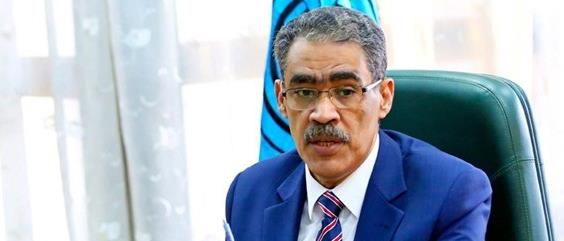
We initially welcomed the appointment of Diaa Rashwan to the new government with optimism.
This held true despite the usual controversy surrounding cabinet selections—a trend that has unfortunately become an unwelcome tradition. I found myself largely indifferent to the debate over whether his title was ‘Minister of Information’ or ‘Minister of State for Information,’ nor was I concerned with the legal and administrative friction regarding his role’s relationship with existing media bodies.
To me, these are merely superficial disputes.
The core issue and the fundamental question is this: are we looking at a minister tasked with media affairs in an institutional, reformative sense? Or are we simply witnessing the appointment of a government spokesperson on a grander scale? Having served as a spokesperson for various entities—both in the opposition and the government—I can say the man performs this role skillfully.
He is well-equipped to defend the government at a stage when it is in dire need of such advocacy and at a time that demands a coherent, explanatory discourse.
Yet, none of these tasks fall under the actual jurisdiction of a Ministry of Information.
The role of a spokesperson is well-defined: it is a communicative function—defensive and explanatory—focused on clarifying decisions, fielding inquiries, managing press conferences, navigating media crises, and providing real-time reputation management for the government.
A spokesperson operates within the realm of the message, determining how it is framed, delivered, and managed from moment to moment.
However, a minister responsible for media affairs is not merely a spokesperson who sits beside the Prime Minister at press conferences to justify, defend, or delivers “clever retorts.”
Such a description is not only incomplete but arguably diminishes the role entirely.
A true Minister of Information, if the position is to have any real substance, must operate within the realm of the system, not just the message. While the traditional model—where a minister directly oversees state-owned institutions—has faded following the abolition of the ministry and the creation of independent bodies, the question today is not about returning to the past.
Rather, it asks: are we witnessing the appointment of a media minister in the modern, reformative sense?
If the role is indeed intended to be reformative, its duties are radically different. They include: restructuring the professional ecosystem, upgrading technical infrastructure, modernizing production mechanisms, and retraining personnel.
It also involves regulating the advertising market, establishing clear professional standards, streamlining the relationship between various media entities, and formulating a national vision for the media.
This is a formidable institutional undertaking with deep technical, technological, and professional dimensions.
I have written extensively about media reform within the context of our current public sphere—as it stands—and despite the existing constraints on open discourse. It is clear to me that the question of “freedom,” as vital as it may be, is not the starting point as some might argue.
Instead, the entire issue hinges on professionalism above all else. Freedom without competence inevitably descends into total chaos, while competence without freedom withers into a silent bureaucracy. But which takes precedence in the reform process?
In my view, it is professionalism, professionalism, and, once again, professionalism.
Competence, merit, and qualification are the missing pillars of this profession. What the industry requires first is genuine training, investment in technology, the establishment of clear standards, and robust institutional governance. Only then does the conversation regarding “freedom” become productive, rather than a recipe for total chaos that could engulf everyone.
My assessment is that we are currently experiencing a state of “organized chaos” within our media. However, despite its flaws, this is far less dangerous than the total anarchy of a system operating without tools, standards, or professional constraints—all in the name of liberty.
This brings me back to my initial question, so that we may proceed with clarity: Are we witnessing the appointment of a minister dedicated to media affairs? Or are we simply looking at a government spokesperson? This question is particularly pertinent given that the Cabinet already has an official spokesperson in office—a role that has seen its institutional presence diminish in recent years.
Ultimately, if the requirement is for a spokesperson, then the role is purely communicative and should be designated as such. However, if the goal is to appoint a media minister in the reformative sense, the mission is not to field questions, but to rebuild the system itself. Calling things by their proper names is not a luxury; it is the first step in any serious reform.
The difference between managing the message and managing the system is the difference between immediate defense and building for the future. If the objective is to reform the media, the task is not to polish the rhetoric, but to overhaul the infrastructure.
Every successful reform begins by defining the role before selecting the individual.
Author’s biography
Dr. Ramy Galal is an Egyptian writer and academic specialising in public governance and cultural policy. His research focuses on cultural diplomacy, the creative economy, and institutional reform within Egypt’s cultural sector.
He was appointed as an adviser and spokesperson for Egypt’s Ministry of Planning. He also served as a senator and spokesperson for the Egyptian Opposition Coalition.
He is the author of two books, “I Saw the World from Both Sides” and “The Future of Egypt’s Culture,” exploring governance, identity, and the role of culture in shaping public life.
Dr. Galal holds a PhD from Alexandria University, a master’s degree from the University of East London, and a Diploma from the University of Chile.
He completed advanced governance programs at the Hertie School in Berlin, King’s College London, and Arizona State University.