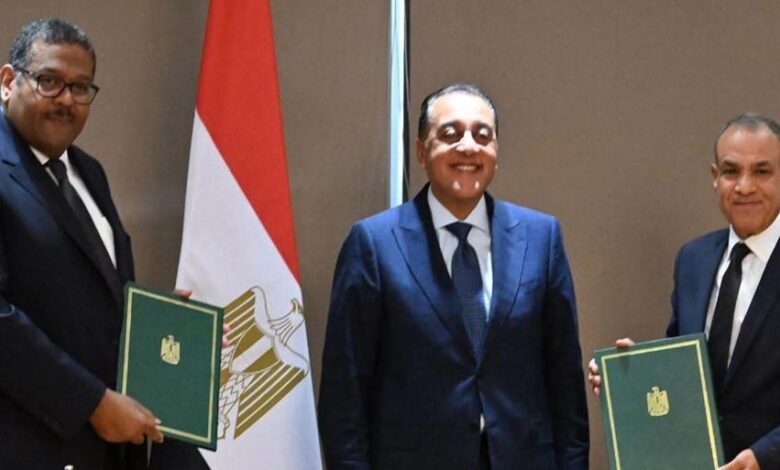
Minister of Foreign Affairs, International Cooperation, and Expatriates Affairs Badr Abdelatty, who also serves as Egypt’s Governor to the World Bank and Alwaleed Alatabani, Regional Director at the World Bank, signed a financing agreement on Sunday, November 1, 2026, under Phase II of the Development Policy Financing (DPF) program.
The agreement is part of the “Building Resilience, Opportunity, and Wealth for Egypt’s Prosperity and Stability” program.
The signing ceremony was attended by Prime Minister Mostafa Madbouly, Minister of Planning and Economic Development Ahmed Rostom, and Vice Minister of Finance Yasser Sobhi.
In his address during the ceremony, the Foreign Minister emphasized that the agreement forms part of Egypt’s broader efforts to expand cooperation with international and regional financial institutions.
He noted that mobilizing concessional development financing aims to bolster the Egyptian economy’s resilience and competitiveness, particularly amid ongoing economic challenges, geopolitical tensions, and their ripple effects on the global economy.
Abdelatty added that the deal reflects progress made in implementing economic and institutional reforms, particularly regarding the expansion of private sector participation, removal of investment barriers, and enhancement of public finance management efficiency.
He affirmed that these measures strengthen the economy’s capability to withstand external shocks while driving sustainable growth and the transition toward a green economy.
The World Bank Group’s Board of Executive Directors had approved $1 billion in total financing under the program in May 2026.
The approval highlights international confidence in Egypt’s ability to continue structural reforms, meet development goals, and execute policies designed to reinforce macroeconomic stability, boost competitiveness, and improve the business environment.
This financing represents the second tranche in a series of three Development Policy Financing (DPF) operations provided by the World Bank to Egypt on concessional terms.
Aligned with national development priorities and the economic reform agenda, the program focuses on key pillars, fostering private-sector-led job creation, improving public finance management and sustainability, protecting vulnerable groups, and supporting the green economy transition.