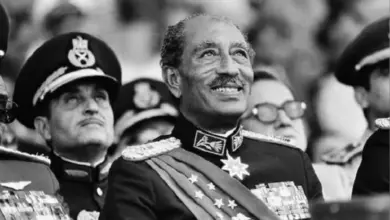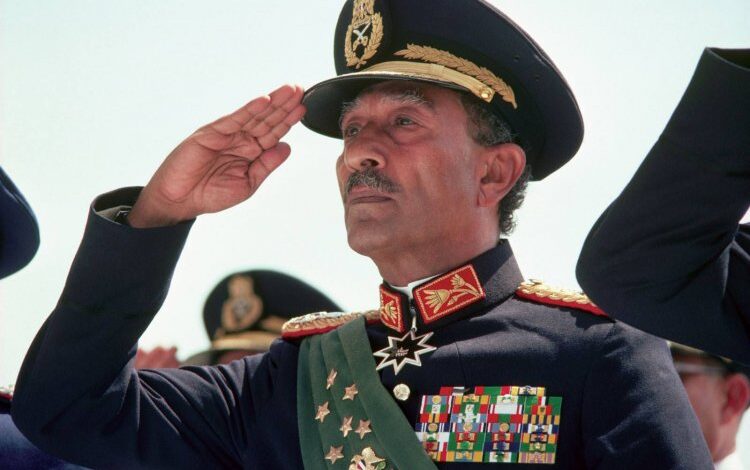
I share a unique relationship with late President Anwar Sadat—one that has, I suppose, been entirely one-sided.
I never saw him in person, never met him, and he certainly never knew who I was. Yet throughout my youth, everything he said and did felt deeply personal. I followed him with anger and opposed him with fervor, though I never missed a word he spoke.
Had that young man glimpsed himself more than four decades later, aboard a flight bound for Washington to attend a ceremony honoring that very same leader, he would never have believed it possible.
En route to the US capital, I found myself retracing that journey and wondering how I arrived at this moment.
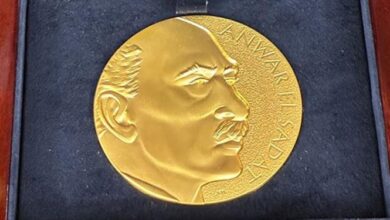
Today, I am preparing to attend the Capitol Hill ceremony posthumously awarding Sadat the Congressional Gold Medal—an honor authorized by legislation in December 2018 in recognition of his historic contributions to Middle East peace.
For me, however, the occasion stirs a far longer reckoning with a man who left this world while I stood in staunch opposition to him.
I was still in high school when I watched him step off the plane at Ben Gurion Airport.
I wept that day, and later carried that anger with me to university, where—like so many of my generation—I joined protests against him. Whenever his image appeared in the newspapers or on television, I looked at him through the eyes of a young dissident certain he saw the whole picture.
By the time he was assassinated, I was still a university student. I have no memory of feeling joy. Instead, I recall a conflicted tangle of emotions—a mixture of gloom, numbness, exhaustion, and shock, mingled perhaps with revulsion at using murder to settle political differences.
I do not claim to have understood my feelings with such clarity at the time; only now, after all these years, am I trying to make sense of what stirred within me then.
The shift began the year after his death, when I met with his wife, Jehan Sadat, at the Maamoura presidential rest house for an interview.
The drive to land a journalistic scoop was enough to set aside my lingering anger toward her husband and request the meeting. Little did I know that our encounter would leave a mark reaching far beyond the story itself.
Our conversations continued from there, evolving into candid, off-the-record exchanges free from any journalistic agenda. I came to know her as a remarkable woman who left an indelible impression.
Whenever she spoke of Sadat, her words gave me pause—filled with devotion, admiration, respect, and an unshakable faith in the man, all expressed in private moments where she had no image to curate for the press and no audience to persuade.
It felt as though she were transported to another world whenever she spoke of him. And I began to ask myself: what did she see in this man that had completely eluded me? And how had I reduced so complex a human being—and so profound a chapter of history—to one-dimensional portrait fueled by anger?
Her love for her husband was not, in itself, proof that his decisions were right, yet it opened a door I had firmly shut myself. I returned to reading, researching, and listening, beginning to notice what I had once glossed over or dismissed before truly understanding it.
I came to realize how readily we gravitate toward whatever validates our existing beliefs—and how deeply unsettled we become by anything that asks us to reconsider them. It is an impulse not confined to youth alone; it can cling to a person no matter how old they grow.
I cannot say my convictions shifted overnight.
Rather, my perspective grew more measured and disciplined, leaving far more room for inquiry than for ready-made judgments. In time, I became able to disagree with Sadat while simultaneously respecting his courage, his patriotism, and his resolve to make a monumental decision fully aware of the backlash it would provoke.
We had every right to oppose him, and some of our questions remain legitimate to this day.
Yet disagreeing with him neither makes him a traitor nor means that he betrayed his country. He acted according to his own judgment, pursued what he believed served Egypt’s best interests, and bore full responsibility for choices that altered the nation’s trajectory, its alliances, and its standing in the region.
His legacy continues to spark a debate worthy of serious scrutiny. Some believe he grasped early on what others took far longer to recognize, while others hold his decisions partly responsible for the state of the region today.
A medal cannot settle that argument, nor does any tribute spare us the obligation of examining his tenure within the context of its circumstances, its outcomes, and the alternatives available to him at the time.
My story with Sadat, and my conversations with Jehan, hold details that deserve to be documented one day through a blend of memory and historical inquiry.
For today, it is enough to acknowledge that they taught me the necessity of questioning certainty—and reminded me that a human being is always far larger than the portrait painted by their adversaries.
I believe Sadat deserves this honor. I am deeply grateful to Jehan Sadat, whose reflections prompted me to look past my anger and search for the man behind it.
And I am glad to be here today to witness this tribute to a man I have known for so long, yet who never knew me at all.