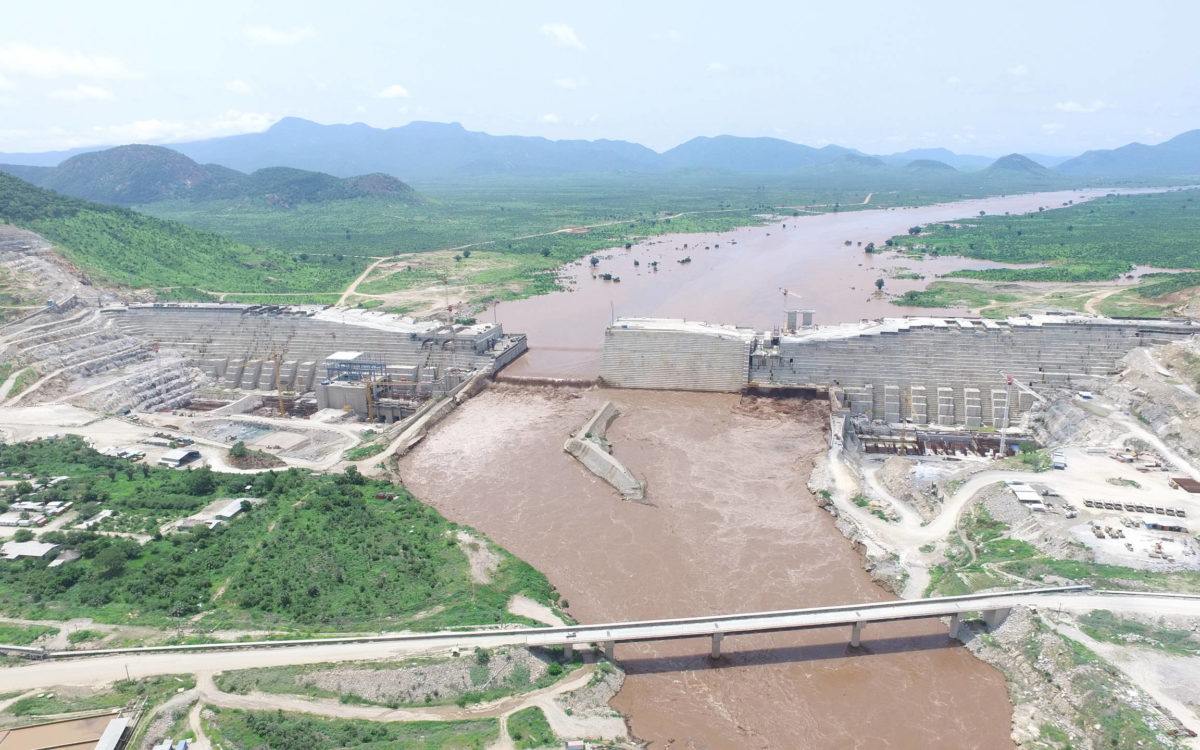
Minister of Water Resources and Irrigation, Hani Sweilem, on Sunday demanded that the Grand Ethiopian Renaissance Dam (GERD) pay compensation for the damage it has caused to Egypt and Sudan.
During his participation in the Senate’s plenary session, the Minister added that no dam of the size of the Ethiopian dam has ever been built on the Nile River through unilateral action.
The damage it has already incurred is the reduction of 38 billion cubic meters from Egypt’s share of 55 billion cubic meters, he explained.
Sweilem revealed that the demand for water has risen to 88.5 billion cubic meters, while Egypt’s water share is 55.5 billion cubic meters.
“We reuse 23.2 billion cubic meters annually to bridge the water gap, and treatment plants add 4.8 billion cubic meters,” he said, noting that the per capita share has decreased to 500 cubic meters, compared to the global average of 1,000 cubic meters per capita.
Grand dispute
The GERD, completed and officially inaugurated on September 2025 on the Blue Nile, is one of the Nile’s main sources and the largest hydropower project in Africa.
The dam includes 13 turbines and a 74 billion cubic meter reservoir. Its reservoir has been filled five times by September 2024, reaching a level of 638 meters above sea level.
The dam has sparked sharp disputes with Egypt and Sudan, which depend on the Nile for 97 percent and 55 percent of their water, respectively.
Egypt, which historically receives 55.5 billion cubic meters annually under agreements from 1929 and 1959, fears that the dam will reduce water flow, threatening agriculture (which consumes 80 percent of the water) and the water security of its 100 million people.
Sudan sees the dam’s benefits in irrigation and electricity, but fears uncontrolled flooding, such as in October 2025 when the opening of the sluices flooded areas in the Roseires River, prompting Ethiopia to reduce discharge to 300 million cubic meters per day to avert disaster.