Hantavirus cases in Argentina have almost doubled in the past year, with the country recording 32 deaths alongside its highest number of infections since 2018.
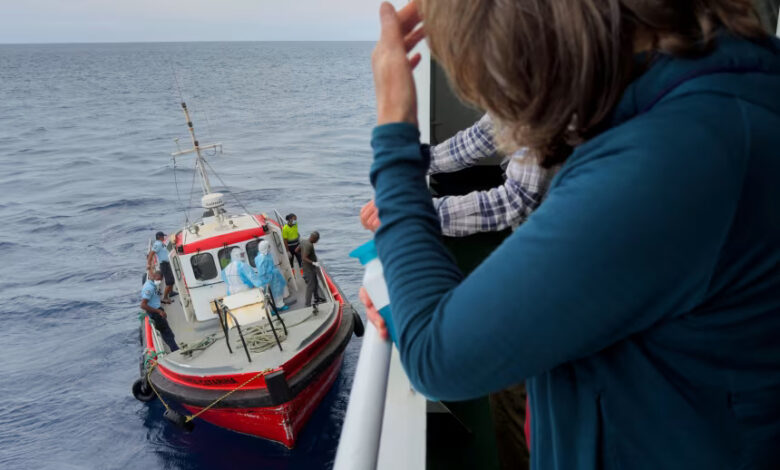
The rise comes as Argentine authorities race to trace the footsteps of a couple who traveled extensively in the country and later died amid an outbreak of the virus on the cruise ship MV Hondius, which left port in Ushuaia, southern Argentina, on April 1 and is currently on its way to Spain’s Canary Islands.
Experts blame climate change and habitat destruction for the rise in cases of the disease, which is usually caused by exposure to the urine or feces of infected rodents.
The current season, which started in June 2025, has already seen 101 confirmed hantavirus cases, Argentina’s health ministry said – compared with just 57 during the same period last season.

Not only did the country record an unusually large number of cases this year, but it also recorded one of the highest lethality rates of recent years, with the number of deaths marking an increase of 10 percentage points compared to the previous year.
And those numbers exclude the outbreak on the cruise-ship MV Hondius, the origins of which remain unknown.
While no cases of the hantavirus have been recorded in Ushuaia in recent decades, according to the ministry, the virus is endemic in some other areas of Argentina.
Argentine authorities believe the couple visited various regions of the country as they crossed back and forth over the border with neighboring Chile on several occasions, and into Uruguay, before joining the cruise.
Four geographic regions of Argentina are historically high-risk areas for contagion: Northwest (in the provinces of Salta, Jujuy, and Tucumán), Northeast (Misiones, Formosa, and Chaco), Center (Buenos Aires, Santa Fe, and Entre Ríos), and South (Neuquén, Río Negro, and Chubut).
The Dutch couple who died amid the outbreak on the ship are thought to have visited both Misiones and Neuquén on their travels.
For many years, hantavirus had been associated with Patagonia in Argentina’s southern tip, after a deadly outbreak in 2018 killed 11 people and resulted in dozens of infections.
This season, however, most cases have been found in the country’s central region, with the province of Buenos Aires topping the highest number of cases with 42.
The outbreak on the ship has been linked to the Andes strain of hantavirus, a rare but potentially severe form of the virus that in some cases can spread between humans through close contact.
Climate to blame?
Hantavirus in Argentina usually develops in rural and peri-urban areas, in the presence of crops, tall weeds, humidity, or a subtropical climate.
But experts believe environmental degradation caused by climate change and human activity is contributing to its spread by allowing the rodents that transmit the virus to thrive in new areas.
“Increasing human interaction with wild environments, habitat destruction, the establishment of small urbanizations in rural areas, and the effects of climate change contribute to the appearance of cases outside historically endemic areas,” the ministry said.
Extreme weather phenomena, such as droughts and episodes of intense rainfall in recent years, are also fueling the trend, according to experts.
Temperature rises generate changes in the ecosystem that affect the presence of the long-tailed mouse, the main carrier of the virus in Argentina and Chile.

“These rodents are better able to adapt to climate changes, which could facilitate the higher number of cases we are seeing,” explained Eduardo López, an infectious disease specialist and adviser to the Argentine government during the Covid-19 pandemic.
Forest fires have prompted both humans and wildlife to move to new places, increasing the risk, said Roberto Debbag, vice president of the Latin American Society of Vaccinology, while tourism trends have also had an effect.
“Anyone going to a risk area for tourism, if it is not cleared of undergrowth, represents a very high danger,” Debbag said.
The Health Ministry said technical health teams will travel to Ushuaia in Argentina’s Tierra del Fuego province to capture and analyze rodents in areas linked to the route of the Dutch couple believed to have been exposed to the virus.
However, Juan Petrina, director of epidemiology for Tierra del Fuego, said the timeline “doesn’t add up for them to have contracted the disease here,” citing airport and ship departure records claiming the couple were only in Tierra del Fuego from March 29 to April 1.
He also dismissed as a “rumor” a suggestion that the couple may have visited a landfill site in Ushuaia before boarding the ship. “The National Ministry of Health hasn’t been able to confirm that this was the case,” Petrina told a news conference in the southern Argentinian city on Friday.