Andrew Naylor, Head of Middle East and Public Policy at the World Gold Council, stated that the direction of gold in the coming period will be determined by several factors, most notably global interest rate expectations—particularly the Federal Reserve’s decision expected next October—alongside inflation rates, which peaked at around 3.9% during the second quarter, and the strength of the dollar.
In exclusive statements to Al-Masry Al-Youm, he added that gold is likely to move within a range of ±5% around the $4,100 per ounce level until the end of the year, and will not drop below $4,000 per ounce. He noted that any decline exceeding 10% typically attracts strong demand from long-term investors, which supports the market’s resilience.
Regarding whether the current war has altered the traditional relationship between gold and geopolitical crises, Naylor explained that gold’s traditional role as a safe haven has not changed; rather, what has occurred is the emergence of more diversified investment behaviors.
He pointed out that during the first quarter of 2026, the average price of gold reached $4,873 per ounce, peaking at $5,405, driven by geopolitical tensions and inflation, alongside robust demand from central banks.
The Head of Middle East and Public Policy at the World Gold Council added that despite some investors turning toward the US dollar or bonds, gold still retains its long-term role as a tool for hedging and portfolio diversification, backed by strong institutional and retail demand.
Regarding the reasons why gold prices have not risen despite the war in the Middle East, Naylor explained that historically, gold has responded positively in about two-thirds of the cases where geopolitical tensions escalated significantly. However, rising oil prices, inflation, and markets pricing in expectations of prolonged high interest rates have been among the most prominent influencing factors during the current period.
He emphasized that despite these pressures, gold still retains its appeal, noting that total global demand for gold increased by 2% year-on-year to reach 1,231 tonnes during the first quarter of 2026, while the value of demand hit a record high of $193 billion, marking a 74% increase.
He clarified that global gold ETFs (Exchange-Traded Funds) experienced some outflows during the recent downturn, which is normal during periods when interest rate expectations are being reassessed.
However, he stressed that these outflows are not widespread and do not reflect a major institutional exit, as institutional investors still view gold as a long-term hedging tool, and flows typically shift according to monetary policy expectations rather than a change in demand fundamentals.
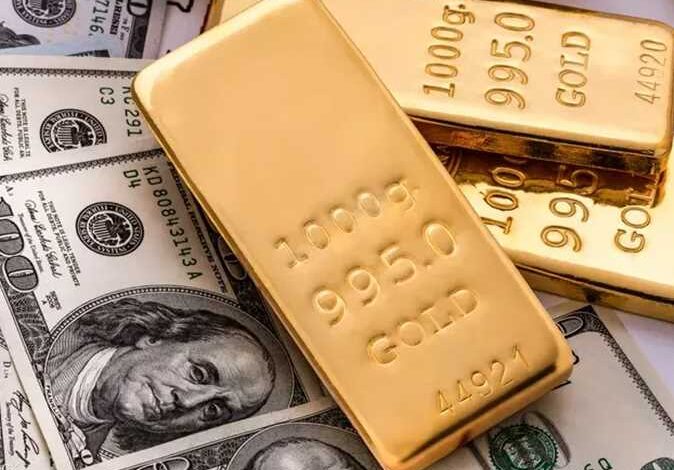
“He added that the Egyptian market witnessed strong demand for gold bars and coins as preferred saving instruments during periods of sharp volatility, explaining that with rising global prices and declining purchasing power, Egyptians have become more inclined to purchase bars and sovereign coins compared to jewelry.
Naylor clarified that this trend is not new, but it has become more pronounced during the current year as a result of ongoing economic conditions and the rising value of the dollar.
He emphasized that the structural fundamentals supporting gold remain strong, alongside a growing reliance on professional storage and custody services. This, he noted, reflects gold’s status as both a cultural and investment asset, and as a reliable store of value during turbulent times.
Regarding gold purchases in the Middle East, particularly in the Gulf region, in light of rising energy prices and declining purchasing power, he pointed out that gold continues to be used as a hedging tool with the same strength. He explained that global demand for gold bars and coins rose by 42% to reach 474 tonnes, as investors turned to gold to hedge against inflation and economic uncertainty.
On the expectations for central bank gold purchases amidst current tensions and rising global oil prices during 2026, Naylor said that the annual Central Bank Gold Reserves survey, published by the World Gold Council, showed that 89% of reserve managers expect gold holdings to continue rising over the next 12 months.
The Head of Middle East and Public Policy at the World Gold Council added that with gold overtaking US bonds as the most important reserve asset, the findings indicate that strong momentum in central bank demand for gold will persist throughout 2026.