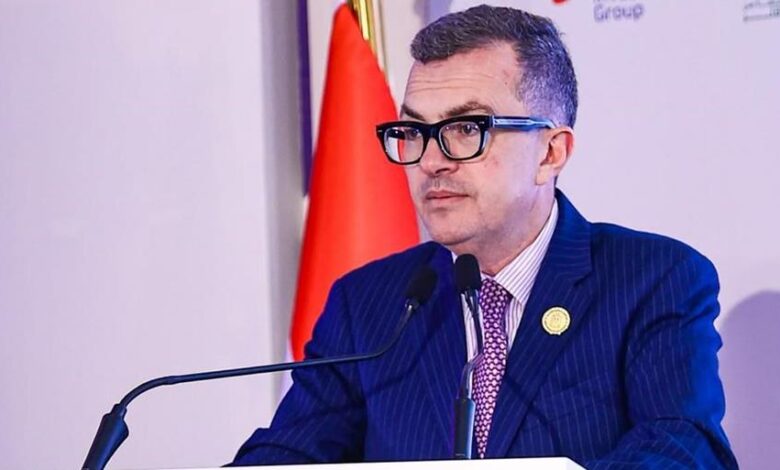
Minister of Planning and Economic Development Ahmed Rostom and Minister of Supply and Internal Trade Sherif Farouk affirmed the state’s continued efforts to invest in human capital and develop the social protection system by increasing investments directed toward health and education, improving the efficiency and nutritional value of food subsidies, and expanding economic empowerment programs for the most vulnerable families.
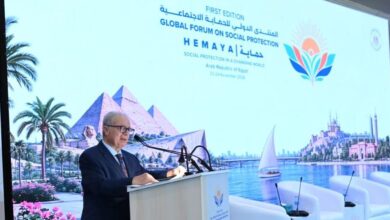
The remarks came during the two ministers’ participation in the second session of the International Social Protection Forum “Hemaya 2026”, held in the New Capital under the patronage of President Abdel Fattah El Sisi under the title “Investing in Human Capital: Cash Transfers and Social Protection to Support Early Childhood, Nutrition, and Education.”
The Planning Minister stated that public investments directed toward human development over the past 12 years have totaled approximately LE 1.5 trillion, noting that the health, education, and social protection sectors account for 48 percent of total government investments in the current fiscal year’s plan.
He explained that investing in human capital represents a fundamental pillar for achieving sustainable economic growth rather than merely a social priority, affirming that the state adopts an integrated approach to human development aimed at ensuring the equitable distribution of economic growth dividends, in line with the goals of “Egypt Vision 2030” and the Comprehensive National Social Protection Framework.
Rostom reviewed state efforts in implementing the national project for developing the Egyptian countryside, “Decent Life” (Hayah Karima), noting that its first phase benefits approximately 18 million citizens across 20 rural governorates, with human-building and public health investments accounting for 73 percent of its total financial allocations.
He added that the state aims to complete the second and third phases of the initiative, extending the project’s coverage umbrella to 57 percent of the Republic’s total population.
He affirmed that the philosophy of social protection is undergoing a shift from providing solely direct cash support to economic empowerment and capacity building, by helping families benefiting from the “Takaful and Karama” program find sustainable sources of income and gradually move out of the cycle of poverty.
For his part, the Supply Minister affirmed that investing in human capital begins with meeting basic human needs—foremost among them providing sufficient and diverse food that supports health and healthy growth and enhances children’s opportunities to learn and build their future.
He explained that the ration subsidy system serves approximately 24 million households, with around 64.5 million citizens benefiting from the subsidized bread system and about 57.5 million citizens benefiting from the ration commodities system, noting that LE 178.3 billion has been allocated for bread and ration commodity subsidies in the FY 2026/2027 budget.
Farouk said the ministry is working to upgrade the ration subsidy system to enhance resource-targeting efficiency and raise the nutritional value of goods provided to citizens, explaining that the move toward a gradual transition to conditional/commodity-linked cash support aims to grant families greater freedom in choosing their food needs, helping diversify food sources and achieve better utilization of allocated subsidy resources.
He noted that developing the subsidy system was among the files discussed during the “Egypt Forum 2026”, where the ministry presented its vision for enhancing equity and flexibility in targeting subsidies and improving resource efficiency.