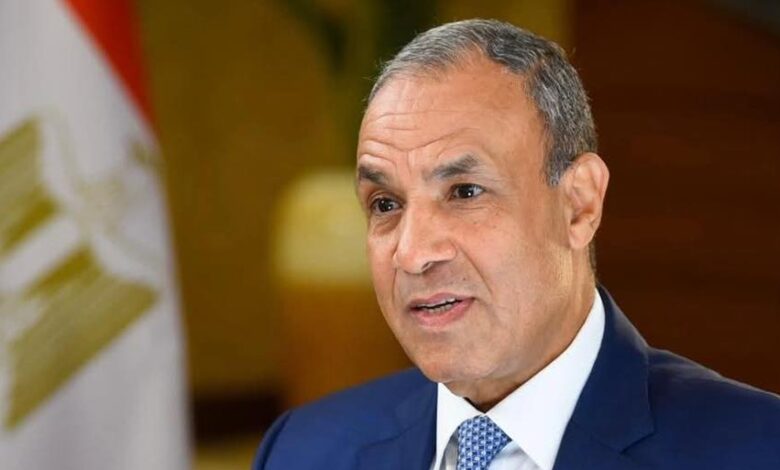
Egyptian Foreign Minister Badr Abdelatty revealed that had Somalia intervened to mediate the dispute over the Grand Ethiopian Renaissance Dam (GERD), noting that a meeting was held in Turkey to this end, but it failed to yield any progress due to Ethiopia’s rejection, RT reported on Saturday.
Abdelatty said that water security is an “existential issue” and a “red line” for Egypt.
He emphasized that while Cairo supports development in the Nile Basin countries, it insists on respect for international law and state sovereignty, and opposes any unilateral actions that infringe upon the rights of downstream nations.
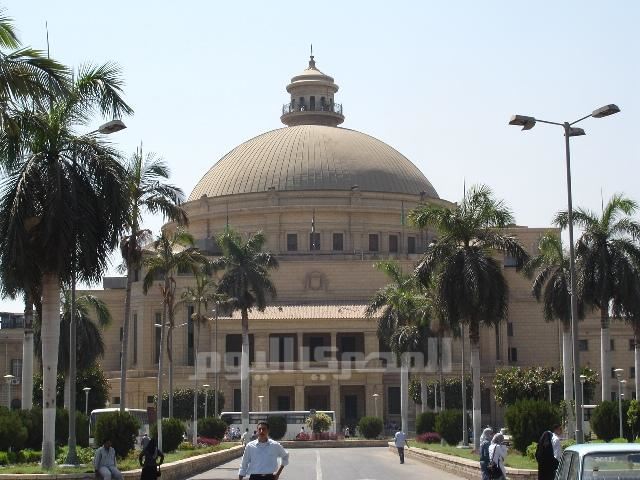
The minister’s remarks came during a meeting with a group of journalists, media figures, newspaper editors-in-chief, and television hosts at the Tahrir Palace in Cairo.
Abdelatty was responding to a question regarding Ethiopian statements that link the Nile water issue to Addis Ababa’s efforts to secure access to the sea, a concept framed as a “river-for-sea-access” trade-off.
Ethiopia rejects mediation
The Egyptian Foreign Minister explained that Somalia had stepped in to mediate the GERD dispute, leading to a meeting in Turkey – Ethiopia rejected the initiative.
The minister did not disclose specific details regarding the Somali proposal or the nature of the arrangements discussed during the meeting.
Abdelatty emphasized that Egypt’s position is based on distinguishing between the GERD issue and Ethiopia’s access to the sea.
He asserted that Egypt’s water security is non-negotiable, and that any arrangements regarding maritime access must be grounded in international law and respect for the sovereignty of the states concerned.
In previous statements, Abdelatty underscored that the issue of the Ethiopian dam is unrelated to the matter of maritime access.
He stressed that reaching a legally binding agreement on the operation of the dam is an entirely separate issue from arrangements for access to the sea, further emphasizing Cairo’s rejection of any maritime access for Ethiopia that could serve military purposes.
Somaliland tensions
The roots of the tension surrounding Ethiopia’s access to the sea date back to early 2024, when Ethiopia signed a memorandum of understanding with the breakaway region of Somaliland, which had unilaterally declared its separation from Somalia.
The memorandum included arrangements granting Addis Ababa access to the Red Sea coast, a move rejected by the Somali government as an infringement upon the country’s sovereignty and territorial integrity.
At the time, Turkey intervened to mediate between Mogadishu and Addis Ababa, leading to the “Ankara Declaration” in December 2024.
This declaration stipulated that efforts would be made toward commercial arrangements providing Ethiopia with reliable and sustainable access to the sea, underpinned by bilateral agreements and subject to Somali sovereignty, while also initiating technical negotiations under Turkish auspices.
Ongoing dam dispute
These developments come against the backdrop of an ongoing dispute between Egypt and Ethiopia regarding the dam, following the stalemate in tripartite negotiations that have dragged on for nearly 12 years without reaching a legally binding agreement to govern the filling and operation of the facility.
Cairo and Khartoum continue to insist on the need for a mechanism that safeguards the rights of the downstream nations and mitigates the risks posed by unilateral actions.
On November 2, Egypt and Sudan reiterated their rejection of unilateral measures in the Eastern Nile Basin and urged Ethiopia to alter its approach toward the dam, warning of the consequences of continuing its unilateral operation in the absence of a legally binding framework to govern it.