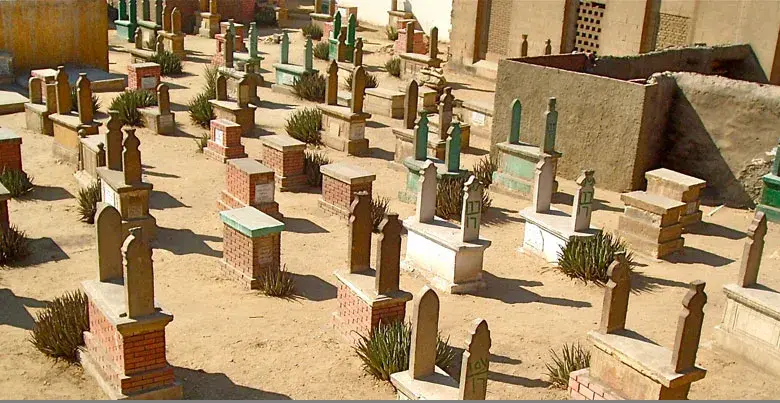
Prime Minister Mostafa Madbouly said the project to revive the Al-Suyuti (Mamluk) cemetery in Cairo, home to the tombs of prominent Muslim scholars from various Islamic schools of thought, is in line with the government’s strategy to restore historic areas, enhance their value and promote them as distinctive tourist destinations showcasing Egypt’s cultural heritage.
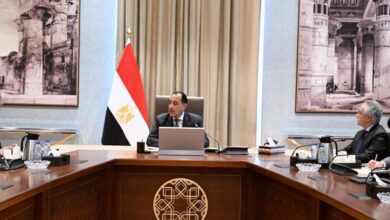
Madbouly made the remarks during a meeting on Monday, July 13, 2026, to review progress on the project. The meeting was attended by Awqaf Minister Osama Al-Azhari, Cairo Governor Ibrahim Saber and Diaa Zahran, Head of the Islamic, Coptic, and Jewish Antiquities Sector at the Supreme Council of Antiquities (SCA), as well as Engineer Mohamed Al-Khatib, the project consultant, and Major General Dr. Mohamed Nabil Araqi, Assistant Minister of Awqaf for Engineering Affairs.
The Awqaf Minister said the restoration works in this area send a message to the world that Egypt was committed to preserving its heritage, noting the site contains the tombs of leading Muslim scholars representing different schools of Islamic jurisprudence, making it an important destination for visitors from across the Islamic world.
The Cairo Governor affirmed the governorate’s readiness to provide all necessary support for the project and said that efforts would be coordinated with relevant ministries and authorities to restore the site in a manner befitting its historical significance.
Mohamed al-Khatib presented a detailed overview of the project, highlighting the site’s historical importance, distinctive minarets and domes, and numerous registered monuments.
He said the area, which evolved over more than 1,000 years, is considered the world’s largest Islamic funerary complex.
He said the project envisions transforming the Al-Suyuti (Mamluk) cemetery into a “garden of collective memory,” an open-air museum of Islamic art and architecture, and a cultural and educational trail that tells the history of the cemetery through the lives of the figures buried there, while preserving its sanctity and funerary character.
The project will include a visitor center, an open-air museum, heritage interpretation trails, a reflection area, a specialized library, a traditional crafts center, lecture halls, cultural event spaces and other visitor facilities.
Khatib added the project also aims to integrate the site with nearby landmarks in Historic Cairo, including the Fustat Park, the Mosque of Amr Ibn Al-As, the mosques of Imam Al-Shafi’i, Sayyida Nafisa and Sayyida Aisha, Sultan Hassan Mosque and the Salah El-Din Citadel.
For his part, Diaa Zahran said the Al-Suyuti (Mamluk) cemetery features a distinctive collection of funerary domes.
He reviewed ongoing restoration works on several domes at the site, describing the project as an important addition that is expected to attract large numbers of visitors while complementing broader restoration efforts across neighboring historic areas.