Tue 22 May 2012

Egyptians discuss response to Ethiopian dam

Mon, 17/05/2010 - 11:03
Nile river in Luxor, southern Egypt.
Photographed by other
Archived

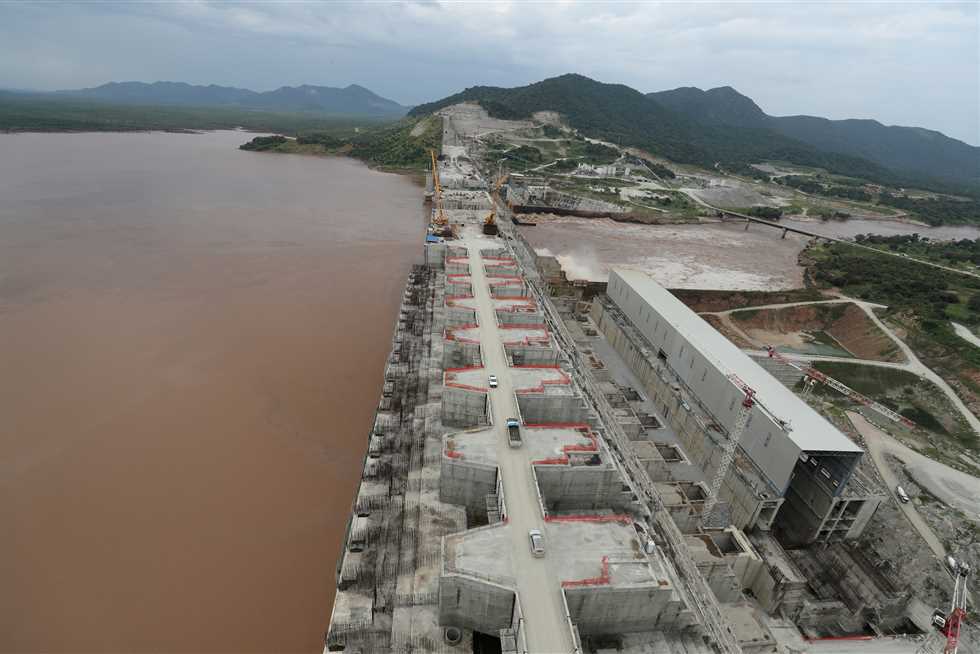
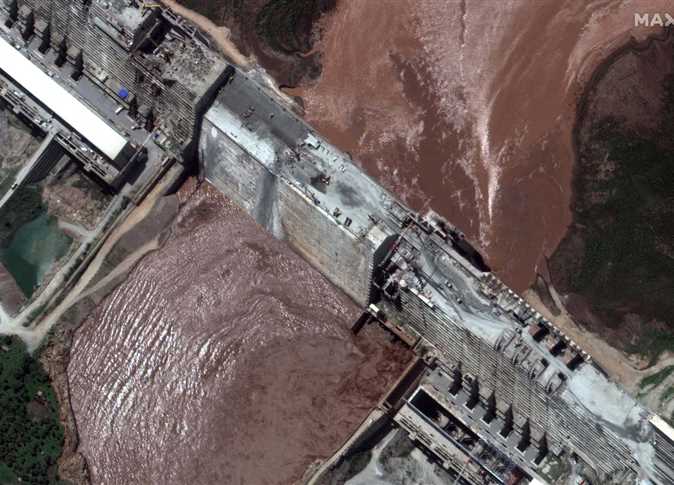
Ethiopia's announcement on Friday of the inauguration of its new Tana Beles dam aimed to provoke Egypt's anger and lead it to taking swift diplomatic behavior which would turn global public opinion in favor of upstream Nile countries and away from international legislation contained in the two water conventions of 1929 and 1959, official sources told Al-Masry Al-Youm.

Egyptian official bodies responsible for the Nile issue met yesterday, according to the sources, to discuss ways to deal with the new situation. They asked for detailed information about the dam to be presented to President Hosni Mubarak. Egypt has been in fierce disagreement with upstream Nile countries over the distribution of water, which Egypt wants to remain unchanged.

Hammo el-Omrani, head of the regional office of the International Development Research Center, said the Ethiopian declarations aimed to prompt Egypt into demanding the delay of water projects planned to be carried out on the Nile instead of requesting new negotiations, which is in Ethiopia's interests. He also said that Egyptian calm reactions were the reason for Ethiopia's declarations, which aimed to turn international support in its favor, rather than supporting the Egyptian perspective.

Foreign Minister Ahmed Abul Gheit held talks yesterday with his Belgian counterpart Steven Vanackere in which they discussed the latest developments between Egypt and Sudan on one side, and source countries on the other.

Translated from the Arabic Edition.

You can comment with:


The content of this field is kept private and will not be shown publicly.
Comments are limited to a maximum of 1000 characters.

Comments

After the dam was financed. Built and inaugurated, we read on the news today the attached article:
“Egyptian official bodies responsible for the Nile issue met yesterday, according to the sources, to discuss ways to deal with the new situation. They asked for detailed information about the dam to be presented to President Hosni Mubarak”.
When we had the Nile dispute last ten years, and 85% of our water comes from Ethiopia, let me ask the following questions:
Do we have embassy in Addis Ababa? If yes, do we have representative for the water department, finance department, culture department, intelligent? If yes, did they have job instructions\tasks and the resources to implement these tasks?
There is a lack of something, and someone is responsible and accountable for such shame news.

Tue, 18/05/2010 - 07:43

The old colonial treaties are totally irrelevant for Ethiopia since Ethiopia was never consulted and did not sign them. Ethiopia was not colonized at any point in its history and nobody can sign treaties on its behalf. The only way the issue of the Nile water can be resolved is through a new agreement that includes Ethiopia and fairly distributes the water. Otherwise, Ethiopia as the main source of the water can go it alone and nobody will be able to do anything about it be it legal or otherwise. A wise thing to do for Egypt will be to negotiate with Ethiopia because no amount of international diplomacy will make Ethiopia to compromise the utilization of one of its most important natural resources.

Tue, 18/05/2010 - 23:51

egypt practically can do nothing to stop ethiopia. nd if it is war ethiopia is ready to teach egypt a lesson. defeating enemy is its character. ethiopia defeat egypt twice in history. it will repeat it.

Mon, 17/05/2010 - 11:55

Dr Fahmy

You are trying to belittle people by using vulgar words. I advise you to come to your sense and engage on constructive discussions instead. Do not attempt to intimidate Ethiopians.

May be you do not know us well or missed to read our common past history when we engaged in war with each other.

I do not want to glorify war but talking of your country's so called invincibilty, I want to remined you that there is no absolute power as such but it is only relative. Nazi Germany conceived herself as the most powerful nation in the world and tried to dominate our planet by fire power. But the reality in the ground was something else. It is an open secret to all of us.

Let me introduce you two things from the past:

1.Several times in 1875 and 1876 during Emperor Yohannes’ reign, Egypt invaded Ethiopia and tried to occupy if possible all, if not, at least the Nile basin area, but failed. The greatest defeat came when Kedive Ismae1 sent an Egyptian army with his own son heading a detachment that was totally annihilated by the Ethiopian army, marking the end of the then Egyptian Empire.

2.Your compatriot Amira Nowaira. She describes beautifully the "indomitability" of Egypt.

Egypt 1967 – a very personal defeat
June 1967 marked the end of my innocence and a new chapter in both my own history and that of Egypt and the Middle East

Amira Nowaira

guardian.co.uk, Thursday 27 May 2010 13.30 BST

http://www.guardian.co.uk/commentisfree/2010/may/27/egypt-1967-very-pers...

Enjoy the reading of that article in the Guardian. You might get a good lesson from it and think positive.

MAKE PEACE NO WAR!!!

Mon, 14/06/2010 - 12:47

Au « Black Lion » 1: Il n’y a pas de lions noirs, ils sont tous des couleurs de peau des Égyptiens. Avant de dire n’importe quoi, sur un sujet quelconque, il faut savoir de quoi il s’agit. Il pleut en Éthiopie et il ne pleut pas en Égypte, simplement car les deux pays appartient au même système météorologique à l’échèle mondiale du globe terrestre, c’est-à-dire le Système de « Cellule Hadley » (voir le cite suivant)
http://en.wikipedia.org/wiki/Hadley_cell.
Dieu fait couler par le Nil ce que manque à l'Égypte en pluie. Le Nil n’est donc pas la propriété de l’Éthiopie toute seule ! Ce n’est pas vos eaux qui les Égyptiens prennent, c’est leurs eaux, à eux, qu’ils prennent du Nil par le pouvoir de la nature et le donne bon et juste de Dieu ! Si tu voulais parler des colonisateurs, l’Éthiopie était, pendant des époques pharaoniques, sous l’occupation Égyptienne. L’Égypte a quittée l’Éthiopie il y a des millénaires, mais personne ne pouvait arrêter l’écoulement de Nil vers l'Égypte.

Wed, 26/05/2010 - 01:39

2: car c’est le droit légitime que le bon Dieu a crée et a donné à l'Égypte. Ni l’Éthiopie ni d’autre pays de basin, n’as besoin des eaux du Nil, car ils ont tous des surplus extravagants en précipitation abondantes et des grands lacs. Le Nil n’est pas comme le Canal du Suez, qui passe entièrement en terre Égyptienne, et l’Égypte a eu tout à fait le droit légitime de la nationaliser. Le Nil, lui, est partagé entre 10 pays. Donc personne ne peut le « nationaliser », même pas les pays en amont, comme l’Éthiopie, contre des pays en aval comme l’Égypte. La décision, par rapport à un tel système partagé entre les 10 pays riverains, doit être prise à l'unanimité par tout le monde, pour rassurer le bien de tout le monde. Au lieu de chercher à soustraire de cota de l’Égypte, il faut chercher à accroitre l’écoulement dans le Nil. En hydrologie, l’écoulement des pluies vers un fleuve on l’appelle le ruissellement. Personne ne peut l’arrêter chez vous, à cause de topographie non favorable.

Wed, 26/05/2010 - 01:42

3: Au contraire, on peut l’accroitre, par des projets nouveaux qui rajoutent aux ressources d’eaux nilotiques.
Le résultat est simple, mais les politiciens chez vous jouent exprès à nos jours sur les mots, et sur les données hydrologiques naturelles sur le terrain.
La conséquence directe de surplus de pluie chez vous, et chez tout les pays d’amont du Nil, est que vous avez des ressources en eaux souterraines renouvelables grandioses, et illimitées. Donc, le meilleur moyen pour répondre à un besoins réel d’eau dans ces pays d’amont, si vraiment besoin est, est le pompage localisé de l’eau souterraine en Éthiopie, et chez les autres pays d’amont, sans jamais toucher au Nil d’Égypte (ce que vous appelez « River Abay » en Éthiopie).

Wed, 26/05/2010 - 01:44

4: L’Égypte pouvait vous aider à installer des puits de pompage, partout chez vous, pour réaliser cette fin pour votre bien et votre développement, et elle pouvait vous aider aussi à générer le courant électrique sur le Nil sans jamais toucher à ces débits, et bien elle pouvait vous aider à apprendre à faire et à exploiter l’agriculture sous systèmes pluviaux extrêmes.
Les solutions pacifiques, il y’en a tant si l’on volait, mais vos politiciens ne volaient que partager le cota du Nil qui appartient à l’Égypte, son seul ressource d’eau, pour faire mourir l’Égypte.
Personne sur terre ne va jamais réussir à faire mourir l’Égypte, ni Meles Zenawi Asres ni qui que se soit sur terre. Mettez tous cela dans vos tètes, ou bien vous êtes tous, pas seulement le petit « elu » des retardés mentales réels.
Vous menacer l’Égypte ? Cela ne va jamais passer.
Vous menacez l’Égypte par apprendre des discisions aléatoires individuels et singer des accords illégitimes pour consumer nos eaux du Nil ?

Wed, 26/05/2010 - 01:46

5: Vous faites des accords loin de l’unanimité de 10 pays riverains du Nil ? Aucune menace ne peut passer sous silence, et les accords sur les eaux sont comme les accords sur les frontières des pays. Celui qui touche aux eaux du Nil qui arrives en Égypte touche aux frontières de l’Égypte, et la guerre n’est pas ni le début ni la fin de ce chemin de conflit qui l’Éthiopie a commencée à mettre sur la route, sans aucune raison réelle, sauf le chantage politique et/ou financière imposé par vos politiciens actuels.
Quand Tafari Makonnen (Haile Sellassie)
http://en.wikipedia.org/wiki/Haile_Selassie_I_of_Ethiopia
était l’empereur de l’Éthiopie tout était bon avec l’Égypte, car s’était un homme juste et courageux, mais votre Meles Zenawi Asres
http://en.wikipedia.org/wiki/Meles_Zenawi
n’est pas l’homme digne, bref, de gouverner ce grand pays de l’Éthiopie.

Wed, 26/05/2010 - 01:47

6: L’Éthiopie est un pays grand pour les Arabes, car il était le lieu où les premiers Arabes musulmanes sont arrivées (il y a 1420 ans) comme refugiés de la Mecque, et ont reçus bon refuge en Éthiopie (qui les Arabe appellent depuis et jusqu'à nos jours : AL-HABACHAH)) sous un régime d’un roi juste et raisonnable de l’époque.
L’Égypte ne peut pas céder aux chantages de régime actuel en Éthiopie.
L’Égypte a aidée, depuis 1952, touts les pays d’Afrique à ce libérer de la colonisation, donc ne parle pas de la « dépendance » d’Égypte sur « des régimes coloniaux ».
De votre part, c’est vous qui a commencé à casser l’Initiative de Basin du Nil, et qui a commencé les hostilités contre l’Égypte, pas l’Égypte, le pays qui ne dépende qui sur le Nil pour vivre.
Vos régimes pro de nouveau colonialisme ont crées un problème, où il n’y a pas un.

Wed, 26/05/2010 - 01:48